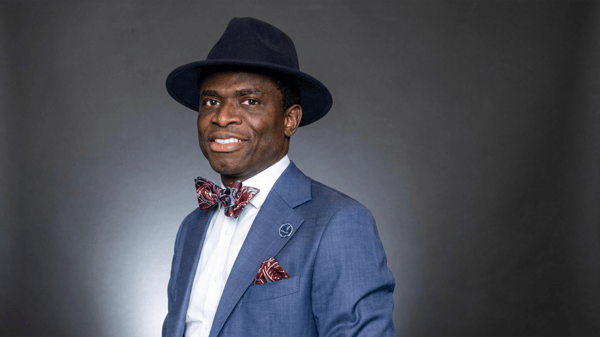
In a sector often challenged by complexity and limited resources, Dr Tokumbo Fasuyi, Founder and Chief Executive Officer of Aegis Private Health Consultant, a United Kingdom-based premier health concierge, offering unmatched access to top-tier medical care, luxury health tourism and personalised wellness plans for High-Net-Worth Individuals (HNWIs) and their families, represents a new generation of healthcare professionals who understand the system from the inside and are committed to making it work better for everyone.
He does not speak in loud promises or sweeping claims; his work does the talking. Over the years, he has quietly built a reputation as one of Nigeria’s most forward-thinking health consultants, driven by a simple but powerful belief: quality healthcare should be accessible, efficient and patient-centred.
Dr Fasuyi’s journey into health consultancy was shaped by firsthand experience within Nigeria’s healthcare system, where, earlier in his career, he observed the gaps that often stood between patients and proper care—poor coordination, limited access to trusted providers, and a lack of personalised health guidance. Instead of just accepting the system’s flaws, he started thinking about a better, more organised way to provide responsive healthcare needs of people.
“The reason why I created Aegis is to make sure people have access to the right healthcare, at the right time, by the right person. For some people, it’s not a problem of resource; they have the resources, but the challenge is having the best value for what they have.
“People want somebody they can trust with their health, to guide them with regards to their health, and to provide the right information when it’s necessary. Take, for instance, if you spent a lot of money and you bought a very expensive car, say a Lamborghini, you wouldn’t take it to the roadside mechanic to look after it for you. You’re going to get the best from the best. So, it’s the same thing when it comes to our health.
“Our health, life in general, is no different. So, you want people that you can trust to look after you, to give you the best information when it comes to your health, and to open up and tell you when things are going wrong. So, the major reason why I created AEGIS is to help people stay alive, extend their lives and optimise the quality of life of those who need it at the highest level.”
Explaining what Aegis is all about, Dr Fasuyi stated that it is not an acronym, but the actual name of his health service providing organisation. “Aegis” is a Greek word that basically means protection. It refers to the shield used by Zeus and Athena in Greek mythology. It means protection; to be protected by somebody or have someone provide a covering or support to you.
“So, when we talk about Aegis, we are saying that what we provide is that we try to cover you from head to toe on every aspect without leaving anything, even nothing unturned. Basically, for us as a care-providing organisation, we make sure our client (patient) gets the help they need in terms of precision. By this, I mean you’re not taking chances at all. So, precision, you know, all the way through every stage of your healthcare journey, including diagnosis, treatment, prevention and outcome of it.”
“We see ourselves as a trusted partner. The way healthcare is now, I mean, if you apply it to every aspect of life, you have your lawyer to handle your legal affairs, you have your wealth manager to handle your finances, and all of that. So, in the same way, we see ourselves as a trusted health partner when it comes to every issue of health, either personally, or family, or organisation.
“We aim to provide the best care at the right time, anywhere, whether in Nigeria or abroad. It’s all about, you know, care education, and we talk about preventative strategies to ensure that you are trying to get the best. So, we don’t compromise on anything. If you’re vulnerable in a very simple way, we talk about protecting your health with precision, with privacy in one class of expertise,” he added.
Speaking on the implications of health on business and the national economy, the UK-based medical consultant noted that health is the visible engine that drives a nation’s economy. He stated that health is very important, not just at the personal level, but also at the family level, organisational level and even at the country level.
“They’re very important for many reasons. For instance, productivity rises and falls with regard to health. When a nation is healthy, you are looking at some core things. One, it means productivity will rise and diseases will fall, meaning expenditures on this will decline. In other words, the country’s gross domestic product (GDP) is also shaped by its health choices.
“This simply means that a healthy nation will be able to build a stronger workforce—meaning that people will miss fewer days at work, businesses will face fewer disruptions and leaders can make clearer and more strategic decisions. When you look at countries with sustained economic growth, you will notice the consistent pattern of long-term investment in public health leading to long-term financial stability. So, not just at the individual level, at the country level, health is indeed wealth.
“For instance, in the case of Nigeria, at a point in time, the health challenge of the former President, Muhammadu Buhari, may God rest his soul, created a lot of uncertainty, and that uncertainty had an impact on businesses. Businesses need a very stable environment as much as possible to flourish.
“Insecurity definitely affects businesses. It affects investors, both local and international investors. So you can imagine when the head of the nation is unwell, then there’s no way it’s not going to affect the productivity of that country because everything rises and falls when it comes to health. When leaders are healthy physically and mentally, they can think better; they can make better decisions and sustain high performance. But with poor health, everything slows down,” Fasuyi said.
“Secondly, business can really grow at the pace of the process that is leading it. It can’t go from an empty cup. So anything like physical illness or even mental illness can reduce the ability, the creativity and the strategic clarity of the leader. Thirdly, when the leader is well-being, the team follows. So take, for instance, an organisation or country where the leader is very high on healthy living; it builds a very strong culture of domination and competence.
“What I’d like you to know is that people look at their leader and they take cues from the leader. So it does help. Now, perhaps the best way to look at it is the international implication of poor health in the nation. For instance, the GDP of Nigeria compared to that of the United States is far, far, far apart. Interestingly, the most important part of the GDP is the human being. So you can imagine, when the country is filled with people of health, there’s always more happiness.
“Take, for instance, life expectancy in Nigeria for 2025 is 56.36, a 0.54 per cent increase from 2024. In 2023, it was 54.46, a 0.71 per cent increase from 2022, while in 2022 it was 54.08, a 1.17 per cent increase from 2021. In the UK, it’s about 82; in India, it’s about 85. So that will tell you how health can impact not just on the business, but ultimately. You’re talking about the next 10, 20, 30 years down the line of that country. So health is definitely very important in the leadership of the nation,” he added.
On simple habits people can adopt to maintain and ensure they stay healthy, the CEO said, “The truth is that I like to be very positive when it comes to health, but some people only get a message when it’s negative. There are simple things you can do; they’re not difficult and you don’t need any equipment. You can do it in your office. You do it for 10 minutes every day, and in a week, that’s 70 minutes.
“For instance, at home, if you have stairs, try to run up and down for 20 minutes. In one corner of the bedroom, try to jump 200 times in the morning. Then, the next day, try to push it to 250. You don’t need to go to the gym. You can do what we call jumping jacks. Basically, you jump and flap your hands at the same time towards your head in one spot. You can squat 50 times. Press your hands together and squat.
“So these are things you can do as a busy professional. You can do them anywhere, but the most important thing is that commitment to say from this time to this time, I do this. For evidence, if you’re able to do that, it would make up for running 10 kilometres. An effective exercise makes your heart beat really very fast so that you can’t talk in full sentences. That’s what is effective.
“Someone once said to me that if you have a very rough lifestyle, no amount of medication is going to make a difference in your life. We need to value our health the way we value our business and all that. Our body, nerves, are designed to move; it is designed to move. So you need to move every day. At least 20 minutes’ exercise will keep your brain sharp and keep the stress low. The last thing I want to say is that there are a lot of experts out there on WhatsApp, TikTok.”
Government has constantly made calls to professionals like you in the diaspora to return home and invest. Are there plans by Aegis to invest in Nigeria?
“There are two answers to that question. First, when we talk about investment in Nigeria, I think the first thing that comes very high on my list is about giving back. For instance, if you go on social media, there are a lot of things going on there about how bad the country is, how people are not doing their best, and all that. But for me, I believe that one of the things we can do as individuals in the diaspora is to start to give back.
“For instance, in the UK and in most developed countries, there is this giving culture, whether people will give their time at the beginning of the month, and they can ask for a type of donation, or they can come together, put on a marathon to raise funds, or they get a group of people together and they provide free services.
“You may ask how we will tend to do that. In this case, obviously, the background of Nigeria is to give back. We have people who provide free services, particularly for people who cannot afford it. And the principle is that we just come from resources, from people that have a lot, and we should be able to do that as well. So that’s part of the plan, to give it back, whatever I know.
“In terms of giving back to Nigeria, it’s basically part of giving back, maybe in and out of the country, and also you have to have the power to do that to open up opportunities, particularly for young people, to relieve pressure, and to pay, and help them all serve the people of Nigeria. So those are the two ways. One is giving back, and the other is not giving back. You have to be able to do that. You have more economic opportunities also to serve people in Nigeria.”