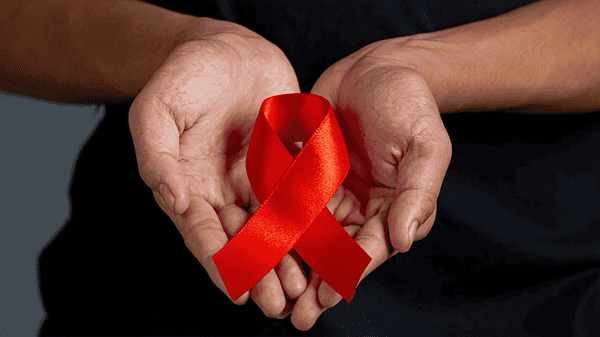
Health experts have renewed calls for greater domestic investment by government and the private sector to ensure the sustainability of Nigeria’s HIV response, warning that funding gaps, stigma and economic pressures continue to threaten progress.
Speaking at the Candlelight Memorial organised by the Network of People Living with HIV and AIDS in Nigeria (NEPWHAN) in honour of those lost to AIDS-related illnesses, as part of the 2025 World AIDS Day activities in Abuja, the National Coordinator of NEPWHAN, Abdulkadir Ibrahim, said the yearly event serves both as a remembrance and a reaffirmation of solidarity with people still living with HIV.
A representative of the United Nations Programme on HIV/AIDS (UNAIDS), Gabriel Undelikwo, said that of the 39.9 million people living with HIV globally, 9.3 million still lack access to life-saving treatment. He noted that in 2024 alone, 630,000 people died of AIDS-related illnesses while 1.3 million newly acquired HIV.
“To change the trajectory of the pandemic, lifesaving medications must be accessible without fear,” he said. “Science continues to innovate with long-acting medicines that require only a few injections a year, but these solutions will only work if access is guided by a strong human rights approach.”
Undelikwo emphasised the need to end stigma and discrimination.
Stressing that people living with HIV must be treated as part of one community. “Empathy, inclusion and accurate knowledge are essential to ending AIDS as a public health threat,” he said.
NEPWHAN National Secretary, Nicholas Ugbeyen, said this year’s theme reflects Nigeria’s present realities, ranging from funding uncertainty and economic challenges to insecurity and persistent stigma. He noted that despite these disruptions, the country has continued to make notable progress through collaboration, innovation and strong community leadership.
“This event amplifies community voices at the centre of an effective, people-centred HIV response,” he said. “Every candle lit represents a life, a memory and a reminder of our collective duty to prevent avoidable deaths.”
The Country Coordinating Mechanism (CCM) of the Global Fund also commended Nigeria for its achievements, noting that more than 1.9 million Nigerians living with HIV are currently on treatment while new infections continue to decline.
Global Fund representative, Winifred Alobo-Agogo, said the Federal Government’s renewed hope agenda has expanded access to care and strengthened country ownership at a time of increasing donor fatigue.
She added that under Grant Cycle 7, the Global Fund has worked closely with the National Human Rights Commission to address stigma and discrimination, key barriers to accessing care. According to her, this year’s World AIDS Day theme aligns with national priorities around health, human capital development and inclusive growth. She urged communities to lead boldly in awareness, testing, treatment support and anti-stigma campaigns.
Managing Director of the Society for Family Health (SFH), Dr Omokhudu Idogho, said that for over three decades SFH has remained a central pillar in Nigeria’s HIV response, championing community engagement, fighting stigma and expanding access to services. He noted that while progress has been significant, dismantling remaining barriers, particularly discrimination and inequitable access, remains critical to achieving national HIV goals.