FG: Nurses key contributors to nation’s economy
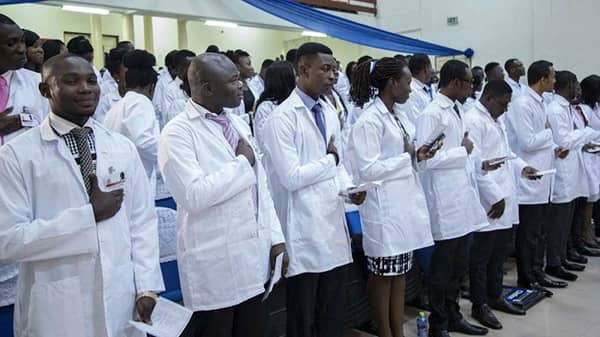
The Association of Resident Doctors in the Federal Capital Territory (ARD-FCT) has embarked on a seven-day warning strike.
The development was announced on Monday, in a communiqué signed by the President, George Ebong, alongside other members of the executive.
The strike, which commenced on 8 September, is expected to run until Sunday, 15 September. The doctors had, in January, embarked on a three-day warning strike to drive home their demands.
The communique indicated that at the end of the strike, Congress shall reconvene to reassess the commitments and progress made by FCTA.
Ebong said the latest action followed resolutions at an emergency meeting held on Friday. He explained that despite several rounds of dialogue, the Federal Capital Territory Administration (FCTA) has failed to address long-standing concerns affecting doctors in its employ.
Among the issues highlighted were a lack of manpower, poor welfare, unpaid salaries, unexplained deductions, and the psychological toll of long working hours.
He noted that no new employment had taken place in FCT hospitals since 2011, forcing resident doctors to cover multiple departments. “The FCT Minister, Nyesom Wike, has been notified severally of the issues affecting doctors but has allegedly turned a blind eye,” he said.
He added that the pressure of excessive workload had already led to fatalities, recalling the recent death of a doctor in Port Harcourt.
Meanwhile, the Permanent Secretary of the Ministry of Women Affairs, Dr Maryam Keshinro, has described nurses as vital contributors to Nigeria’s economy due to their critical role in healthcare delivery.
She said this yesterday at the commemoration of the International Nurses Week at the State House Medical Centre, themed “Our Nurses, Our Future: Caring for Nurses Strengthens Economies.”
Keshinro emphasised that the health of Nigerians was a prerequisite for economic productivity, noting that ill health resulted in lost manpower hours and negatively impacted the nation’s economy.
“The nursing profession is a vital contributor not only to healthcare but also to the economy, both in Nigeria and globally,” she said.