 Follow Us on Google News
 Follow Us on Google Discover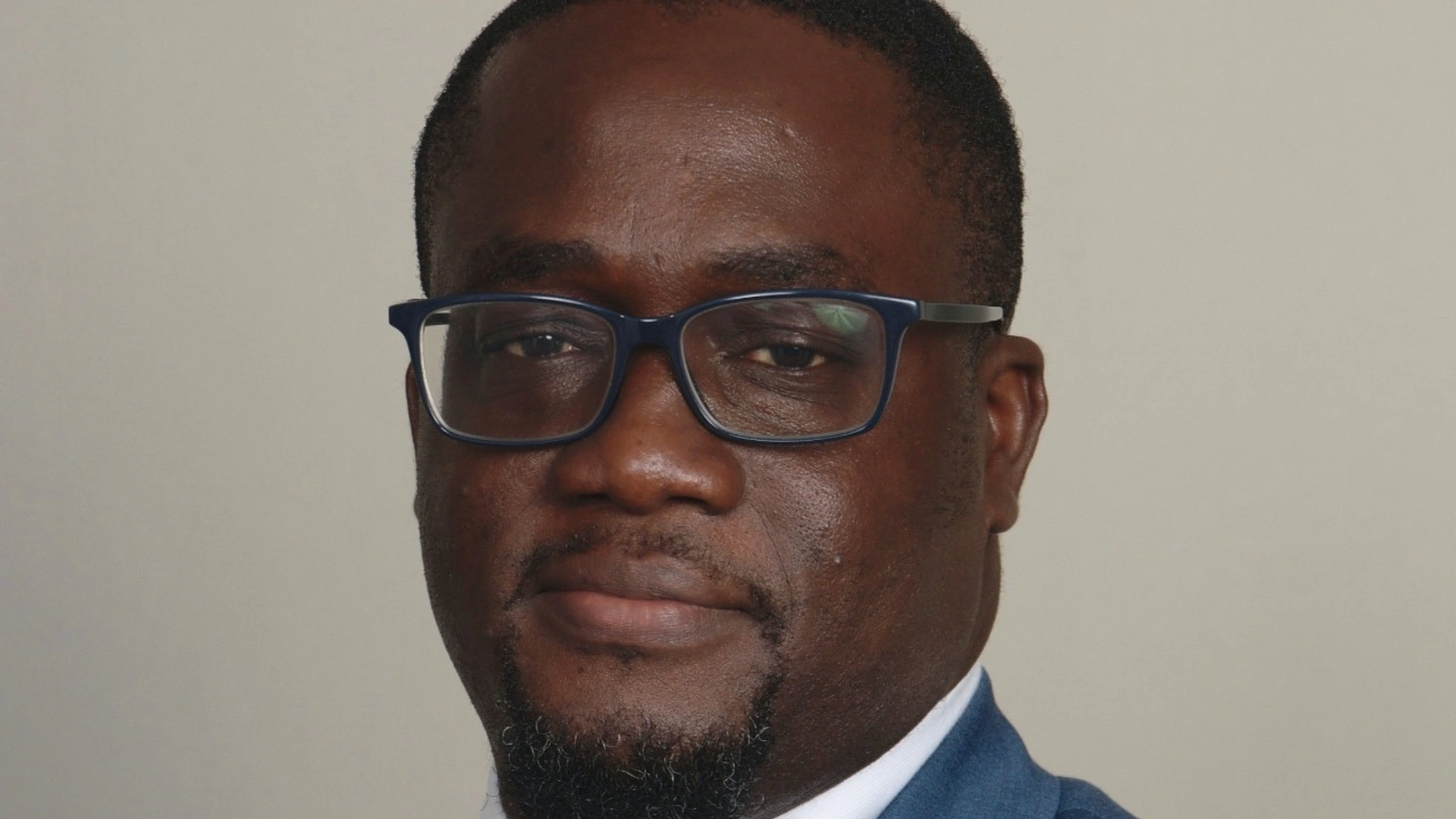
Before 2021, Nigeria accounted for one of the highest burdens of maternal and newborn deaths globally, with thousands of women dying each year from largely preventable causes linked to pregnancy and childbirth. While clinical skill gaps and infrastructure deficits have long dominated policy debates, Dr Babajide Adewumi saw something else inside labour wards in Ibadan: an information failure.
Working at the University College Hospital and Adeoyo Maternity Hospital, he repeatedly encountered what he calls “blind arrivals”, critically ill women rushed in with no clinical history, incomplete referral notes, or fragmented antenatal records. The problem, he concluded, was not only medical but systemic: data scattered across facilities, warning signs untracked, and referrals activated too late.
That realisation led to the creation of the Maternal Health Services Digital Innovation in 2021, anchored by EMERS AI, a clinician-informed predictive system designed to structure maternal health data, flag high-risk pregnancies, and trigger earlier preparedness without overriding medical judgment. The platform was first rolled out live at Orile-Agege General Hospital in July 2023 before expanding to other facilities.
In this interview with Ijeoma Nwanosike, Adewumi discusses how bedside obstetrics shaped the architecture of the system, the challenges of translating messy clinical notes into machine-readable risk signals, what changed inside hospitals during implementation, and why he believes predictive intelligence must now extend beyond delivery to the full maternal–newborn continuum.
Before 2021, Nigeria’s high maternal and newborn death figures troubled you. Was there a specific clinical experience that convinced you the biggest problems were scattered notes, slow referrals, and ‘blind arrivals’?
Yes. The turning point was not a single dramatic event, but a pattern I kept seeing. It is a pattern we still see a lot. Some of our very strong women and about-to-be mothers are falling victim to very preventable deaths just because of late intervention in complicated pregnancies. While I worked at UCH and Adeoyo Hospitals in Ibadan, this was always the case. You will see a woman being rushed into the hospital with some very dire complications of pregnancy or delivery, and we would have no clue what was going on with her. Some of them would be coming from a traditional or religious birth center or even coming from another hospital. Women would arrive in active distress—eclampsia, bleeding, obstructed labour—and we, the receiving team, on call, will have no information about their condition. No clinical history, no medical record. Sometimes there will be a handwritten referral note that is already crumpled or stained; sometimes there will be nothing. Sometimes it is the husband or mother trying to piece together some story, very incoherently and very inconsistently.

Those were what I began calling “blind arrivals.” The receiving team was clinically competent – we are talking about some of the best-trained doctors – but they were starting from zero. There were lots of risks to the mothers and also to the doctors who had to dive right in to intervene without even having any information about the infection status of the patient. We are often blindsided in situations like these, and we will still be victims when there are poor outcomes
Meanwhile, even the ones that did antenatal care at community clinics did not have their risks tracked. They work in isolation, often unaware that subtle warning signs had been accumulating across visits.
It became clear that the problem was not just medical, it was informational. These things are patterns. Once we pay attention and combine all the information, a pattern can form that may not be easy to predict, but is predictable anyway. That realisation became the catalyst for building a connected, predictive system ensuring no woman arrives unseen or undocumented. That was the gap MHSDI was designed to close: connect the signal before the crisis.
As both a physician and a health informaticist, how did your training shape your approach when you first designed the Maternal Health Services Digital Innovation in 2021?
My clinical training taught me pattern recognition. Medicine is all about patterns. Obstetrics is about trajectories – rising blood pressure across antenatal visits, progressive anaemia, subtle fetal changes. Even mundane information, such as age or the mother’s weight, contributes to forming patterns. My informatics training and experience simply taught me that patterns can be encoded.
When I designed MHSDI in 2021, I did not begin with an algorithm. I began with clinical reasoning. I asked questions – What things make obstetricians nervous? What combinations of variables predict risks, and what severity of risks? How can I make it possible for community health staff to document care that can be easily transmitted to other healthcare facilities?
From there, we translated that reasoning into structured data models and machine-readable rules inside EMERS AI. The architecture – data ingestion, predictive engine, and decision-support layer – was built to mirror clinical thinking, not replace it.
That physician-informaticist bridge is central to MHSDI’s design philosophy.
EMERS AI is described as extracting signals from messy clinical notes and flagging high-risk pregnancies. What were the hardest types of information for the system to interpret accurately?
It is very difficult to predict human behaviour. Patterns from over trends, so when patients don’t keep regular antenatal appointments, it is harder to form patterns and predict risks appropriately. A single blood pressure of 138/88 may not alarm anyone, but a steady upward trend across three visits is clinically meaningful.
Coding contextual language is also very difficult. Imagine having to map contextual phrases to discrete medical terminologies. Like a patient who has a headache but would refuse to say so because they believe that will be a negative confession speaking such “to” themselves; they will rather say “my enemy has a headache”. This is one example of many contextual phrases that pose documentation and coding challenges.
Language and culture are always challenging factors as well. We don’t have accurate word-for-word, concept-for-concept, and context-for-context mapping of medical terminologies and local language descriptions. This was one unique challenge that required thoughtful feature engineering.
The solution was not just AI sophistication. It was structured data capture, standardised templates, and clinician-informed ontology design within EMERS.
The system emphasises that clinicians, not software, make final decisions. How did you design MHSDI to support rather than override medical judgment?
That was actually one of the most important design decisions we made from the beginning. I’m a physician first. I would never build a system that removes clinical judgment from the equation. MHSDI produces a Maternal Risk Score and recommendations. It does not execute decisions autonomously.
It does not force a referral. The idea does not interfere at all with medical judgment; it augments it. It does not take away the doctor’s power; it actually enhances it. We built it intentionally as a support system, not a command system.
The dashboard provides transparency into the variables contributing to the risk classifications, proposes recommendations, but does not make the decisions for the professionals. It uses tiered alerts to prevent over-escalation.
Although it triggers a referral system at a critical risk level, a doctor can still override it. Obviously, it is still a work in progress; it will take a while to fully stress it, but from the results we are getting, it is evident that medical professionals are seeing it as a worthy partner in patient care. It functions as a second set of eyes while preserving clinical authority.
Why did you select Orile-Agege General Hospital in Lagos for the first live rollout in July 2023, and what practical changes inside the hospital stood out most during the pilot period?
Orile-Agege General Hospital represented a high-volume, real-world environment with genuine referral complexity. It is a high-volume referral centre with complex patient flows. The community itself boasted of sound maternal outreach centres that refer patients to OAGH, but were largely fragmented, not integrated. This is the exact sort of problem MHSDI was designed to address.
The leadership was open to workflow redesign. Many projects, such as MHSDI, face the problem of leadership buy-in. So, when you see a leadership that is open to innovations and cares about improvements and outcomes, they win.
The pilot demonstrated anticipatory preparedness – electronic referral summaries before arrival, earlier emergency readiness activation, and real-time visibility of maternal risk profiles. What stood out during the pilot was not the AI model itself but the operational shifts. Again, with the assistance of the hospital leadership, teams were formed from operational support to clinical emergency readiness. It was obvious that the hospital and the community were determined for the project to be a success.
The hospital’s quality reports showed referral delays dropped sharply and perinatal deaths declined among enrolled mothers. Which specific workflow changes do you believe drove those results?
Honestly, it wasn’t one dramatic change. It was a series of practical workflow adjustments that finally connected the dots.
First, we started to adjust how we see, process, and interact with patient information. It is the lifeblood of providing medical care. We started to redefine how we collect and clean information for it to be complete, standardised, and programmable. Once you can structure electronic referral packets, the receiving hospital can see the full antenatal summary before the patient even arrives. That alone reduced triage time significantly.
Second, we introduced automated readiness alerts. When the system flags a high-risk pregnancy, transport teams and the receiving hospital are notified simultaneously. So instead of reacting when the ambulance pulls up, the team is already preparing – blood is arranged, specialists are alerted, equipment is ready.
Third, we made the risk visible. The colour-coded dashboards allowed high-risk patients to be seen across departments. Everyone, from triage to labor room or operating room, sometimes had a shared situational awareness.
And finally, we closed the loop. Outcome data fed back into the system helped refine future predictions and improved clinical learning across the hospital.
So the reduction in delay wasn’t because ambulances suddenly moved faster. It was because better information moved ahead of the patient. Preparation started earlier, and in maternal care, minutes matter.
MHSDI has since expanded to facilities including Ayinke House, Blossom Care Family Medical Centre, and Hadejia General Hospital. What lessons have you learned about scaling the system across different hospital settings?
Scaling has been one of the most eye-opening parts of this journey. When you build something in one hospital, and it works, you’re encouraged. But when you take it to a completely different environment, that’s when the real lessons begin.
The first thing we learned is that infrastructure matters more than people sometimes assume. Bandwidth reliability, power stability, and device availability are practical realities that influence how quickly and smoothly a system can be adopted. You can have the best AI model in the world, but if the internet drops every afternoon, you need an adaptive strategy.
The second lesson was that workflow culture differs. Some facilities are still heavily paper-based and cautious about digital systems. Others are already comfortable with EMRs and dashboards. So we realised we couldn’t impose a one-size-fits-all approach. The architecture of MHSDI remained constant, but the implementation strategy had to flex to each hospital’s culture and readiness.
And perhaps the most important lesson was that governance and training are just as important as code. Technology adoption is about trust. Doctors, nurses, midwives, and other allied or auxiliary medical staff need to understand how the model works, what the risk score means, and how it supports their judgment. We invested heavily in education, transparency, and open dialogue. That built confidence.
So yes, the technology scaled, but more importantly, the relationships scaled. And that’s what made the expansion sustainable.
Your work was a system-level shift in maternal care coordination. In your view, what gaps remain that technology could help address next?
We’ve made meaningful progress, but we’re not finished. The solution will keep learning in order to predict with better accuracy and precision for different environments. There are several important gaps that technology can help close, as well. One major area we are looking at is developing predictive models around mother and newborn linkage.
Right now, maternal data and newborn data don’t always flow together. For example, we see mothers with very low BMI bringing their babies to postpartum clinics. Still, we never think about it as a risk factor for their newborn babies suffering from malnutrition or undernutrition. We need to start thinking about patterns – that is, how we predict problems from a distance, and plan to prevent them or respond appropriately. Risk prediction should extend beyond delivery, tracking the mother and baby as a connected unit. That continuity is critical, especially in the early postpartum period.
Another gap is chronic diseases. Conditions like sickle cell disease, asthma, HIV/AIDS, and chronic hypertension don’t just appear; there are risk patterns to them. Medicine has taught us a lot about this. We need predictive models that extend beyond women’s health to chronic disease management. This concept and framework can be adapted to other clinical problems that are troubling our population.
Data privacy is another frontier. As we scale, we’re exploring federated learning approaches—ways to improve model accuracy across multiple facilities without centralising sensitive patient data. That allows learning while protecting privacy.
Then there’s rural resilience. Many facilities still operate in low-bandwidth environments. We’re working toward offline-capable AI logic—systems that can function even when connectivity is intermittent.
And finally, patient-facing tools. I believe mothers themselves should have greater visibility into their own risk trajectory. Education and empowerment can complement clinical intelligence. Some of us live in environments where patients are empowered to participate in decision-making about their own health. We have a long way to go, but I dream of a destination where mothers in antenatal clinics will be able to see risk dashboards in their languages. They will not need convincing to go to a specialist hospital; they will even suggest it to their caregivers.
Technology won’t solve every systemic challenge we have, but it can, at least, eliminate informational blind spots. The next frontier is deeper integration of predictive intelligence across the entire maternal–neonatal continuum.

