 Follow Us on Google News
 Follow Us on Google Discover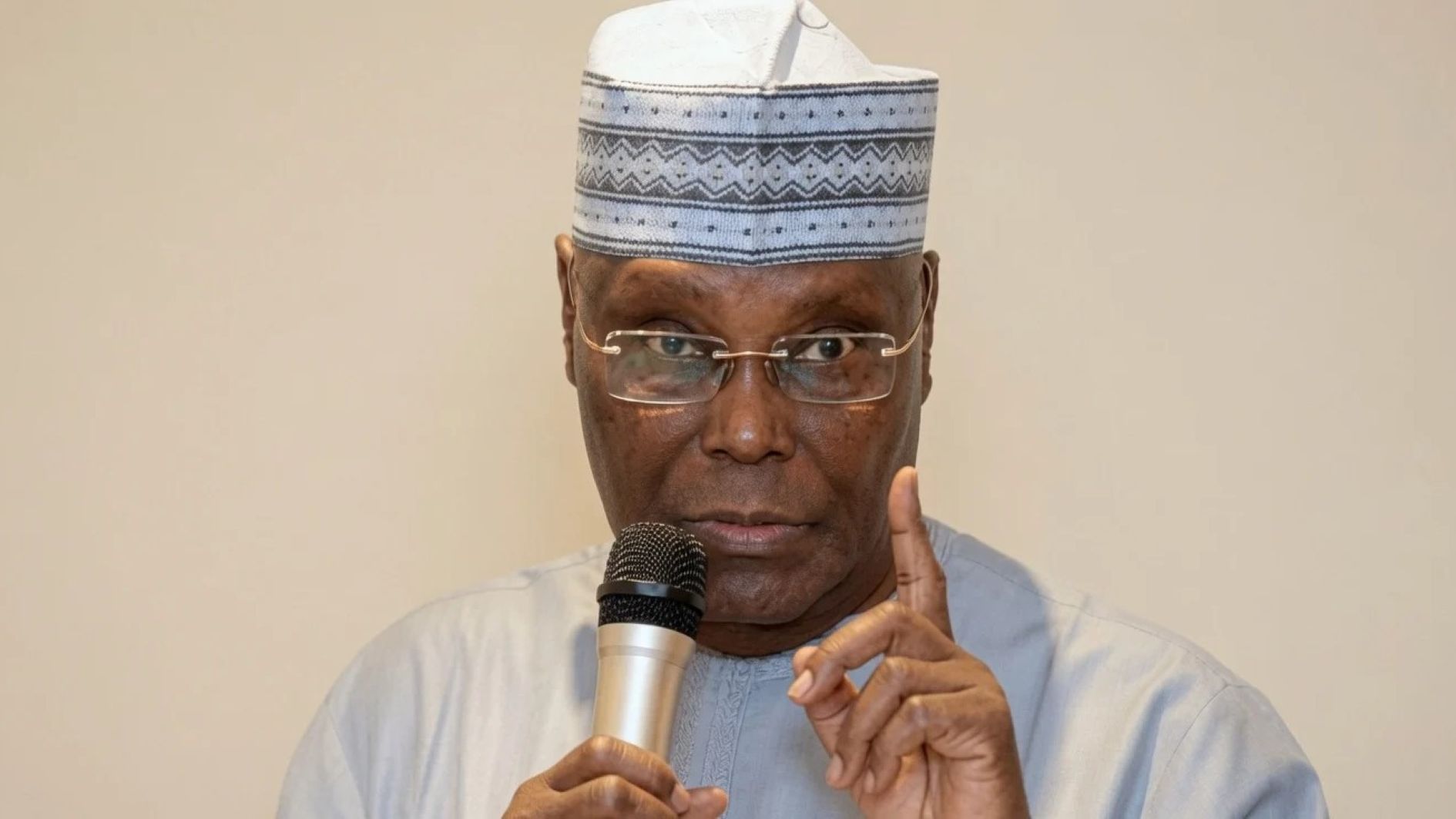
• Atiku, ADC split over Tambuwal, Imoke for campaign leadership
• Regional balance complicates campaign leadership choice
• ADC plans stakeholders’ meeting after Osun poll
• SERAP demands asset disclosure, rejection of vote-buying
• Dasuki seeks single-day 2027 elections, Electoral Act review
• APM seeks global sanctions over alleged democratic violations
Barely 10 days to the commencement of presidential campaigns ahead of the 2027 general elections, the opposition African Democratic Congress (ADC) and its presidential candidate, Atiku Abubakar, are divided over who should head the party’s presidential campaign.
The development comes amid fresh calls by civil society groups and lawmakers for electoral reforms and greater transparency ahead of the 2027 polls.
The ADC disagreement is reportedly centred on former Sokoto State Governor, Senator Aminu Waziri Tambuwal, and former Cross River State Governor, Senator Liyel Imoke.
The Independent National Electoral Commission (INEC) has fixed August 19, 2026, for the commencement of campaigns for the 2027 presidential election.
Ahead of the date, political parties are putting finishing touches to their presidential campaign structures, although they are not required to commence their campaigns on the same day.

The major political parties — the All Progressives Congress (APC), ADC, Nigeria Democratic Congress (NDC) and Peoples Democratic Party (PDP) — are expected to unveil their presidential campaign teams ahead of the commencement date as a demonstration of their readiness for the election.
However, the ADC, which is increasingly being regarded as a major force ahead of the 2027 elections, is currently divided over whether Tambuwal or Imoke should lead Atiku’s campaign, with the debate taking on regional dimensions.
Sources within the party told The Guardian that Atiku and some members of the National Working Committee (NWC) from different geopolitical zones favour Tambuwal as the head of the campaign team.
Others, however, are pushing for a southerner, particularly Imoke, to take charge of the presidential campaign.
The divergent positions have reportedly put the party’s National Chairman, David Mark, in a difficult position, while the silence of the ADC’s vice-presidential candidate, Rotimi Amaechi, has further complicated the situation, according to party sources.
A member of the ADC NWC, who spoke on condition of anonymity, said Tambuwal’s role in organising Atiku’s 2023 presidential campaign and his political connections across the country made him the preferred choice.
The source said Tambuwal should be allowed to lead the campaign because he would not be contesting for any political office in 2027.
“Well, it is true that we are having different opinions regarding who chairs the campaign of our presidential candidate, Atiku Abubakar and his running mate, Rotimi Amaechi, but some of us think that Senator Tambuwal did a good job in 2023, even when he was also running for an election. And we could see the level of organisation and hard work that he put into the campaign team. He had to split his time to attend to governance in Sokoto, run his personal campaign and also coordinate the presidential campaign.
“Now he is not running for any elections. Secondly, this is somebody who built bridges across the country when he was Speaker. Do not forget how he emerged as Speaker. He built such alliances, and there is no place in Nigeria where he does not have allies. That is good for the campaign.
“Thirdly, Tambuwal has friends across all the political parties, including the APC. He has the integrity, and you cannot argue that he is not loved. So, we need such a person that can change the game. But you know, in this kind of situation, people will want to differ, and you cannot blame them. That is why some of our colleagues are fronting for Liyel Imoke.
“They argue that since Atiku is from the North, there should be somebody from the South to run the campaign at the level of Director General.
“Some of us have tried to let them understand that Imoke can be the chairman of the campaign council, which is actually reasonable. So that is where we are having a stalemate. But I believe that Tambuwal might emerge in the long run, but I can confirm to you that there is that debate and the leadership of our party is taking time to convince those with opposing views so that it does not degenerate into another turbulence.
“What we need now is unity, so no opinion or suggestion cannot be outrightly dismissed. We will address these concerns and arrive at a conclusion that nobody will feel bad. That is the situation.”
The Guardian also learnt that the ADC is planning an all-stakeholders’ meeting immediately after the Osun State off-season governorship election to finalise the list of members of the Presidential Campaign Council and Presidential Campaign Organisation.
The party’s national leadership has also started compiling names for a broad-based Presidential Campaign Organisation designed to accommodate various interests across the country.
It was gathered that all ADC governorship candidates across the 36 states had been mandated to submit nominations for membership of the Presidential Campaign Organisation.
According to sources, the ADC national leadership will focus mainly on constituting the Presidential Campaign Council, while Atiku and Amaechi will largely handle the composition of the Presidential Campaign Organisation.
Publish assets, reject vote-buying, SERAP urges presidential candidates
MEANWHILE, the Socio-Economic Rights and Accountability Project (SERAP) has written to all 19 presidential candidates announced by INEC, urging them to publish details of their assets and liabilities ahead of the election and to publicly reject vote-buying.
SERAP also asked the candidates to disclose the assets and liabilities of their spouses and, where applicable, unmarried children under 18, as well as the legitimate sources of their significant assets.
In an open letter at the weekend, signed by SERAP Deputy Director, Kolawole Oluwadare, the organisation urged the candidates to go beyond the bare legal minimum and voluntarily embrace higher standards of transparency, accountability and integrity in seeking Nigeria’s highest elected office.
SERAP said: “Candidates asking Nigerians to entrust them with enormous constitutional powers over public finances, natural resources, appointments and security institutions should be willing, before asking for their votes, to demonstrate that their personal financial affairs can withstand reasonable public scrutiny.
“Nigeria’s democracy belongs to its citizens. Votes must not be bought. Public office must not be treated as private property. Those seeking the highest public office must be willing to meet the highest standards of transparency, accountability and integrity,” the organisation said.
SERAP said voluntary pre-election asset disclosure would enable voters to assess potential conflicts of interest and significant sources of wealth, strengthen confidence in the electoral process and provide a baseline for assessing future changes in assets if a candidate is elected.
SERAP added: “An election in which citizens’ votes are purchased, coerced or otherwise financially induced cannot genuinely reflect the free political will of the Nigerian people.”
It further argued that vote-buying was particularly harmful amid poverty and economic hardship because it exploits economic vulnerability and risks turning a constitutional political right into a financial transaction.
Lawmaker urges INEC to merge 2027 federal, state elections
ALSO, the Deputy Minority Leader of the House of Representatives, Abdussamad Dasuki, has urged the Independent National Electoral Commission to reconsider its staggered arrangement for the 2027 general elections and conduct the federal and state elections on a single day.
Dasuki also called for the expunging of Section 63(2) of the Electoral Act, warning that the provision could create a loophole for the use of fake or unauthorised ballot papers during elections.
He made the call at the weekend when youths of the African Democratic Congress visited him to congratulate him on his emergence as Deputy Minority Leader, according to a statement issued yesterday.
Dasuki said conducting the 2027 elections on a single day would reduce the economic disruption associated with staggered elections and save the government the additional costs of deploying ad hoc electoral personnel, security agencies and other election logistics on separate days.
He also argued that the arrangement would reduce the financial burden on citizens and other election participants who travel for the polls, particularly amid the country’s security challenges.
The lawmaker said under the current arrangement, Nigerians travelling for election purposes could be required to make separate journeys for the federal and state elections.
He urged INEC to merge the elections and conduct them in either January or February 2027.
According to him, the combined exercise would involve five ballot papers covering the presidential, senatorial and House of Representatives elections at the federal level, as well as the governorship and State House of Assembly elections at the state level.
Dasuki said INEC had the capacity to manage the five ballot papers efficiently if adequate preparations were made ahead of the polls.
He added that the existence of eight off-cycle governorship elections would make the single-day arrangement even more practicable, as governorship elections would not be held in those states during the 2027 election cycle.
He said voters in the eight states would consequently use four ballot papers, further reducing the complexity of the exercise.
Dasuki said the proposed arrangement would also reduce the movement of voters, political actors, election officials and security personnel across the country.
On Section 63(2) of the Electoral Act, the lawmaker said the provision should be removed because it could undermine the integrity of the electoral process.
He drew attention to the apparent contradiction between Sections 63(1) and 63(2) of the Act.
Section 63(1) provides that, subject to subsection (2), a ballot paper without the official mark prescribed by INEC shall not be counted.
However, Section 63(2) provides an exception, allowing a returning officer to count a ballot paper without the official mark where he or she is satisfied that it came from a book of ballot papers supplied to the presiding officer of the relevant polling unit for the election.
Dasuki argued that the exception could create an avenue for electoral malpractice by making it possible for unauthorised ballot papers to be introduced into the process.
He said allowing ballot papers without the prescribed official mark to be counted could make it difficult to distinguish genuine ballot papers from counterfeit ones and expose the electoral process to abuse.
APM asks global community to sanction officials over alleged democratic violations
RELATEDLY, the Allied Peoples Movement (APM) has called on the international community to take urgent diplomatic action against officials of the Bola Ahmed Tinubu administration allegedly undermining democracy and human rights in Nigeria.
The party, in a statement by its National Publicity Secretary, Abubakar Yusuf, yesterday urged the United Nations (UN), European Union (EU), African Union (AU), Commonwealth of Nations, United States, United Kingdom, France and other international partners to intervene in what it described as Nigeria’s drift towards authoritarianism.
APM’s position followed a report published on the Human Rights Foundation’s (HRF) Tyranny Tracker platform, which, according to the party, classified Nigeria as a “full authoritarian state” under President Tinubu.
The party said the report reinforced its earlier warnings over what it described as “authoritarian tendencies” of the Tinubu-led All Progressives Congress (APC) administration.
It alleged that democratic institutions, security and anti-corruption agencies, as well as the judiciary, had been subjected to executive influence and used against opposition parties and critical voices.
The party also accused the administration of suppressing freedom of expression and the media, alleging that journalists had been brutalised or detained while covering pro-democracy protests and critical reports.
The party therefore urged foreign governments and international institutions to consider diplomatic sanctions, including visa restrictions and asset freezes against Nigerian officials allegedly involved in undermining democratic governance.
APM urged Nigerians to make the 2027 general elections a decisive opportunity to remove the APC from power and elect what it described as a “truly democratic and people-oriented government.”
The party said its objective was to restore the country to the path of constitutionalism, rule of law, economic prosperity and national stability.
It, however, warned that failure to address the alleged erosion of democratic institutions could trigger a humanitarian and political crisis capable of affecting Nigeria’s neighbours and the wider international community.

