 Follow Us on Google News


 Follow Us on Google Discover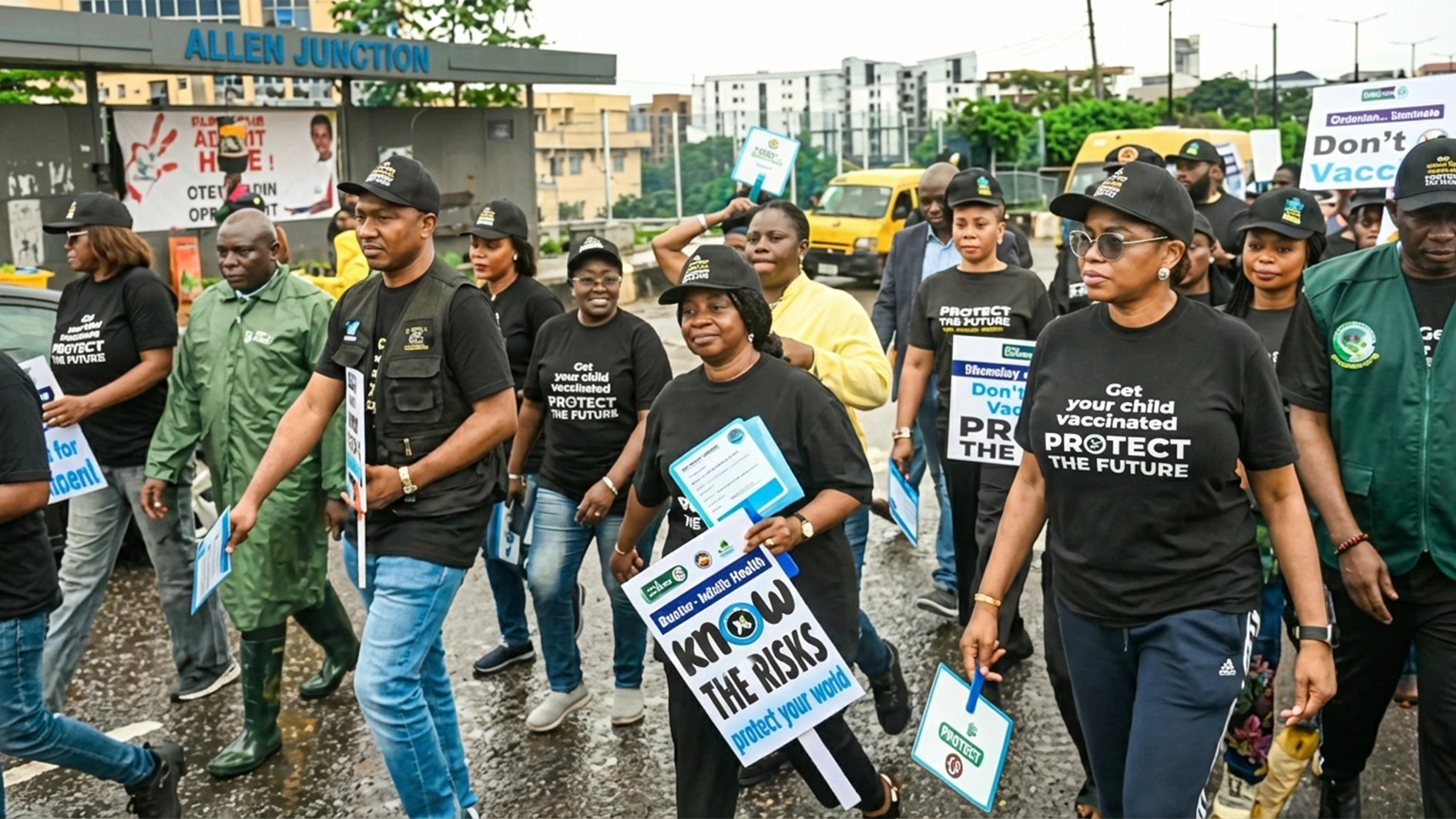
MEASLES-RUBELLA is a highly contagious viral disease that continues to pose serious public health risks, especially to children and pregnant women. While both illnesses are vaccine-preventable, gaps in immunisation coverage can lead to outbreaks, severe complications, and even death. Vaccination not only protects individuals from uncomfortable symptoms and life-threatening outcomes but also helps build community-wide immunity, reducing the spread of these diseases and safeguarding vulnerable populations. Educating every resident on the safety, effectiveness, and life-saving value of the measles–rubella vaccine is a crucial step toward ensuring healthier families and a stronger, disease-resilient community, GBENGA SALAU reports.
• Essential To Protect Children’s Health, Stop Deadly Outbreaks – Stakeholders
DESPITE global progress in reducing measles and rubella cases through vaccination, these diseases remain a significant threat where awareness and vaccine uptake are low. Worthy to mention is that many public health specialists have stated that measles-rubella can lead to serious complications such as pneumonia and brain inflammation, while rubella infection during pregnancy carries a high risk of birth defects or miscarriage.
Fortunately, science has intervened as safe, effective, and affordable vaccines exist that can protect individuals and help communities achieve the high levels of immunity needed to prevent outbreaks. As part of efforts to halt the negative impact of measles-rubella, the government at federal and state have been taking concrete steps including engaging in vaccination campaigns and introducing measles-rubella vaccines into the routine immunization programme.
Sometimes in October 2025, in a bold and ambitious move, Nigeria through Federal Ministry of Health supported by partners launched the country’s largest-ever integrated vaccination campaign, aiming to reach about 109 million children aged 9 months to 14 years with vaccines against measles-rubella (MR), human papillomavirus which protects against cervical cancer (HPV), polio, and other routine immunisations.
The campaign is being implemented in two phases. While the Phase one which covers 20 high-risk northern states and Oyo State in the southwest has been implemented last year successfully with no negative impact, the second phase which started in January 2026, hopes to expand campaign to the remaining southern states.

At present, there is an ongoing immunisation campaign in Lagos as part of phase two of the larger campaign drive where the state government is not only educating residents about the importance of receiving the Measles-Rubella vaccines but also children ages nine months and 14 years are given Measles-Rubella vaccines. The integrated campaign which aligns with national and global immunization goals is designed to protect children and adolescents from vaccine-preventable diseases.
The initiative, running from January 27 to February 5, aims to reach more than 10.5 million children aged nine months to 14 years across the nooks and cranny of Lagos including riverine and hard-to-reach communities. The campaign bears the imprint of months of planning and collaboration among government agencies, health workers, community champions and humanitarian partners. At its heart lies a clear goal to eliminate measles-rubella as widespread threats to children’s health in Lagos State, diseases that remain highly contagious and, if left unchecked, can lead to severe illness and long-term complications.
Underpinning the campaign is a robust network of partners. The Lagos State Primary Health Care Board has coordinated training for thousands of health workers and volunteers, while organisations like the Nigerian Red Cross Society have deployed over 5,300 trained community volunteers to conduct house-to-house sensitisation and engage families throughout the state. These volunteers, equipped with practical communication skills, are working daily to address questions, build trust and encourage participation in vaccination activities.
Speaking during the introduction of the Measles–Rubella (MR) vaccine into the State’s Routine Immunization Programme, First Lady of Lagos State, Dr. Claudiana Ibijoke Sanwo-Olu reaffirmed the state government commitment to safeguarding children from vaccine-preventable diseases and improving child survival outcomes across Lagos State.
Aside saying the efforts align with the vision and priorities of the Babajide Olusola Sanwo-Olu administration under the T.H.E.M.E.S+ Agenda, she maintained that the introduction of the MR vaccine is a strategic and timely intervention aimed at eliminating measles and rubella while preventing lifelong disabilities among children.
“Immunisation is a collective social responsibility. Measles and rubella are dangerous but preventable diseases — and the vaccine, which is free and safe, must reach every eligible child in Lagos State. Together, let us say YES to vaccination, YES to a healthier Lagos, and YES to the future of our children. Parents must ensure that no child is left unprotected. The vaccines are free, safe, and available across all government health facilities,” Mrs Sanwo-Olu stated.
Also speaking at the flag-off ceremony, the Special Adviser to the Governor on Health, Dr. Kemi Ogunyemi noted that blending the Measles–Rubella vaccine into routine immunization is a critical step towards securing the future of our children.
“No child in Lagos should suffer or die from diseases that are preventable. This initiative underscores our administration’s unwavering commitment to child health, family well being, and the strengthening of primary health care as the bedrock of a healthy society.” Mrs. Ogunyemi stated.
Speaking on the significance and scope of the initiative, the Permanent Secretary, Lagos State Primary Health Care Board, Dr. Ibrahim Akinwunmi Mustafa, mni, explained that the introduction of the MR vaccine marks a shift from reactive outbreak response to sustained disease prevention.
He disclosed that over 10.4 million children aged nine months to 14 years will be reached during the initial mass vaccination phase, after which the vaccine will be fully integrated into routine immunization services at nine months (MR1) and 15 months (MR2).
He urged parents and caregivers to cooperate fully with health workers and ensure that all eligible children are vaccinated, stressing that the initiative aligns with the T.H.E.M.E.S+ Agenda of the Sanwo-Olu administration and the broader goal of building a healthier, safer, and more resilient Lagos State.
Mustafa was optimistic that as the phase one of the campaign recorded huge successes in the states it was implemented, the campaign will be implemented in Lagos and other states in the phase two without any issues as all the stakeholders have fully worked to make it a success.
He added that Routine Immunization is a proven intervention for preventing vaccine preventable diseases like polio, tuberculosis, whooping cough, diptheria, cervical cancer, and many more.
“This integrated immunization campaign is a critical public health intervention aimed at preventing measles, rubella, and other vaccine-preventable diseases. Lagos State is determined to ensure that every eligible child and adolescent is reached, irrespective of location or socioeconomic status. The vaccines provided are safe, effective, and completely free.”
The Permanent Secretary emphasized that sustained immunization efforts contribute significantly to reducing child morbidity and mortality, improving school attendance, and promoting long-term economic and social development.
“Immunization is one of the most cost-effective public health investments. We urge parents, guardians, community leaders, religious leaders and school authorities to support this campaign by ensuring that eligible children and adolescents receive their vaccines,” he added.
“The campaign is being implemented with support from key development partners, including the Federal Ministry of Health, National Primary Health Care Development Agency (NPHCDA), World Health Organization (WHO), United Nations Children’s Fund (UNICEF), and other immunization partners. These collaborations strengthen vaccine delivery, cold chain management, health worker training, and community engagement across the state.
“Vaccination services will be provided at primary health care facilities, schools, religious houses, temporary vaccination posts to ensure hard-to-reach and under-served populations are covered. All vaccinations will be administered by trained health personnel in line with national and international safety standards. Residents are encouraged to visit the nearest primary health care centre or designated vaccination post within their communities during the campaign period. Lagos State remains committed to building a healthier, safer, and more resilient population through effective immunization.”
Speaking on the importance of receiving vaccines to check the negative impact of Measles-Rubella recently, the Immunisation Programme Coordinator, Lagos State Primary Health Care Board, Dr Adetola Akinpelu, stated that 90 per cent of persons who come in contact with anyone with Measles Rubella will likely be infected, but with vaccines the negative impact will be likely neutralized.
He also said that it is usually mild in children but can have severe consequences during pregnancy, leading to congenital rubella syndrome in newborns with lifelong disabilities such as heart disease.
According to him, each year, an estimate of 10,000 children are born with congenital rubella syndrome in Nigeria representing one third of global incidents.
Speaking on the impact of vaccines, he said that over the last 50 years, safe vaccine use worldwide has averted about 94 million deaths, while measles rubella immunisation has the potential to avert 2.8 million deaths in Nigeria and contribute to global shift in immunisation coverage.
“Nigeria contributes significantly to the burden of measles and rubella globally as Nigeria is second to DR Congo. Many under 14 in Nigeria has not received the Rubella Measles vaccine.”
He noted that one of the major threats to receiving vaccines is misinformation despite the huge advantages it offers, imploring the media to educate residents about the importance of vaccines.
On her part, Director, Health Education and Promotion Services, Lagos State Primary Healthcare Board, Adesola Grace-Honfor, tasked the media about letting the people know the importance of measles rubella vaccine for ages nine months and 14 and that the state government has the interest of the citizens because when the children is healthy that the parents can be healthy.
“We have formally engaged traditional leaders and Vaccination Ambassadors across the state to drive awareness and counter misinformation about the measles–rubella vaccine. Their support is crucial to building confidence and ensuring children’s protection.”

