 Follow Us on Google News
 Follow Us on Google Discover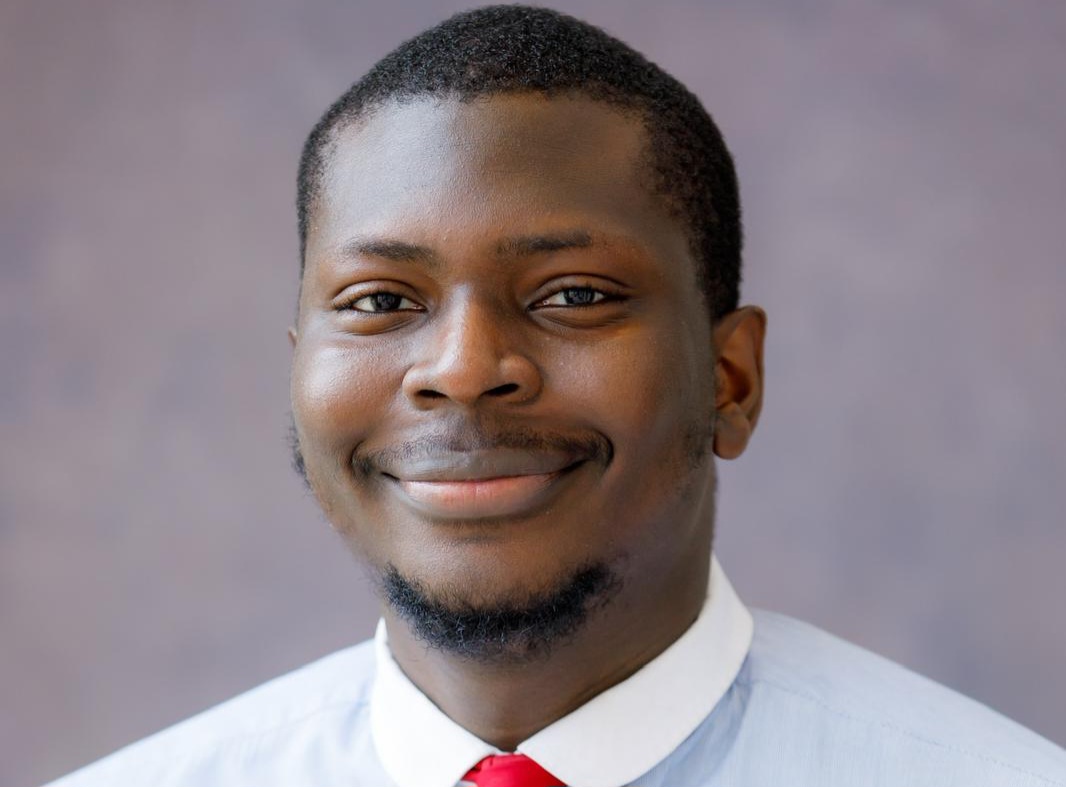
 In a remarkable advancement in human-computer interaction, researchers have been pushing the boundaries of technology to create more inclusive solutions. One of the most significant breakthroughs in this field comes from Oladipupo Adeoluwa, a Nigerian researcher at the University of Alabama, who is actively working in a team pioneering the use of radio frequency (RF) sensors for Sign Language (SL) recognition.
Prior to embarking on his doctoral pursuit, Adeoluwa received his Bachelor’s degree in Electrical Engineering from Covenant University in July 2018, with first class honors. He also worked as an embedded systems engineer at Softcom Nigeria from 2019-2021.
[ad]
Adeoluwa’s journey into the world of sign language recognition was driven by a passion for bridging communication gaps through technology. His work has focused on developing non-invasive, user-friendly systems that can accurately recognize SL signs without the need for video or wearable devices—a significant improvement over previous methods.
The team’s research, which utilized millimeter wave radar combined with deep neural networks, achieved impressive accuracies in recognizing SL signs captured with RF sensors. This innovation not only offers practical applications, such as in smart homes and personal assistants for deaf individuals, but also deepens our understanding of the linguistic properties of SL.
By analyzing the micro-Doppler signatures of SL signs, Adeoluwa’s work provides new insights into the kinematics of motion, further enhancing recognition accuracy. His commitment to making technology accessible is evident in both the technical and practical aspects of this research.
As Adeoluwa continues to explore new frontiers in SL recognition, his ultimate goal remains clear: to develop technologies that transcend barriers and create a more inclusive world for all through signal processing and computer vision.
[ad]

