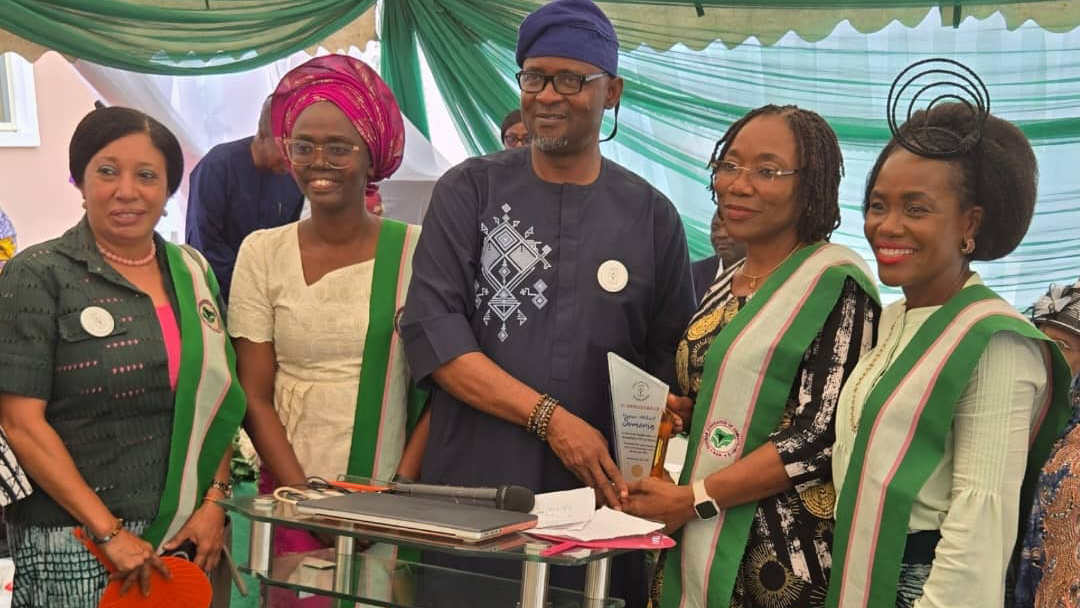
It was a torrent of encomiums for Professor Lai Oso, the immediate past Dean of the School of Communication, Lagos State University at a lecture to celebrate his 60th birthday held in Lagos last week. On hand to celebrate with him were family members, friends, colleagues and church members, who came from different parts of the country. Instructively, many of his professional colleagues and friends that included his mentors and students scattered in the different Mass Communication Departments across the country were in attendance. For many, who took turns to talk, specifically commended the celebrant, as a man in his own class because of his humility and love towards others and willingness to see others achieve their goals.
To kick-start the eulogies the Dean of LASU School of Communication, Dr. Rotimi Olatunji, who gave insight how he met Oso and the robust working relationship they had enjoyed since then. Olatunji described him as a teacher, coach, mentor, counsellor, bridge-builder and spiritual leader. He said he had benefited enormously from Oso’s mentorship. He also narrated how, instead of renewing his Deanship, Oso decided to make him take up the leadership of the school. Olatunji listed a number of Departments of Mass Communication that contributed to make the programme a success.
Chairman of the occasion, Justice Mobolaji Ojo, commended the organisers of the celebration, especially since many young Nigerians either do not have good role models or do not know them. He also spoke warmly about Oso. He, however, challenged media and communication scholars to help rebuild the country through promoting better values among young people.
On his part, Professor Ralph Akinfeleye, said he was happy to be associated with the programme, and described the celebrant as a distinguished scholar and gentleman who has dedicated his life to academic excellence. He said the only regret he had was that Oso was lured away from the Department of Mass Communication, University of Lagos. He got many stunted when Akinfeleye said that Professor Oso might end his academic career at the University of Lagos after traversing many other universities.
For Professor Oludayo Soola of Department of Communication and Language Arts, University of Ibadan, said Professor Oso stands tall among his colleagues. He said the love they had for him was why a team came all the way from Ibadan like many other mass communication departments to celebrate with him.
While delivering the lecture to mark Oso’s 60th birthday, Professor Umaru Pate said the media had been contributing to the process of keeping Nigeria united. He, howver, said that effort was being heavily influenced negatively by internal and external forces whose parochial interests contravene the spirit of national integration. He further noted that such negative influences had often subverted the perceptions of the public that lead to attitudes and tendencies inimical to the ideals of national integration among the diverse people of Nigeria.
As a result of this, Umaru appealed to the media to always understand the complexities of the nation, develop common national platforms in reporting and information dissemination and be guided by the national spirit in all cases. According to him, the performance of the media on issues of integration have been dictated and influenced by the interest of the elites who may not always have the interest of the country at heart.
The university teacher noted that the case was further compounded by the ownership pattern, commercialisation and competing interests in the media industry, adding that the personal interests and political sympathy of media owners are mainstreamed into professional content to demonise, advocate or manipulate public opinion.
“Thus, to be able to explain the role of the media in the Nigerian integration process within its multicultural setting, it is important to locate the position of the media in the whole political and economic milieu of the nation. Basically, the media have been part of the economic system with close links to the political establishment.
“One should not be over optimistic that the performance of the Nigerian media in handling issues of national integration can be radically different from the deficiencies and failures of the Nigerian ruling elites particularly in the effective management of the diversities, tensions and contradictions that define the character of integration and unity in the nation.”
Umaru accused the media of selective reporting and promotion of prejudicial stereotypes about groups and individuals in their content because groups and sections of the country are commonly labelled and selectively reported based on stereotypes, incomplete facts or ignorance. For him, this is exacerbated by the poor knowledge of the complexities of the land and people in the different parts of the country.
“The understanding of the Nigerian nation and its citizens in terms of geography, history, sociological and anthropological set ups and other basic information that foster the spirit of empathy are grossly deficient. Unfortunately, due to weak research capacities, even our media professionals have manifested such deficits of knowledge, often manifesting shallow and episodic attitudes in news coverage and programme production.”
In dissecting the contribution of the media, Pate took a historical analysis of the contributions of each of the three major segments of the media – the print, broadcast and social media. He gave an observation of the perceived roles each of these segments of the media had played.
Moving forward, the university don recommended among other things that for the media to be more relevant, respected and trusted, its personnel must demonstrate professional competence in dealing with issues of diversity and multiculturalism. And to do this, he said the media environment must be diverse by reflecting in their structure and content the various social, economic and cultural realities of the society in which they operate in a more or less proportional way.
He, therefore, called for the institution of teaching of diversity and multicultural reporting in the curricula of journalism and mass communication training departments all over the country to adequately prepare upcoming journalists to understand and appreciate the complexities of Nigeria’s federal structure and history.
He also argued that licensing more national broadcast networks with plural ownerships and diverse outlooks would help a great deal in helping the media to promote national integration because additional networks can enhance competition and probably improve national broadcasting strength, diversity, accessibility, courage and relevance across the nation.
After his paper, Professor Bayo Oloyede and Dr. Yinka Oyewo moderated Pate’s presentation. Oloyede summarised the presentation, but noted that Nigeria is not the only country with diversities and multicultural tendencies, and that these other countries have achieved better integration while Nigeria still lagged behind. Oloyode stated that beyond the media, every segment and individual must play a role for the country to achieve better integration. He also stressed that the country must constantly review some of the measures aimed at driving its national integration.
Oyewo also faulted the position that political parties as pillars for national integration and argued that happenings during the last general election didn’t give credence to such claim, just as it had been the antecedents of political parties from after independence.
In a brief remark, Oso said he was happy that his colleagues staged the event for him and that he didn’t know about it until about a week ago and thanked them for its success. What the many eulogies meant, he said, was that he had to do more and that his contributions were appreciated.
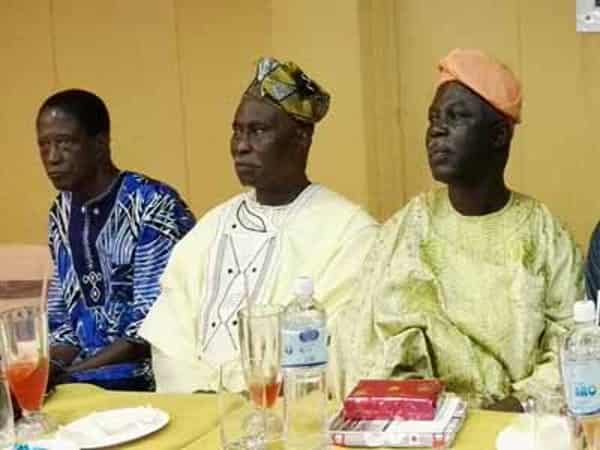
Some of those present at the event are Professor Idowu Sobowale, Sir and Lady E. Akinyitan, Professor Dayo Alao, Pastor Adeoye Adeyanju, representatives of the Departments of Mass communication, University of Lagos, Crescent University, BOWEN, Redeemers University, OOU, Caleb University and Moshood Abiola Polytechnic.