 Follow Us on Google News


 Follow Us on Google Discover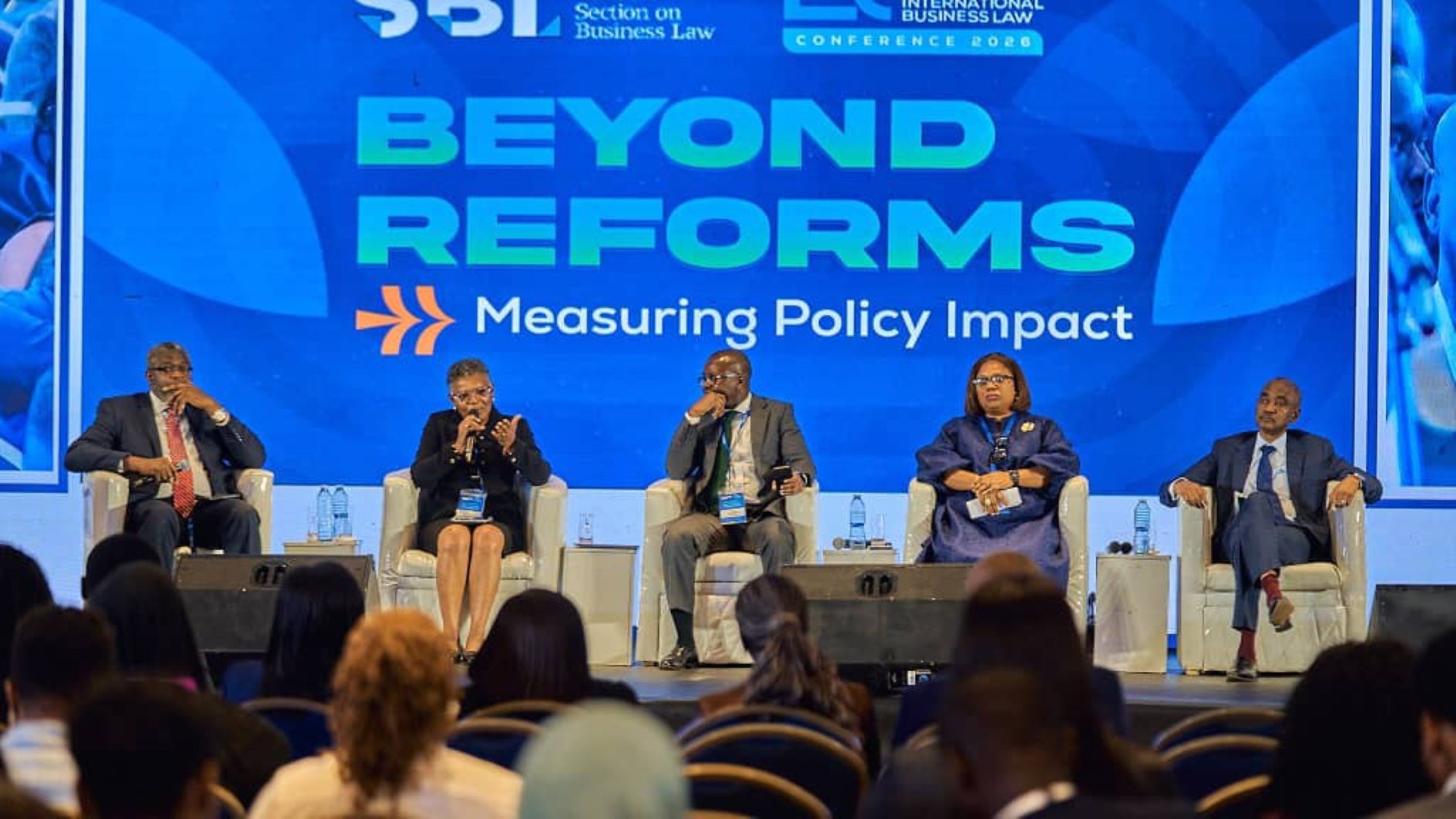
The Nigerian Bar Association Section on Business Law (NBA-SBL) and key stakeholders in the business and legal sectors have urged policymakers to move beyond the announcement of reforms and focus on measuring their real impact on citizens, businesses and the economy.
The call was made at the opening ceremony of the 20th Annual International Business Law Conference of the NBA-SBL with the theme, “Beyond Reforms: Measuring Policy Impact.”
The event brought together legal practitioners, government officials, business leaders and economic experts to assess the effectiveness of ongoing economic and regulatory reforms in Nigeria.
In her welcome address, Chair of the NBA-SBL, Mrs Ozofu ‘Latunde Ogiemudia, said the conference had, for two decades, served as a vital platform for engagement between the legal and business communities.
According to her, while Nigeria has witnessed significant reforms in recent years, including tax and economic policy changes, the true measure of success lies in the tangible benefits delivered to citizens.
“We have seen reforms in different sectors, including taxation. However, the true test of reform is not its announcement but its impact on citizens. That is what we intend to interrogate through this session,” she said.
In his remarks, the NBA President, Mazi Afam Osigwe (SAN), stressed the need to create a more attractive environment for investment and economic growth.
“The important thing is how to make Nigeria a better place for investment. Whatever we are going to do here should contribute to improving Nigeria’s economy and making the country better for all of us,” he said.
The Attorney-General of the Federation (AGF) and Minister of Justice, Prince Lateef Fagbemi (SAN), represented by SSA to the President on Arbitration and Drafting (Office of the Minister of Justice), Hussein Taiye Oloyode, in a keynote address, outlined the Federal Government’s reform agenda and its implications for economic development.
Fagbemi described the conference as an important platform for discussions on business law, economic policy, institutional reforms and commercial development in Nigeria and across Africa.
He noted that the Federal Government had introduced a broad range of policy measures aimed at laying the foundation for sustainable economic growth, including fiscal and tax reforms, foreign exchange market reforms, ease-of-doing-business initiatives, energy sector reforms and programmes designed to attract investment.
According to him, the reforms have improved transparency, strengthened investor confidence and encouraged a more market-driven economy.
“Investors, both local and foreign, have gained confidence and continue to support the process. While the transition has not been without short-term difficulties, business growth has been impressive, and there is now greater transparency and direction,” he stated.
He added that international financial institutions had taken note of Nigeria’s reform efforts and expressed confidence that the administration’s policies would continue to strengthen governance, national security and economic resilience.
Minister of Industry, Trade and Investment, Dr Jumoke Oduwole, welcomed the conference’s focus on measuring policy impact, noting that recent economic reforms have begun to yield observable results across key indicators.

She said: “I am delighted that the legal community continues to support the administration and ask itself questions, and continues to demand more and what has been achieved.”
Also speaking, the Chief Justice of Nigeria (CJN), represented by Justice M.A. Danjuma of the Court of Appeal, Abuja Division, said the law must remain a tool for justice, accountability and national development.
He described the conference as timely, noting that it offers stakeholders an opportunity to critically evaluate government policies against global best practices.
“The law should ensure that justice is done. This conference offers a valuable opportunity to analyse and compare government policies with what obtains in other jurisdictions. The Federal Government has put in place a number of policies aimed at improving the economy,” he said.
He further noted that while Nigeria has enacted laws and regulations to support commerce and investment, the real test lies in whether those frameworks are producing meaningful outcomes. He also emphasised the need for stronger collaboration to improve the efficiency of commercial dispute resolution and enhance investor confidence.
Others who spoke agreed that while reforms remain necessary for economic transformation, their success must ultimately be measured by tangible outcomes, including improved living standards, stronger institutions, increased investment and sustainable economic growth.

