 Follow Us on Google News


 Follow Us on Google Discover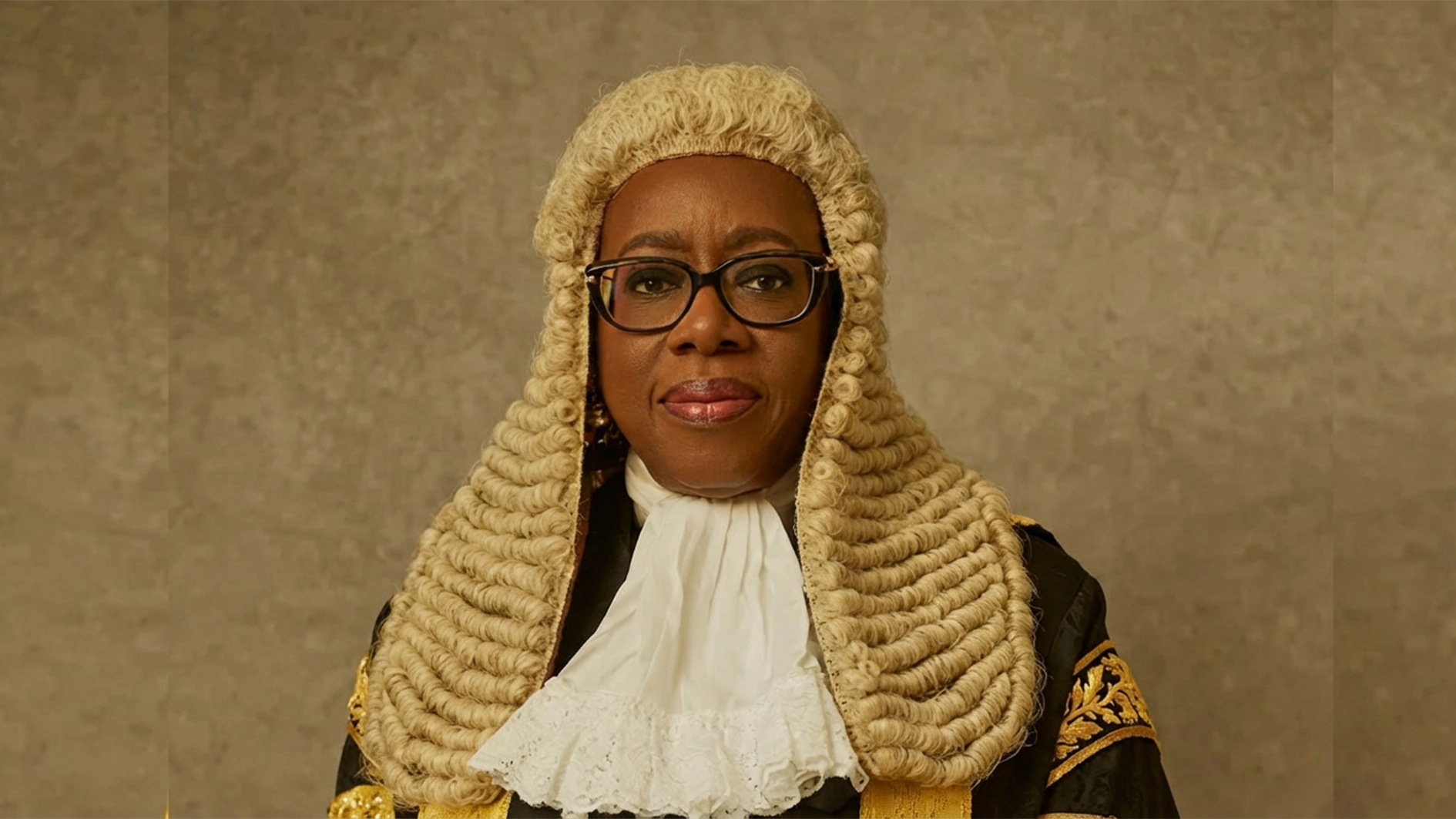
As Nigeria continues its struggle against corruption, attention is increasingly shifting from dramatic arrests and investigations to the effectiveness of the judicial process itself. At the centre of this debate is the Corruption and Financial Crimes Cases Trial Monitoring Committee (COTRIMCO), a body established by the National Judicial Council to track the progress of corruption and financial crimes cases across the country’s courts. AMEH OCHOJILA reports that the committee represents a meaningful step towards judicial reform and effective anti-corruption enforcement, but currently appears as another bureaucracy in a system still struggling with institutional inefficiencies.
What began as a quiet reform under the administration of the late Chief Justice, Ibrahim Tanko Muhammad, was touted as a potentially game-changing tool in Nigeria’s long and troubled war against corruption. But growing questions now linger on whether it has lived up to that promise or made any meaningful impact on the slow and controversial handling of high-profile corruption cases.
The Corruption and Financial Crimes Cases Trial Monitoring Committee (COTRIMCO), domiciled in the National Judicial Council (NJC), and chaired by a retired Justice of the Supreme Court, Suleiman Galadima, may sound like just another bureaucratic layer, but the committee carries a far more consequential mandate: to closely track, scrutinise and report on the progress of corruption and financial crimes trials across courts nationwide. This is an assignment that strikes at the heart of public frustration over delayed justice and high-profile impunity.
Yet, beneath that unassuming label lies a far more consequential experiment. COTRIMCO sits at the heart of one of Nigeria’s most enduring governance dilemmas: how to convert anti-corruption rhetoric into firm judicial outcomes without undermining judicial independence or reducing the courts to instruments of political convenience.
Beneath its modest label, COTRIMCO represents a far-reaching institutional experiment. One of its burdens is how to translate anti-corruption promises into concrete judicial outcomes without turning courts into extensions of the executive power or making them look like a refuge for the rich and powerful.
Justice Galadima has consistently framed the committee’s role as limited but necessary. “Our mandate is not to interfere with trials but to ensure that corruption and financial crimes cases are handled diligently and concluded within a reasonable time, so that convictions and forfeiture orders can be effectively enforced,” he said.

COTRIMCO’s relevance is both practical and symbolic. Practically, it aims to unclog court dockets and reduce endemic delays. Symbolically, it amounts to an institutional admission that delay rather than absence of laws or agencies has become the soft underbelly of Nigeria’s anti-corruption effort. Whether the committee strengthens justice or merely manages perceptions depends on how convincingly it navigates this balance, but so far, it does appear that its impact is yet to fully manifest.
Senior Advocate of Nigeria, Ebute Moses, is blunt in his assessment. In his view, the committee neither enhances judicial efficiency nor interferes with judicial discretion, largely because it is unnecessary to begin with. He argued that there was no clear legal or institutional basis for its creation and that, even if such a basis once existed, it has been overtaken by events.
“Why do we have the Court of Appeal, the Supreme Court and the National Judicial Council?” he queried. He wondered why those higher courts would need an overseeing committee to live up to expectations in terms of determining high-profile corruption cases expeditiously.
Still, Nigeria did not stumble into COTRIMCO by accident. For decades, corruption cases have crawled through the courts. Charges are filed amid wide publicity, only for those files to languish silently in the courtrooms. Sometimes, judges are transferred or retire mid-trial, causing proceedings to start afresh. In some cases, matters are fraught with multiple adjournments because of flimsy excuses by lawyers, which judges often indulge embarrassingly. There are circumstances where evidence is poorly presented, causing such cases to collapse on technical grounds unrelated to guilt or innocence.
This dysfunction has produced two corrosive outcomes. First, public confidence in the justice system has steadily eroded, replaced by a widespread belief that power insulates offenders from accountability. Second, it has blunted the deterrent value of agencies such as the Economic and Financial Crimes Commission (EFCC) and the Independent Corrupt Practices and Other Related Offences Commission (ICPC). Prosecution, after all, matters only if it ends in timely and credible adjudication.
COTRIMCO was designed to confront these issues. Its brief is deceptively simple – track cases, identify systemic obstacles from prosecutorial lapses to procedural abuse and recommend corrective measures. Successive Chief Justices have framed it as an internal accountability mechanism, allowing the judiciary to reform itself without external intrusion.
Critics often dismiss such monitoring bodies as cosmetic. Yet some sector observers argue that COTRIMCO has gone beyond symbolism. It has issued reports, engaged anti-graft agencies and encouraged the designation of special corruption dockets in several courts. These efforts, they said, coincided with periods of quicker case movement and improved conviction figures, particularly between 2024 and 2025 judicial window.
Convictions, however, matter not as trophies but as proof that investigations can survive trial. When cases are monitored, incentives subtly shift; adjournments attract scrutiny, and poor preparation carries consequences. Even marginal changes can move the system from inertia towards resolution.
But numbers alone do not tell the full story. Perhaps COTRIMCO’s most enduring contribution lies in its diagnostic work. Through engagements with judges, prosecutors and court officials, the committee has identified recurring sources of delay: weakly drafted charges, duplicity of counts, late amendments, slow transmission of records to appellate courts and stalled evidence presentation.
These are technical, unglamorous problems, and precisely for that reason, often ignored. They demand training, disciplined case management, digital tracking and prosecutorial competence, not dramatic arrests. In Nigeria’s experience, such quiet reforms frequently matter more than headline-grabbing enforcements.
However, suspicion is unavoidable. Anybody who monitors corruption trials operates at the intersection of law and politics. From inception, sceptics warned that “monitoring” could slide into pressure, subtle or overt, on judges, or create the impression that the judiciary is aligning with executive priorities.
According to Abuja-based lawyer, Monday Ikpe, the concern is not fanciful. Speed, if poorly managed, can blur into interference. COTRIMCO’s legitimacy, therefore, rests on restraint and transparency. According to him, monitoring must focus on process, not outcomes. “The moment it appears to nudge judges toward conviction rather than due process, it risks undermining the credibility it seeks to restore,” he pointed out.
He noted that even with goodwill, constraints abound. His words: “Judicial transfers disrupt continuity. Dockets are overloaded. Defence counsel deploy delay as a strategy. Prosecutors often lack expertise in complex financial crimes involving forensic accounting or cross-border transactions. Many registries remain stubbornly paper-based.
“Against this backdrop, COTRIMCO’s recommendations frequently collide with institutional inertia. Real improvement depends on coordination with agencies like the EFCC and ICPC, which face their own capacity gaps. The committee can highlight problems; it cannot modernise the justice system alone.
“There is also a reputational dimension. A judiciary that monitors itself sends a signal of seriousness. Public trust, fragile as it is, grows when cases no longer vanish into procedural limbo. But perception cuts both ways. If monitoring appears selective, swift for some defendants, sluggish for others – cynicism deepens. Communication is therefore central, not incidental.”
Ikpe explained that COTRIMCO grapples with a classic dilemma, which is speed versus fairness. He noted that justice delayed may be justice denied, but justice rushed can be justice distorted. Convictions secured through shortcuts, he said, collapse on appeal and weaken the anti-corruption project.
He explained that its most valuable contribution may lie in procedural reform: firm case calendars, timely disclosure, digital transmission of records, specialised training for judges and prosecutors, and witness protection. These, he stated, are painstaking reforms which safeguard credibility.
Some lawyers argue that COTRIMCO is most effective as a convener. Corruption trials, they argue, falter not because of a single failing institution, but because responsibility is fragmented. By bringing together the judiciary, prosecuting agencies, the Attorney-General’s office and registries, the committee can align timelines and resolve bottlenecks early enough.
For COTRIMCO to endure, observers say it must avoid two traps: becoming a de facto appellate court in public opinion or degenerating into a toothless reporting exercise. The middle path lies in procedural oversight, clear milestones, administrative consequences for chronic default and sustained investment in court infrastructure. Ultimately, the NJC must translate recommendations into action.
Success should be measurable: shorter time-to-judgment, digital record transmission, standardised case management rules, mandatory pre-trial conferences and transparent reporting. Development expert, Victor Idajili, argued that such reforms, if clearly communicated, could reposition COTRIMCO as a catalyst for broader judicial renewal.
However, the dangers remain real: politicisation, selective focus, and rushed prosecutions that fail on appeal. “If COTRIMCO is perceived as targeting enemies while sparing allies, it will lose legitimacy. Institutional safeguards — clear criteria, public metrics and strict separation between oversight and adjudication- are essential,” Idajili said.
Omale Ajonye, a lawyer, said that the committee can improve efficiency by identifying delays and systemic bottlenecks, but only within strict limits. “If properly restrained and judiciary-led, it may support timely justice, but if poorly bounded, it risks exerting subtle pressure that compromises judicial autonomy,” he declared, adding that it would be counter-productive to have the latter.
Beyond statistics lies the ultimate test: are stolen assets being recovered, wrongdoing by politically exposed persons deterred and public trust restored? Monitoring is a means, not an end. The end is justice that punishes abuse, repairs harm and deters future misconduct.
COTRIMCO matters because it shifts attention from spectacle to substance, from arrests to outcomes, and from noise to process. Whether that quiet ambition survives Nigeria’s political and institutional realities will determine whether it becomes a mere footnote or a turning point in judicial reform.

