 Follow Us on Google News
 Follow Us on Google Discover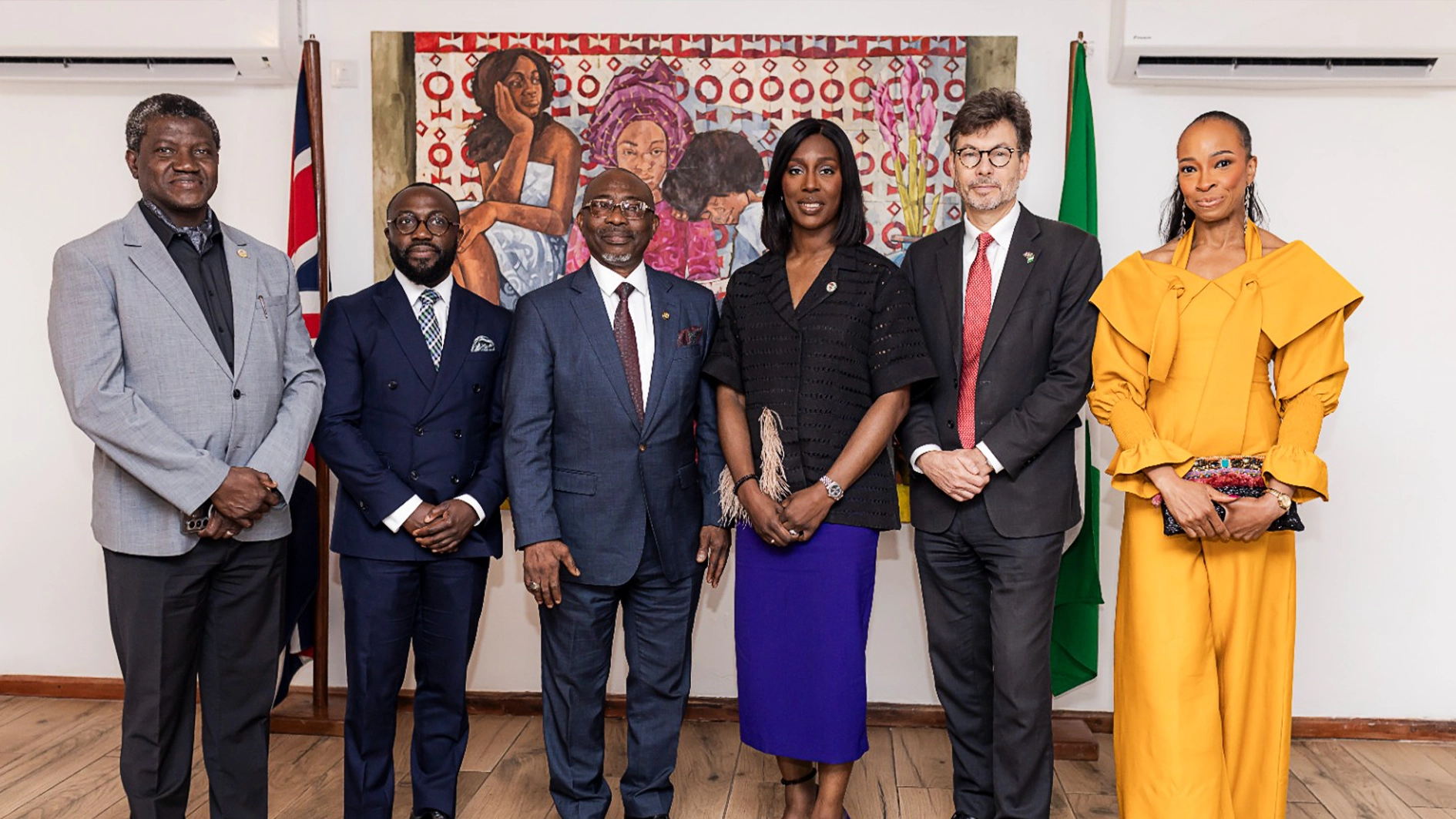
Stakeholders have called for stronger collaboration between Nigerian and UK legal professionals, policymakers and investors to unlock the vast opportunities in bilateral relations between both countries.
This was at the British Nigeria Law Forum (BNLF) summit and 25th anniversary held in Lagos with the theme, “A New Dawn in Law, Investment and Opportunity in UK-Nigeria Relations.”
According to the stakeholders, UK-Nigeria relations are no longer merely historical or sentimental, but increasingly commercial, strategic and filled with untapped potential.
A Professor of Law at Babcock University, Konyin Ajayi (SAN) urged lawyers and business leaders to prioritise collaboration over competition and focus on building enduring institutions rather than pursuing short-term gains.
According to him, trust remains the foundation of commerce, investment and prosperity.
Ajayi, who was the keynote speaker, noted that commerce moves at the cusp of trust, stressing that nations flourish, businesses invest and innovation thrives where confidence exists.

Ajayi described Africa as no longer a frontier market to be observed, but a strategic partner to be understood, urging international firms to move beyond transactional engagements and contribute meaningfully to institutional development.
He further warned that legal uncertainty remains the greatest obstacle to investment, arguing that investors can navigate taxation and regulation but are often deterred by unpredictable legal systems and weak institutional confidence.
Lagos Attorney General and Commissioner for Justice, Lawal Pedro (SAN), said collaboration between Nigerian and United Kingdom legal practitioners can deepen arbitration practice and improve the enforcement of arbitral awards in Nigeria.
Pedro also said there is a need to enhance cooperation between Nigerian and UK lawyers and arbitrators.
He noted that while arbitration remains an effective and efficient dispute resolution mechanism globally, judicial interventions in Nigeria have often slowed the enforcement of arbitral awards.
According to him, Lagos State is addressing this challenge through its designated commercial courts staffed by specialised judges.
Pedro expressed optimism that the implementation of the Arbitration and Mediation Act 2023 would significantly improve arbitration procedures and accelerate the enforcement of arbitral awards and foreign judgments in Nigeria.
The Governor of Lagos State, Babajide Sanwo-Olu, at the summit, said Lagos remains at the heart of efforts to deepen UK-Nigeria economic relations and attract global investment.
The governor, who was represented by Pedro, described the evolving UK-Nigeria partnership as a strategic shift towards long-term economic cooperation.
He noted that with a Gross Domestic Product (GDP) of $259 billion, Lagos is Africa’s second-largest city economy and accounts for over 60 per cent of Nigeria’s foreign direct investment inflows.
He added that recent UK-Nigeria trade agreements have created new opportunities in sectors including finance, technology, education, pharmaceuticals and the creative economy.
Sanwo-Olu stressed that legal certainty, regulatory transparency and effective dispute resolution remain critical to sustaining cross-border investment and economic growth.
UK arbitration expert and co-chair of the International Arbitration Group, Mohammed Khamisa, expressed optimism about Nigeria’s legal and investment landscape, citing growing alignment between Nigeria and the United Kingdom in addressing judicial and commercial challenges.
Khamisa said both countries were strengthening ties despite challenges such as high litigation costs in the UK and delays within Nigeria’s judicial system.
He praised Nigerian lawyers, describing them as hardworking, highly skilled and inspirational.
He noted that international investors remain interested in Nigeria but seek greater stability, security and confidence in dispute resolution mechanisms.
According to him, improving trust in the judiciary and arbitral institutions would boost foreign investment, adding that investors from Europe, the Middle East and Asia remain optimistic about Nigeria’s economic potential.
The Dean of the Faculty of Law, University of Lagos (UNILAG), Abiola Sanni (SAN) urged legal practitioners to take a leading role in the implementation and interpretation of Nigeria’s tax reforms.
Sanni noted that differing positions by the Nigerian Revenue Service and the Ministry of Finance on aspects of the new tax regime underscore the need for legal guidance.
He described the tax reforms as the most business-friendly in Nigeria’s history, stating they are pro-taxpayer, pro-investment and pro-business.
While acknowledging concerns over government accountability, he stressed that ensuring transparency remains a collective responsibility beyond tax administrators.
Chairman, Nigerian Bar Association Section on Legal Practice (NBA-SLP), Folashade Alli (SAN), commended BNLF for sustaining collaboration between lawyers in Nigeria and the diaspora over the past 25 years.
Alli described the milestone as a testament to excellence and consistency in fostering partnerships within the legal profession.
She noted that the forum has facilitated collaborations involving the NBA-SLP, NBA-SBL and the NBA-SPIDEL, promoting mentorship, continuous legal education, and professional development.
Earlier, chairman of BNLF, Kash Balogun in his opening remarks noted that this year’s summit was particularly significant as the BNLF marked its 25th anniversary, celebrating a quarter-century of connecting legal practitioners, professionals and institutions across the UK and Nigeria.
He stressed that the milestone was not only an opportunity to reflect on past achievements but also to chart the course for the next 25 years.
He said the BNLF aims to remain a critical bridge between both jurisdictions, creating opportunities for senior professionals and the next generation of lawyers and business leaders.
He added that this year’s summit had surpassed previous editions in terms of participation, institutional support and ambition, with stronger UK representation and broader Nigerian engagement.
Balogun further emphasised the role of legal practitioners in facilitating investment and economic growth through effective transaction structuring, risk management, dispute resolution and institutional support.
“If we do our job properly, we help create the conditions in which commerce can thrive,” he said.
He also highlighted discussions on Nigeria’s evolving tax framework, describing the consolidation of multiple tax laws as a major step towards improving clarity and certainty for international investors.
He reiterated the need for greater collaboration with Nigerian lawyers, regulators and policymakers, particularly in the enforcement of international judgments, noting that such partnerships remain central to the BNLF’s mission of fostering lasting legal and commercial relationships.
BNLF vice chair, Genevieve Nwodo Wakeley-Jones emphasised the need for a renewed approach to knowledge and skills transfer between the United Kingdom and Nigeria, describing the evolving relationship as one of equal partnership.
Wakeley-Jones said Nigeria’s growing influence requires diaspora professionals to engage with the country on the basis of mutual respect and collaboration.
She noted that this new approach is already being reflected in engagements with the NBA, adding that the BNLF remains committed to fostering connections, creating opportunities and strengthening partnerships across both jurisdictions.

