 Follow Us on Google News
 Follow Us on Google Discover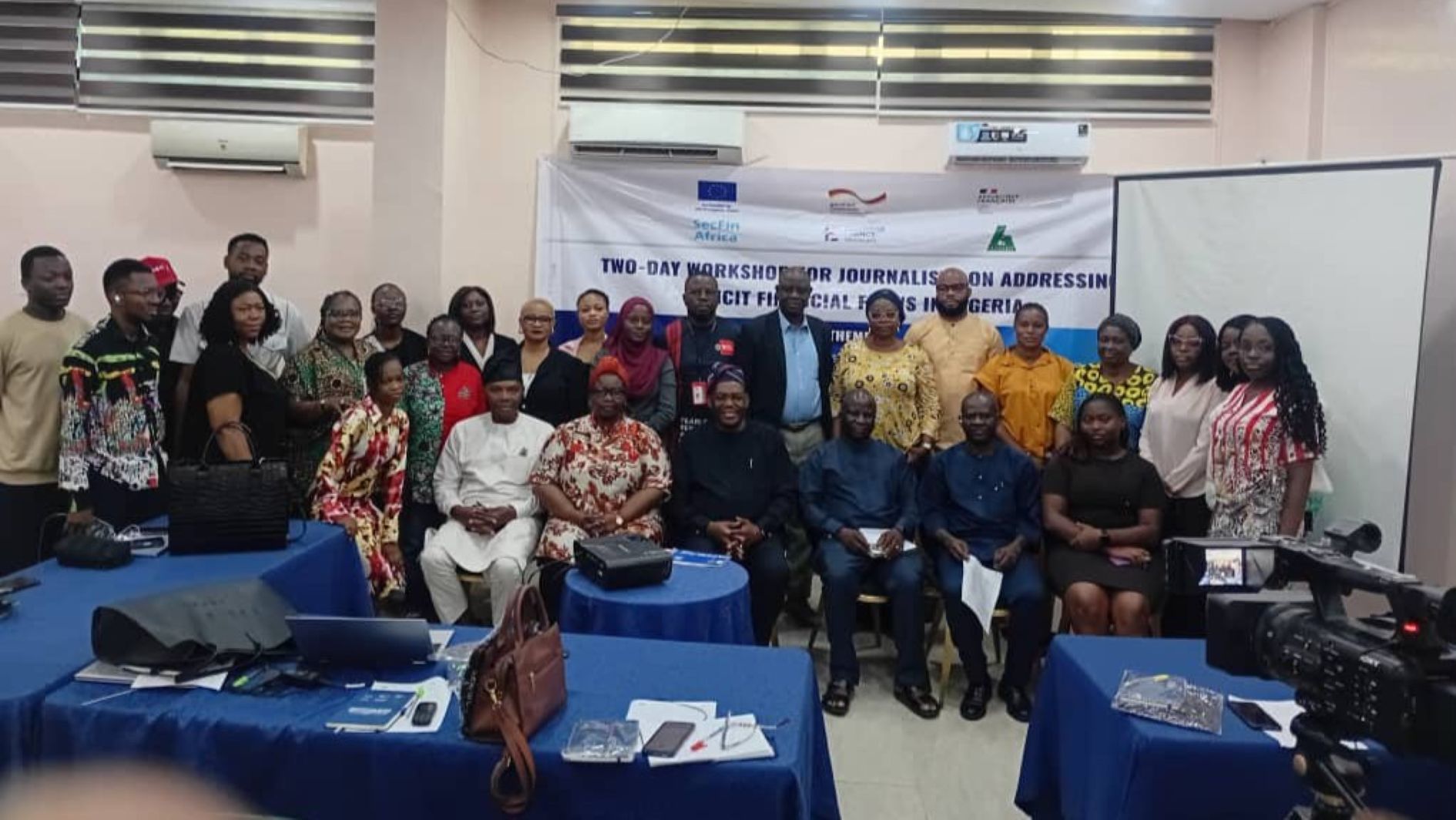
Former Director of Proceeds of Crime (Recovery and Management) at the Economic and Financial Crimes Commission (EFCC), Aliyu Mohammed Yusuf, has lamented that despite Nigeria’s extensive legal and institutional framework to combat Illicit Financial Flows (IFFs), weak enforcement, inadequate institutional capacity and poor coordination among government agencies have continued to undermine implementation.
Yusuf said the country has enacted several laws targeting money laundering, corruption, tax evasion, trade fraud and corporate secrecy, but persistent implementation challenges have limited their impact.
He made this lamentation at a two-day training for journalists on addressing IFFs in the country at the weekend, organised by Africa Network for Environment and Economic Justice (ANEEJ) and supported by the European Union through the SecFin Africa project.
The training had the theme: “Strengthening CSOs and Media Capacity to Contribute to the Fight Against IFFs in Nigeria.”
Yusuf, who presented a paper titled “Assessment of Nigeria’s Legal and Institutional Framework for Addressing Illicit Financial Flows” at the workshop, identified weak institutional capacity as a major obstacle.
According to him, many enforcement agencies lack sufficient skilled investigators, forensic experts and modern technological tools required to analyse complex financial crimes.

He also noted weak regulation in sectors such as artisanal mining, where inadequate oversight and lenient penalties continue to create opportunities for illicit financial activities.
He further observed that poor coordination among agencies, including the EFCC, Independent Corrupt Practices and Other Related Offences Commission (ICPC), Nigerian Financial Intelligence Unit (NFIU), Nigeria Customs Service, Police and tax authorities, has resulted in information-sharing gaps, jurisdictional disputes and duplication of responsibilities.
Yusuf also pointed to weaknesses in Nigeria’s beneficial ownership transparency regime, noting that although the Corporate Affairs Commission established a public register for Persons with Significant Control under the Companies and Allied Matters Act (CAMA) 2020, its effectiveness remains limited due to weak verification systems, poor compliance by companies and inadequate data sharing across government institutions.
He said: “Criminals continue to exploit shell companies, nominal directors and complex ownership structures to conceal illicit assets, while concerns over data privacy have further complicated efforts to improve transparency.”
His presentation also highlighted the growing challenge posed by cryptocurrency transactions. Although the Investment and Securities Act 2025 gives the Securities and Exchange Commission regulatory authority over digital assets, Yusuf said peer-to-peer crypto trading and regulatory gaps continue to expose the financial system to money laundering and illicit financial flows.
At the international level, he noted that differences in legal systems, banking secrecy laws, limited cooperation among countries and slow mutual legal assistance processes have made asset recovery and cross-border investigations more difficult.
Yusuf added that delays in Nigeria’s judicial system, characterised by prolonged court proceedings, repeated adjournments and lengthy appeal processes, have weakened the deterrent effect of anti-corruption and anti-money laundering laws.
To improve implementation, he recommended stronger collaboration among enforcement agencies, increased investment in financial intelligence technology and forensic accounting, enhanced judicial capacity, greater independence and funding for anti-corruption institutions, improved customs oversight and deeper international cooperation in asset tracing and recovery.
He also called on the media and CSOs to intensify investigative reporting, monitor the use of recovered assets and hold public institutions accountable in the fight against illicit financial flows.
The Deputy Executive Director, ANEEJ, Leo Atakpu described IFFs as one of the greatest threats to Nigeria’s development, urging journalists to strengthen investigative reporting to expose financial crimes and promote accountability.
Speaking at the training, Atakpu said corruption, money laundering, tax evasion, procurement fraud, illicit invoicing and profit shifting continue to drain resources needed for education, healthcare, infrastructure and social protection.
He stressed that while Nigeria has established legal and institutional frameworks to combat financial crimes, effective implementation depends on active citizen participation and a vibrant media.
According to him, investigative journalism has played a vital role in uncovering corruption, tracing illicit funds, recovering stolen assets and driving policy reforms.
Atakpu urged participants to acquire skills in investigating money laundering, analysing financial data and understanding the roles of anti-corruption agencies, insisting that the fight against illicit financial flows requires collective action by government, civil society, the media and citizens.
Also, the representative of SecFin Africa, Prof Abdullahi Shehu, said the media plays a critical role in every democratic society by raising awareness, educating and informing the public.
He said the workshop was designed to equip journalists with a deeper understanding of illicit financial flows and practical strategies for promoting accountability through their respective media organisations.
Similarly, NFIU underscored the critical role of the media in combating IFFs, describing responsible journalism as indispensable to strengthening accountability, protecting national security and advancing sustainable development.
Chief Executive Officer of the NFIU, Hafsat Abubakar Bakari, who was represented by Aisha Bantam, said every illicit dollar that leaves Africa unlawfully deprives citizens of essential infrastructure, healthcare, education and economic opportunities, stressing that tackling IFFs is not only a financial crime issue but also a national development priority.
She noted that financial crimes have become increasingly sophisticated, transnational and technology-driven, making informed, ethical and investigative journalism essential in exposing corruption, money laundering, tax evasion, organised crime and other illicit financial activities.
According to her, the NFIU has remained at the forefront of Nigeria’s anti-money laundering, counter-terrorism financing and counter-proliferation financing efforts by providing financial intelligence that supports investigations into corruption, terrorism financing, kidnapping for ransom, cyber-enabled fraud, oil theft and related crimes.
Bakari added that the Unit had strengthened collaboration with domestic and international partners through the Joint Financial Intelligence Collaboration (JFIC), while promoting beneficial ownership transparency, intelligence sharing and targeted financial sanctions.
She urged journalists to deepen accurate and responsible reporting on financial integrity issues as Nigeria prepares for the 2027 Financial Action Task Force (FATF) Mutual Evaluation, saying informed media coverage would strengthen public understanding of corruption, asset recovery, financial transparency and the far-reaching impact of illicit financial flows on governance and economic stability.

