 Follow Us on Google News


 Follow Us on Google Discover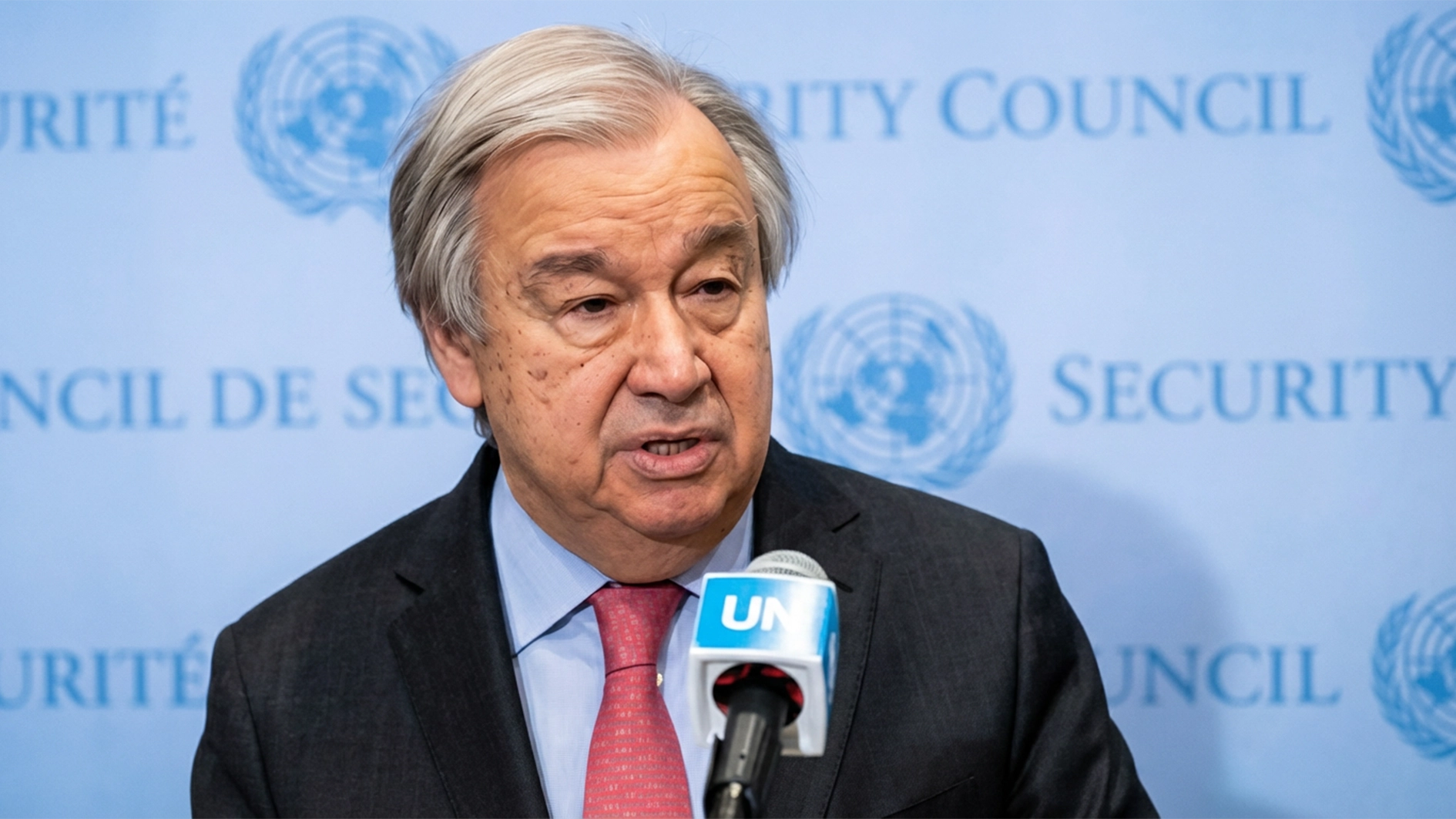
For AI to benefit all people, technology and international cooperation must move forward together. This was the message of Doreen Bogdan-Martin, Secretary-General, The International Telecommunication Union (ITU), yesterday, at the opening of Global Dialogue on AI Governance.
The dialogue, first platform under a United Nations General Assembly mandate where member states and all relevant stakeholders convene on AI governance,is set to deepen the world’s focus on building an AI future that includes everyone, especially the 2.2 billion people who have yet to join the digital world.
Established by resolution A/RES/79/325, it meets recurrently to exchange best practices, share national and regional experiences, and build common approaches to the governance of artificial intelligence.
The session also seeks to ensure that governance reflects the priorities of all nations, not just the most technologically advanced, and that the benefits of AI are shared by all.
According to the UN Secretary-General, António Guterres, “AI is advancing at runaway speed.
The question is whether we will govern it together – or let it govern us. For the first time, the AI Dialogue gives every country a seat at the table. We must now turn global participation into global action – to make AI safer, fairer, more accessible and more ethical.”

Mandated by the UN General Assembly, it gives every government an equal seat. Developing countries and the Global South participate with full standing to shape outcomes — not as observers.
President of the UN General Assembly, Annalena Baerbock, said the “Global Dialogue is not merely about regulating a technology. It is about defining a shared vision in which technological progress goes hand in hand with human dignity, equity, and sustainable development. If governed responsibly and collectively, AI has the potential to accelerate progress across nearly every Sustainable Development Goal, offering powerful new tools in healthcare, education, scientific research, disaster preparedness, and agriculture. It is about demonstrating to the people of the world that the United Nations is not lost in the past or too slow to act; that it is, in fact, able and willing to move on the most pressing and emerging issues of our time.”
For Permanent Representative of El Salvador to the UN and Co-Chair of the Dialogue, Egriselda López, “the credibility of this first Global Dialogue has been built through an open and participatory process that continues here in Geneva. Our collective success will be defined by every voice, perspective, experience, and contribution that is shaping the path forward for AI.”
Fellow Co-Chair and Permanent Representative of Estonia to the UN, Rein Tammsaar, said, “leveraging the convening power of the UN, we must start transforming artificial intelligence into a global public good that benefits all of humanity while ensuring safety by design and meaningful human oversight. For this to happen, the first Global Dialogue on AI Governance in Geneva should spark AI’s San Francisco moment.”
The Dialogue holds one week after the Independent International Scientific Panel on Artificial Intelligence launched its preliminary report handing the governments who convene there a shared evidence base to build policy from. The Panel, composed of independent scientists and experts from every region, outlines trends in AI and warns that current safeguards cannot keep pace with the growth of AI’s capabilities.
The Panel comprises 40 members serving in their personal capacity, independent of any government, company, or institution, including the United Nations. Members were selected from more than 2,600 candidates through an open call and independent review process. The Panel is co-chaired by Yoshua Bengio (Canada) and Maria Ressa (Philippines).
Since January 2026, structured global consultations have held across thematic, regional, and virtual formats, drawing in governments, civil society, the private sector, academia, and the technical community. More than 1,500 written submissions were submitted from organisations and individuals across all regional groups.

