 Follow Us on Google News
 Follow Us on Google Discover
*Data Suggests N215,997 As New Minimum Wage
*Nigeria Needs Wage Automatic Adjustment Framework, Says Oshinowo
* NASU Warns Against Flat Wage Model
The current national minimum wage of N70,000 will complete its three-year cycle in July next year, with talks expected to kick off next month, one year ahead of a new and improved national wage floor.
As expected, warning shots have started to be fired at the government and employers of labour by both the Nigeria Labour Congress (NLC) and Trade Union Congress (TUC).
The organised labour movement is of the view that the economic facts and the fund available to the three tiers of government align with workers’ expectations. To them, the next round of negotiations may be among the easiest in the country’s history.
They believe that workers have given more than they should. They have endured more than enough. They have shouldered responsibilities that exceed their earnings.
With these heavy-lifting issues recognised by the state governors, labour believes that not only is public sympathy on their side this time, but also that governors of good conscience will also be on their side when negotiations begin in July.
One fact in the public domain is the increased allocation from the Federation Account Allocation Committee (FAAC), which manages revenue accruing to the federation and has the sole responsibility for sharing the funds.
The jump in revenue was boosted by the removal of petrol subsidy and the liberalisation of the foreign exchange market by President Bola Tinubu upon assuming office in 2023. These two key decisions led to rapid inflation, which topped 30 per cent last year, with food inflation reaching 40 per cent amid stagnated wages.
Currently, the Federal Government receives 52.68 per cent of the allocation, while states receive 26.72 per cent and local councils receive 20.60 per cent.
Data extracted from the monthly FAAC communiqués show that in January 2026, states and the Federal Capital Territory (FCT) got N703 billion, while in February they received N652 billion.
In March, they received N658 billion; in April, N685 billion and in May, N700 billion.
Cumulatively, the total amount disbursed to the states and the FCT was between N3.34 trillion and N3.40 trillion from January to May 2026.
Between 2011 and 2019, Nigeria’s minimum wage increased by 300 per cent, from N7,500 to N30,000. The initial 140 per cent hike to N18,000 in 2011 was intended to offset inflation, which averaged 10.83 per cent that same year.
At the time, the N18,000 monthly wage was equivalent to $156.52. Today, at the N1,380-to-one-dollar rate, no Nigerian worker should earn less than N215,997 as minimum wage using $156.52 as the baseline.
But the early signs point to stormy negotiations ahead. Why? The renewed debate over a new national minimum wage may have exposed sharp divisions between government, labour unions and employers, with the private sector warning that any politically driven wage increase could destabilise businesses and worsen unemployment.
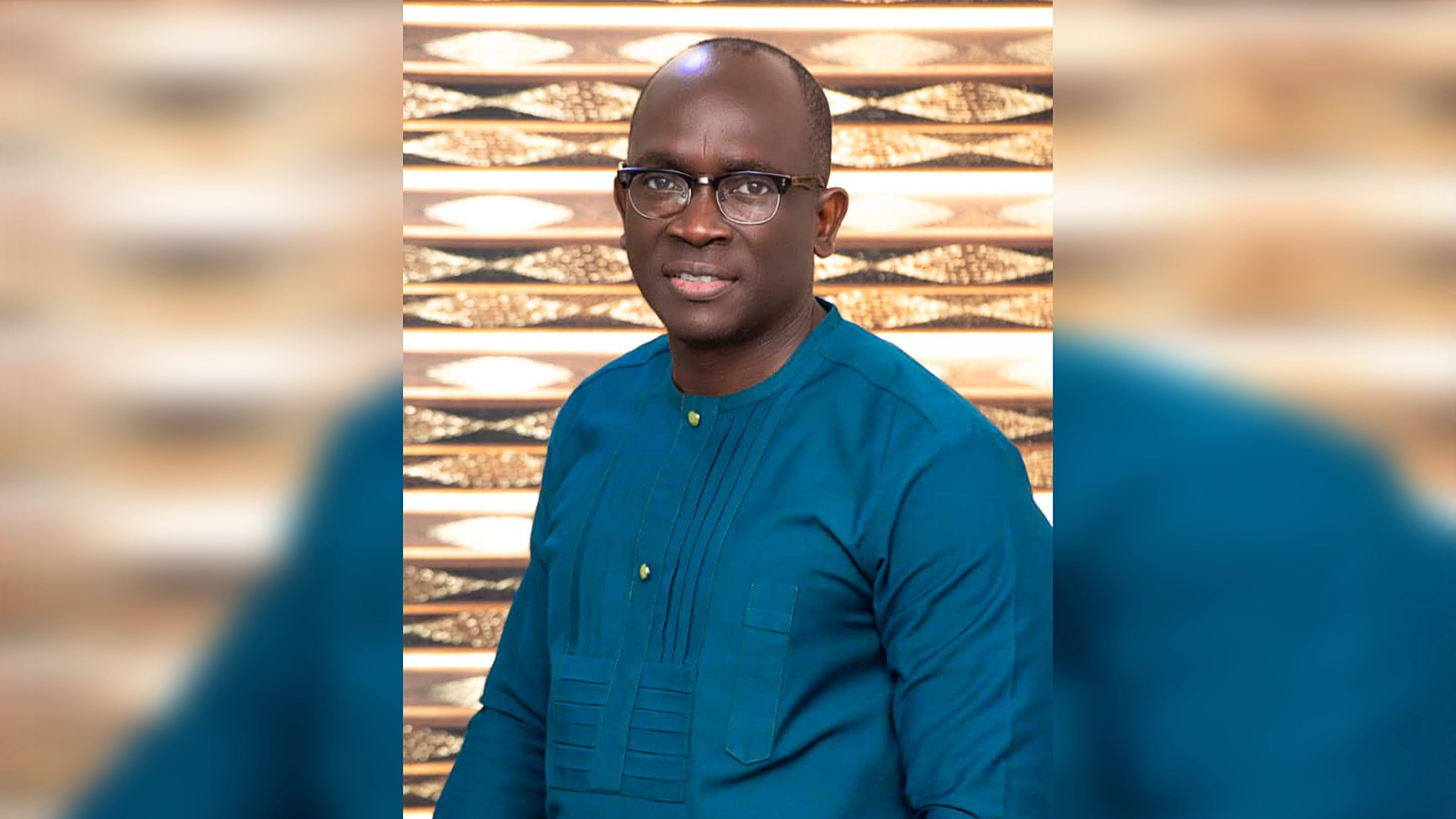
He said any sustainable wage framework must rest on four pillars: the overall state of the economy, workers’ needs and household welfare, the sustainability of enterprises and productivity levels.
According to him, failure to balance these factors risks either worsening poverty among workers or pushing firms into insolvency.
“You cannot isolate wages from inflation, exchange rates and productivity. If the economy is unstable, even a high nominal wage becomes meaningless in real terms,” he explained.
This comes amid growing pressure from labour unions and political actors calling for a new minimum wage review, with some proposals placing monthly pay at around ₦100,000. The employers’ representative dismissed such figures as ‘political estimates,’ insisting that wage levels must emerge from structured tripartite negotiations involving government, labour, and employers.
Oyerinde warned that agreements reached without full tripartite participation risk not being implemented.
“If it is not negotiated with all parties at the table, it will not be binding on the private sector,” he said.
He also insinuated that previous wage arrangements were concluded without the full participation of employers.
While the debate has intensified amid rising inflation, currency depreciation and increased operating costs, Oyerinde argued that these issues affect the business community equally.
He submitted that these pressures have significantly eroded business margins, with many firms only recently recovering from years of losses.
He cited sectors such as manufacturing and consumer goods as particularly affected, noting that companies had struggled with foreign-exchange volatility and rising debt-servicing costs.
Despite the concerns, he acknowledged that some firms have responded by voluntarily adjusting wages in line with economic conditions, with several companies reportedly increasing salaries multiple times over the course of a year to retain staff.
The NECA scribe also turned to broader structural challenges in Nigeria’s economy, particularly electricity supply, energy costs and security concerns.
He declared that without addressing the foundational issues inhibiting the manufacturing sector, wage increases alone would not translate into improved living standards.
He said: “Manufacturing is not competitive because of power and energy constraints. A unit of production in Nigeria cannot compete with the same unit produced elsewhere under stable conditions.”
He also pointed to global economic shocks, including energy price volatility and geopolitical tensions, as additional pressures affecting domestic inflation and business stability.
On the role of government, he gave a mixed assessment. While acknowledging that the current administration inherited deep structural distortions, he said reforms were beginning to show early signs of traction, particularly in regulatory engagement and economic coordination.
He highlighted ongoing collaboration between the private sector and institutions such as the Presidential Enabling Business Environment Council, noting that regulatory bottlenecks were gradually being addressed.
He, however, cautioned that progress would be slow and uneven given the scale of Nigeria’s economic challenges.
Speaking along the same line of thought, a former Director General of NECA, Segun Oshinowo, said minimum wage negotiation should be re-examined in a neoclassical, economic-policy-driven economy that cannot put a lid on inflation.
He argued that Nigeria urgently needs a framework that accommodates automatic inflation adjustment–a form of wage indexation–otherwise the labour market will always be in disequilibrium relative to the rest of the economy’s markets.
“The advantage of this approach is that it will also stem the frequent calls for minimum wage negotiations and adjustments. The issue of affordability will, of course, emerge.”
He maintained that if the economy could easily adjust to price movements in the other markets, why not the labour market?
“Should this be implemented, it will of course set in motion a series of actions that will affect the utilisation of human capital in the economy, either for good or bad–right-sizing, etc. There is nothing wrong with it, as it is part of the overall process of establishing an equitable equilibrium in economic management,” he explained.
To the President of the Non-Academic Staff Union of Educational and Associated Institutions (NASU), Dr. Hassan Makolo, adopting a flat minimum wage model will do the system more harm than good.
He called for a comprehensive overhaul of Nigeria’s minimum wage framework, saying that the new wage structure must reflect economic realities and include full consequential adjustments across all salary levels.
Makolo stressed that the upcoming negotiation process must go beyond what he described as a ‘mere award’ for the lowest-paid workers, arguing that such an approach undermines collective bargaining principles.
He emphasised that a proper minimum wage system must be accompanied by consequential adjustments affecting all categories of workers.
According to him, “a minimum wage is predicated on consequential adjustment,” adding that failure to implement such adjustments distorts salary structures and weakens industrial harmony.
He argued that previous wage implementations in the country had fallen short of international labour practice, leaving gaps in remuneration across different levels of the public service.
Raising concerns about Nigeria’s current economic situation, the labour leader pointed to rising costs of transportation, fuel and basic household goods as evidence that workers’ real incomes have significantly declined.
He observed that many civil servants were already unable to afford basic commuting costs, with some reportedly parking their vehicles due to fuel affordability challenges.
Responding to suggestions that N100,000 could serve as an appropriate new minimum wage benchmark, Makolo dismissed the figure as insufficient in the current economic climate.
He noted that some state governments are already paying above that threshold, warning against setting a wage floor that does not reflect existing disparities or cost-of-living pressures.
He stated that in the education sub-sector, salary disparities within tertiary institutions often mean that highly qualified professionals earn less than workers in other sectors performing less specialised roles.
He called for the education sector to be given special consideration during wage reviews to avoid further industrial tensions.
As consultations on a new minimum wage approach continue, government, employers and organised labour appear to agree that Nigeria’s economic future will depend on difficult compromises between protecting workers’ purchasing power and ensuring business survival.

