 Follow Us on Google News
 Follow Us on Google Discover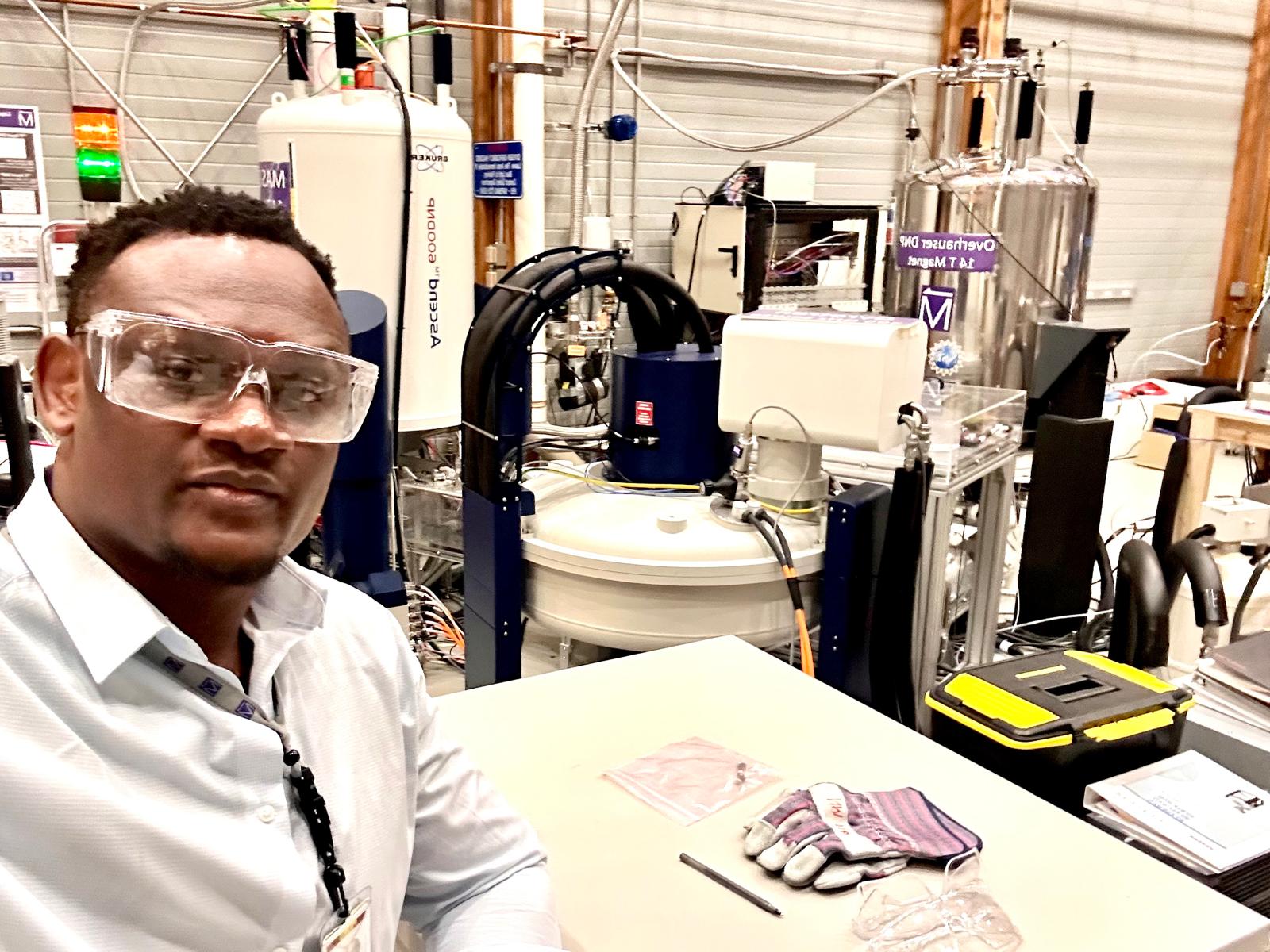
A study pioneered by Nigerian-born, U.S.-based scientist Bright Ogbolu has revealed a faster, safer, and highly scalable route for synthesizing sodium-ion electrolytes.
This breakthrough, according to Ogbolu, offers a transformative solution to one of the most urgent challenges in global energy storage.
In what has been described as a landmark development poised to reshape battery technology, Ogbolu and his collaborators introduced a new class of sodium-based solid electrolytes with remarkable ionic conductivity and enhanced safety characteristics.
Unlike conventional lithium-based systems that require intricate and time-consuming synthesis methods, the materials developed in this research follow an accelerated production route. This innovation significantly reduces time, cost, and complexity without compromising performance.
The study, obtained by this news outlet, presents a novel electrolyte composition identified as Naᵤ₊ᵧN𝓌₋ᵧMᵧLa𝓏Cl₃₋ᵥXᵥ. It demonstrates superionic conductivity while maintaining negligible electronic conductivity, a key feature for ensuring battery safety.
“Our approach enables faster synthesis and maintains a strict barrier against electron leakage,” Ogbolu explained.
“This significantly reduces the risk of internal short circuits or thermal runaway in sodium-ion batteries.”

The timing of the discovery could not be more critical. As industries around the world seek alternatives to lithium, due to high costs, environmental concerns, and supply chain vulnerabilities, sodium has emerged as a viable substitute. However, the development of robust sodium-ion solid electrolytes has lagged behind, largely due to stability and manufacturing challenges.
“This study bridges that gap by demonstrating a scalable, reproducible synthesis of sodium solid electrolytes with the right properties to transition from lab-scale innovation to industrial manufacturing,” Ogbolu noted.
“The ultimate goal is to enable safe, affordable energy storage solutions, from home backup systems to grid-level infrastructure.”
Drawing on his extensive research experience at Florida State University and the National High Magnetic Field Laboratory, Ogbolu employed a multidisciplinary approach that combined materials chemistry, process development, and advanced electrochemical characterization.
His work utilized techniques including X-ray diffraction (XRD), nuclear magnetic resonance (NMR), scanning electron microscopy (SEM), energy-dispersive X-ray spectroscopy (EDS), electrochemical impedance spectroscopy (EIS), and Raman spectroscopy to verify the structure and performance of the materials.
With a background in halide-based electrolytes and prior collaborations funded by the U.S. Department of Energy, partnering with institutions such as MIT, Northwestern University, and Solid Power Inc., Ogbolu was uniquely positioned to lead this innovation.
His earlier success optimizing lithium-ion electrolytes informed this strategic shift to sodium, where speed, cost-effectiveness, and safety could redefine battery production and deployment.
“We’ve shown that sodium-ion systems can not only match lithium in performance but also surpass it in areas like synthesis efficiency and operational safety,” he said.
“Because our synthesis method is significantly faster, it is readily scalable for industrial applications.”
The materials described in the published patent exhibit very low electronic conductivity, a critical attribute that helps prevent current leakage and thermal buildup. Combined with high ionic conductivity, they offer an ideal profile for applications requiring thermal stability, extended cycle life, and durability under demanding environmental conditions.
Beyond the material innovation, Ogbolu’s team prioritized ensuring that the synthesis protocol is compatible with pilot and commercial-scale manufacturing infrastructure.
“We designed the process so that every step, reagent, and condition can be reproduced outside of the research lab. This includes dry room and glovebox environments already used in the battery industry,” he explained.
This is not the first time Ogbolu’s work has gained attention for its practical impact. With over 15 peer-reviewed publications, four U.S. patents filed, and speaking invitations from prestigious forums like the American Chemical Society (ACS) and the Materials Research Society (MRS), his thought leadership continues to shape how the industry views materials science not as a purely academic pursuit, but as a driver of real-world solutions.
Ogbolu currently leads multi-institutional research projects focused on battery materials and recently completed his term as President of the NOBCChE FSU-FAMU-TCC Chapter, where he supports underrepresented students in STEM fields.
His commitment to mentorship mirrors his scientific vision, creating knowledge that translates into meaningful impact.
“Science is about solving problems that matter,” he reflected.
“We’re not just inventing new compounds. We’re enabling technologies that can power communities more safely and sustainably.”
As governments and industries worldwide invest billions into energy resilience and clean technology, innovations like Ogbolu’s sodium-based electrolyte platform are expected to play a pivotal role in the future of energy storage.

