 Follow Us on Google News


 Follow Us on Google Discover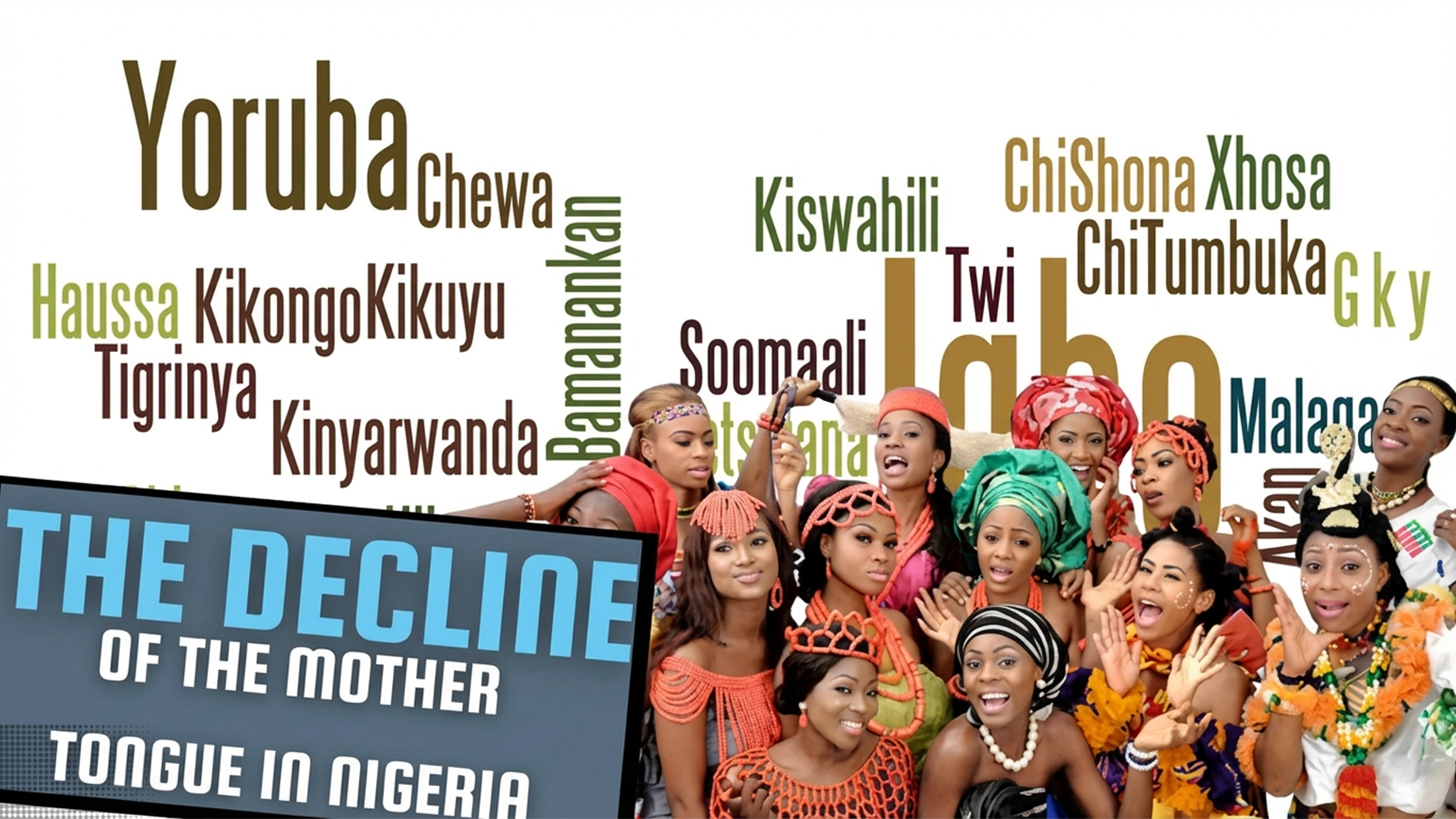
I followed my aunt to welcome her daughter, who had just arrived in Nigeria from South Africa, where she was born. After exchanging pleasantries in English, for some reason, I decided to ask her a question in Yoruba language. Perhaps Yoruba jumped out of my mouth because I had been conversing with her mother in the language before we saw her. Unfortunately, she couldn’t answer my question but claimed to understand Yoruba because she used to watch Yoruba movies in South Africa. I then turned to my aunt to ask why her daughter couldn’t speak Yoruba, despite both parents being from the Yoruba ethnic group in Southwest Nigeria. This is simply the case of many Nigerian children born and raised in the diaspora. The only thing still connecting them to their roots is their last name.
Nigeria has over 500 languages. Yoruba, Igbo and Hausa are mainly spoken, yet diaspora children can hardly construct a sentence in any of the three. A lot of factors could be blamed for this, most especially parents not speaking their language to their kids while in the diaspora. Olaniyi, who lives in the UK with his wife and kids, blames the intricacies of living in a foreign country.
“While we were growing up in Nigeria, my parents never sat us down to teach us Yoruba. The official language in the house was English, but my parents communicated in Yoruba, and that was how we picked it up. But here in the UK, things are different. Although my wife and I communicate in Yoruba, the kids are rarely around to hear us speak it because of our busy work schedule. We mostly converse in Yoruba on the phone. When we do while at home, it’s either the kids are outside playing or fast asleep because we came home late,” he said.
Ikenna, who moved to the UK six years ago, would love for his kids to speak Igbo fluently, believing they will one day need to return to their roots.
“The goal of moving to this country is to secure a good financial standing, then return to Nigeria for business. Yes, my kids can have a good life here in the UK, but they will one day need to return to Nigeria to oversee my business. It will be disastrous if they are not in touch with the language and culture,” he said.
Popular Ifa priest, actor, poet, and writer, Ifayemi Elebuibon, who expressed displeasure at the trend, urged Nigerians in the diaspora to emulate Indians and the Chinese, who never lose touch with their culture despite living abroad.

“It’s not good. Yoruba has an adage that says, ‘Charity begins at home.’ It is the duty of every parent to speak their mother tongue to their children. If you don’t speak to them early on, it will be difficult later. A lot of them abroad don’t emulate the other nationalities living there. Take a look at Indians and Chinese living and working in America; they speak their own languages to their children. So, Nigerians abroad should speak their language to their children,” he said.
The President of the Igbo apex organisation in Lagos State, Ohanaeze Ndigbo, Solomon Ogbonna, lamented to our correspondent that the trend of not teaching children their mother tongue is becoming prevalent not just in the diaspora but also in Igboland.
“It’s not only in the diaspora. The Yoruba and Hausa do better than any other ethnicity in Nigeria. I can tell you now that there are so many Igbo children living in Igboland in the Southeast who don’t understand Igbo language. Such is tolerated, but in a place like Germany or Japan, you cannot be employed for any job, except an illegal job, if you cannot speak their language,” he said.
Technology to the rescue
In the past 10 years, Nigeria has suffered from brain drain, with many of its best hands fleeing the country in search of greener pastures in the diaspora. Some left with their family, while others established families in their new abode. In the diaspora, they are sucked in by peer pressure; they need to fit in by speaking the Queen’s English. Their native tongue may seem embarrassing to converse in. “No need for that,” some may say. After all, the goal was to flee from a system that was not working to one that works, hence their reason for adopting a foreign heritage to the detriment of their own. Fortunately, some Nigerians in the diaspora are beginning to reason otherwise.
Prior to the 2023 governorship election in Lagos State, the coast seemed clear for one candidate, Gbadebo Rhodes-Vivour (GRV) of the Labour Party. While the presidential candidate of his party, Peter Obi, had successfully won Lagos, all predictions resulted in a likely victory for Rhodes-Vivour. However, his chance of unseating the incumbent governor suddenly became dim as campaigns took a different turn. His opponents capitalised on his lack of fluency in Yoruba language.
“Language was one of the many aspects critics used to justify why GRV did not represent the Yoruba people. For the Yoruba people that already doubted GRV’s Yoruba heritage due to his Igbo mother and wife, his confirmation that he could not speak Yoruba fluently proved to be the nail in the coffin as to why he could not be trusted as a true son of the soil,” said Tito Kolawole, author of ‘I Don’t Think in Yoruba: Ghadebo Rhodes-Vivour and the Language Shift among Nigeria’s Educated Elite’.
To ensure indigenous languages are taken seriously, the President of Lagos Ohanaeze, Solomon Oogbonna, advocated amending the Constitution.
He said, “I’ve said this time and time again that it should be mandatory in the Nigerian Constitution that if you don’t pass the three major languages of WAZOBIA in school, you can’t contest politics. If you don’t speak Yoruba, Hausa or Igbo, you can’t represent your ethnicity in politics. If we don’t have such a policy, we will keep losing our children in terms of language.”
With GRV’s situation, some diasporans are beginning to see the need to pass their mother tongue to their offspring. Like Ikenna, they believe a time will come when returning home will be the new trend, unlike now, when fleeing Nigeria seems like an achievement. Ahead of such a period, Deolu is employing technology to teach his kids Yoruba language.
“The world is now a global village. When I first arrived in Canada, I found it difficult to adapt to the culture. That period got me very engrossed in Nigerian content I found on social media. My kids often joined me in watching Yoruba Nollywood movies on YouTube, from which they pick up Yoruba words. On Weekends, we stream old Yoruba shows I used to watch on NTA while growing up. That gives them a feel of my childhood. I ensured they installed an app that teaches Yoruba language on their phones,” he said.
Michael, who is married to a white Canadian woman, said he was surprised to hear one of his kids tell Alexa to play an Afrobeat song and then sing the song word-for-word. “I developed an interest in teaching him more about his roots from then on,” said Michael, a furniture salesman. “However, time has been the major constraint. I believe that a time will come when Nigerians back home will run online classes that will teach the kids of their diaspora counterparts their mother tongue.”

