 Follow Us on Google News
 Follow Us on Google Discover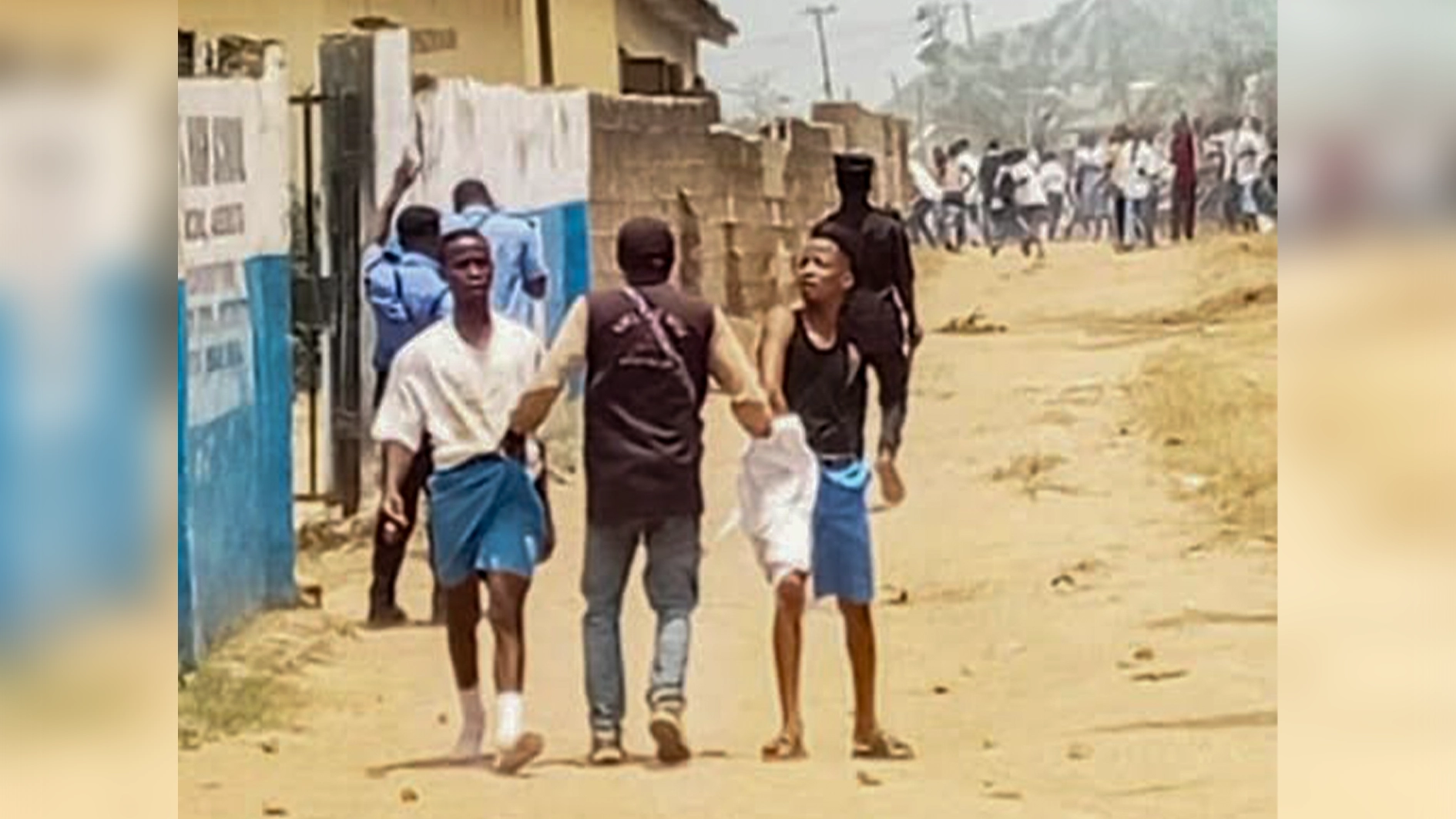
The menace of hooliganism in secondary schools is gradually going out of control. The menace, which encompasses bullying, raping and other vices, has shifted from mere students-to-students attack to physical attacks on educators, theft and vandalisation of school property. While some stakeholders are raising concern that it is a time bomb that may consume the country if not urgently tamed, others claim that the government and policy makers have treated the issue with kid gloves, Assistant Features Editor, GBENGA AKINFENWA writes.
The recent viral video on the bullying incident involving students at the Igbinedion Education Centre, Benin City, Edo State, is a true reflection of the height of hooliganism and systemic failure in secondary schools across the country.
While many were shocked by the level of violence exhibited by the students and the extent of abuse on their victim, reports have it that the incident is one of the numerous hooliganism cases displayed by students across the country almost on a daily basis. While some are either not reported or under-reported, some are swept under the carpet.
This growing incident of hooliganism, which encompasses bullying, fighting, vandalism and carrying of weapons, has often caused violence and disruptive behaviour by students, violating discipline and heightening insecurity in schools.
Sadly, as dangerous as this heinous trend is, investigations showed that it is spreading like a wildfire across schools in the country, and severely hampering the teaching-learning process, majorly due to government’s underestimation of the issue.
In March 2020, a boy reportedly died after he was allegedly beaten by his classmates at a popular school in Buguma, Rivers State. It was reported that the incident occurred on Friday, March 13, and the boy’s parents were not contacted by the Principal or the teachers.

A lady, who took to social media to call out the management of the school, said the principal’s son was also involved in the assault.
“Death with so much guts and audacity invaded our home and snatched our bright shining star away. He was not sick, but died to the wickedness of humanity. On Friday last week, his classmates, without any squabble, ganged up and beat him to unconsciousness, bouncing on his chest and stomach…”
While students-to-students attacks are increasing at an alarming rate, the scenario has also taken a more dangerous direction – violence against teachers.
Reports have it that educators are now soft targets for these students, causing harm, fear, and damage through physical assaults, which often leads to emotional distress, injury and even death.
Last July, in Benue State, a Junior Secondary School 3 (JSS-3) student of UBE Secondary School, Oju Centre, allegedly beat his teacher to death during a dispute over a seized school cap.
The student, identified as 16-year-old Friday Ogamude, was said to have confronted his 35-year-old teacher, Mr. Oyibe Oyibe, demanding the return of a cap confiscated in May 2025.
According to eyewitnesses, the confrontation turned violent when the student allegedly attacked the teacher during a heated exchange.
Oyibe reportedly collapsed on the spot. He was rushed to Amara Hospital in Oju, where a medical doctor confirmed him dead on arrival.
In July 2023, 10 Senior Secondary School (SSS) students of Isanbi Comprehensive High School, Ilisan-Remo, Ogun State, allegedly beat up their teacher, Kolawole Shonuga, for stopping one of them from cheating in an examination.
Shonuga had while invigilating the unified examination for the SS1 Art Class caught one Ashimi Adebanjo cheating and seized his paper.
Angered by the development, Adebanjo allegedly mobilised his gang to waylay the teacher at the school gate and beat him severely.
One of the suspects, Kazeem Adelaja, allegedly used a stick on Shonuga while they also tore his clothes. The matter was immediately reported to the police by the victim, after which officers arrested the 10 students.
Last October, the students of Ilugun High School, Elega, in Abeokuta, Ogun State, went on a rampage over an alleged illegal fee collection by teachers.
They allegedly attacked teachers and vandalised school property running into several millions of naira. A viral video that surfaced online showed them destroying school property in broad daylight.
The clip captured groups of students hurling stones at classroom windows until the glass got shattered. In some cases, they went further by removing entire aluminum window frames, leaving the classrooms badly damaged.
During the melee, a student reportedly died after jumping into the river following the arrival of law enforcement agents.
Three students were said to have jumped into the river. Two were rescued, while one, identified as Babalola, drowned. His body was reportedly recovered a day later and buried at the riverbank.
Just two weeks ago, Wednesday, March 4, 2026, to be precise; a full-scale student riot erupted at Ikija High School, also in Abeokuta.
The disturbing incident, which saw students throwing stones, attacking security officials, and pursuing school staff, forced a multi-agency security intervention involving the National School Crime Prevention Corps (NSCPC) to rescue trapped school officials to restore order within the school premises.
Findings revealed that the unrest was triggered by a collective decision by key stakeholders within the school community to restore discipline after months of troubling misconduct by some students, some of whom have been suspended from the school.
Eyewitness account showed that a group of students suddenly launched a violent attack on the NSCPC officers, pelting them with stones and other dangerous objects in an attempt to stop the interrogation of their detained peers.
The situation rapidly deteriorated into what security officials described as an aggressive mob action within the school premises, with the principal as one of the primary targets of the angry students.
Outside attacks on fellow students and educators, investigations showed that others vices being displayed by these students include theft, rape and other forms of indiscipline.
For instance, The Guardian authoritatively gathered that at a popular school under Ifo Local Council, Ogun State, the students intentionally sold the school gate to scavengers and shared the proceeds. The school authority, maybe due to the fear of attack, failed to sanction the erring students.
With the spate of these heinous acts, stakeholders and parents have raised concern that the future of secondary education in the country is endangered.
They noted that the development reflects a broader societal challenge regarding discipline, accountability, and the responsibilities of parents, communities, and educational authorities.
An educationist, Mr. Tunde Sanyaolu, said the rising spate of hooliganism in secondary schools do not only disorganise usual school activities, but also jeopardise achieving the primary goals of the curricula of various schools. He added that the issue is going beyond minor acts of misbehaviour to serious violence, which involves harming teachers and diligent students.
He said: “It is quite unfortunate that some parents are openly supporting or even initiating acts of hooliganism. In a recent case, it was alleged that a parent whose child was charged to court slapped a teacher in open court. The involvement of parents in escalating unruly and violent acts in schools underlines the extent of the decay of the family system as the primary agent of socialisation and character formation.
“Every stakeholder must take decisive steps to arrest this destructive situation in our secondary schools. Immediate and sustained attention must be given to it. Parents’ fora, by whatever name they are called, should begin to be actively involved in restoring adequate levels of discipline in schools. The students should be made to identify their colleagues who promote or support hooliganism and sanction them accordingly. This will evolve a rethinking that will eventually aid the restoration of peace and self-discipline in secondary schools.
“Governments and school authorities should not sacrifice discipline on the altar of politics or social connections. Unruly and violent students, either as individuals or as groups, must be appropriately punished.”
While noting that many of the students who exhibit acts of hooliganism do not regularly attend classrooms, but usually stay on the streets and later go into the school premises to cause problems, he said the country may need to go back to the days when security personnel were posted to schools to maintain discipline.
“State governments can give full support to voluntary organisations that are purposely formed for the prevention of violence in schools. An example of such an organisation is NSCPC. They focus on prevention of violence and firm disciplinary reactions that seek correction and rehabilitation where this is necessary. Such organisations can be engaged by state governments to see to the sustenance of peaceful environments in our schools.
“Parents should see teachers as the other parents of their children and work together with them instead of seeing them as their enemies. Teachers too should present themselves as constructive role models. It is known that every human segment has its own bad eggs.”
On his part, a social psychologist, Dr. Sanmi Johnson Ibidapo, the Team Lead, Counseling and Development Clinic, Caleb University, Lagos, described the menace as disruptive and destructive behavior, saying it is currently a very big issue because it’s becoming commonplace among young people in schools.
He said: “The implications of this in the education system and larger society are enormous. Firstly, it will disrupt the academic calendar. It will again lead to destruction of properties – school buildings, chairs, and other property of the school. Some students have fought using their teaching and learning materials, some of them even engage in cultism.
“Poor academic performance is another possible effect or the implication of hooliganism in the school system. Again, it makes the school environment unsafe, even the teachers are not safe. And you know, controlling the school environment becomes very difficult because discipline becomes difficult to enforce. The number of school dropouts will also increase, and, of course, there’ll be negative peer pressure.
“Can you imagine a teacher trying to enforce order by correcting his student, but the student is attacking the teacher based on the fact that he has a gun that can help him get revenge on the teacher? Hooliganism is a very big problem that we have on our hands as a country.”
He said in the larger society, the implications will be a high number of miscreants on the streets – more touts, more area boys, more thugs because most of them drop out of school.
“And then, you know, insecurity is slightly heightened because of this. We’ll have more youths who are getting involved in violent behaviour. There is a likelihood of increase in drug use and drug abuse among these young people.
“You know we are nearing an election year, and then the politicians will soon begin campaigning. Guess who they are going to be using for all the disruptions all over town? It’s the hooligans, usually school dropouts. So these are some of the challenges. The society will suffer too because a very productive workforce would be diverted and distracted.”
He identified lack of home training – broken homes, drug abuse, peer pressure, and frustration – as the cause of the problem.
“When somebody is frustrated, he/she will react aggressively to things that shouldn’t warrant any form of aggressive behavior. That’s what we call negative traction in psychology. Sadly, it’s a reality that many of our young people have access to several violent movies that model violent behaviour.
“And then there have been several social psychological experiments that show that if people watch violent movies consistently for a period of time, they can also begin to act in violent ways. So, that’s also part of the problem.”
While proffering solutions, Ibidapo said: “I think we should go back to the home front, where the old problem started. Proper parental control will solve part of the problem of hooliganism. When parents are becoming responsible to their children and children are accountable to their parents, hooliganism will reduce.
“There should be some improved measures for school control; discipline should be brought back to schools, as most state governments have banned corporal punishment in schools. The Bible says that foolishness is bound in the heart of a child, but the rod of correction will drag it out. So, you see, we need corporal punishment.
“There is a need for sensitisation and awareness creation in schools, in society to tell people about the dangers of hooliganism, and how it affects young lives. Then, I believe, the government will begin to take seriously the issue of legislation regarding films and movies that young people have access to. Those days, films were rated by the Nigerian film sensors board. I think we need to go back to that.
“And finally, counseling is very important. For those who have gotten themselves involved, they need to go for professional counseling support and therapeutic interventions through qualified and competent psychologists who can assist them. That’s one of the greatest ways we can deal with this issue.”

