 Follow Us on Google News
 Follow Us on Google Discover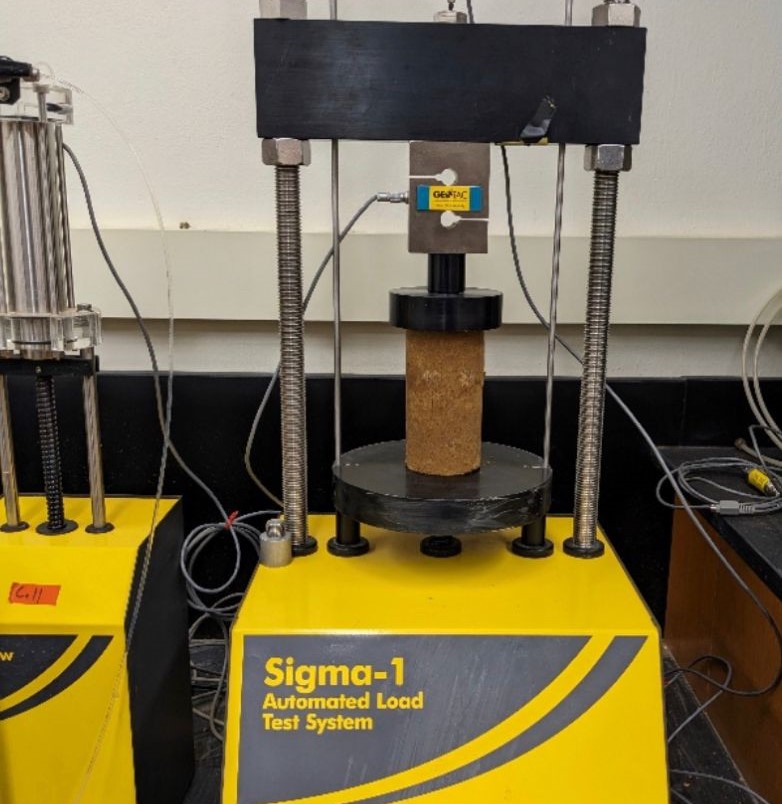
 In an era marked by the urgent need for sustainable solutions, Mr. Chukwuma Okafor, a doctoral researcher at Auburn University, is leading the way in transforming environmental challenges into engineering opportunities. Partnering with Somtochukwu Benjamin Anieto, a Mechanical Engineering student at Michael Okpara University, Umudike, their groundbreaking work in combining Geotechnical Engineering concepts like soil reinforcement, and the Mechanical Engineering of a low-cost shredder is addressing one of the pandemic’s most pressing environmental issues—the disposal of billions of single-use face masks (SUFMs).
[ad]
Since 2019, the COVID-19 pandemic has led to a dramatic increase in the use of disposable face masks, creating an environmental crisis as these masks accumulate in staggering volumes. In response, the duo has devised an innovative approach that turns this waste into a valuable resource for infrastructure development. This research focuses on using discarded SUFMs to enhance the resilience of geotechnical construction by reinforcing soils.
Through their research, they have demonstrated that incorporating shredded face masks into sandy soils significantly increases shear strength and reduces associated deformations. Utilizing unconfined compression testing, which is a special type of triaxial testing to determine the undrained shear strength of consolidated specimens, they found that these fibers, when mixed with sand (SC-materials) in varying concentrations, add cohesion and flexibility to the soil. This innovation presents a practical application in stabilizing base and subgrade layers for road pavement construction.
This pioneering work represents a major step toward circular engineering—repurposing waste materials to fulfill structural needs. By turning discarded face masks into a resource for sustainable construction, they are advancing both the resilience and sustainability of infrastructure. This research serves as a powerful example of how creativity and dedication can transform environmental challenges into engineering solutions.
As they continue to explore new pathways for sustainable infrastructure, their work is inspiring a new standard in interdisciplinary research. Their efforts highlight how engineering can be at the forefront of solving today’s most pressing environmental problems, paving the way for a future where sustainability is embedded in every aspect of infrastructure development.
[ad]

