 Follow Us on Google News


 Follow Us on Google Discover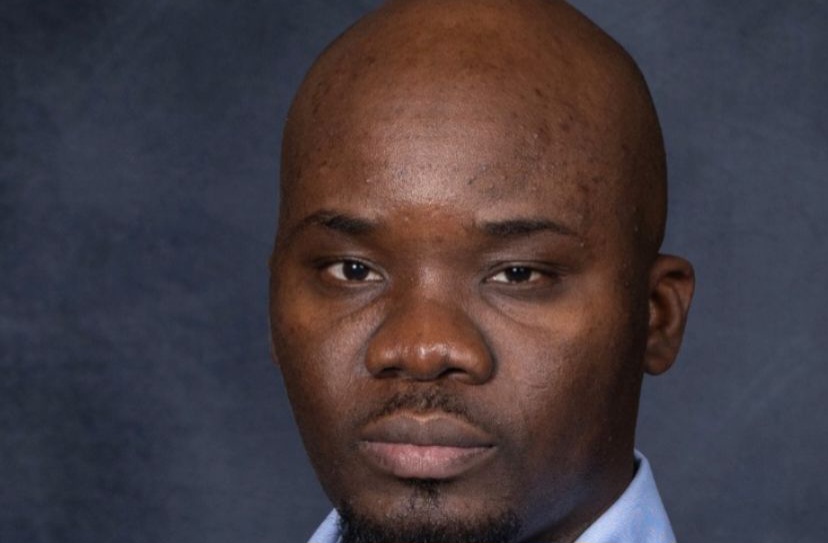
 Revolutionizing Recycling: An Interview with Samuel Afolabi on Developing a Low-Cost Polyurethane Foam Waste Shredding Machine.
[ad]
Media Chat Host: Today, we have the honor of speaking with Samuel Afolabi, a renowned expert in sustainable engineering for his work on “Development of a Low-Cost Polyurethane (Foam) Waste Shredding Machine,” published in the prestigious ABUAD Journal of Engineering Research and Development in December 2020. Samuel, thank you for joining us.
Samuel Afolabi: Thank you for having me. I’m excited to delve into this work and discuss its potential to address critical environmental challenges.
Host: To begin, could you tell us a bit about your background?
Samuel Afolabi: Certainly! I am a mechanical engineer deeply committed to sustainable development and practical problem-solving. My work centers on tackling environmental challenges through innovative engineering solutions, with a particular focus on creating accessible technologies for small-scale industries. This project aligns closely with my passion for sustainability and environmental stewardship. I have the in-depth knowledge on subject matter, academically, and professionally.
Host: What inspired you and your team to embark on this remarkable project?
Samuel Afolabi: The project stemmed from two pressing issues: the environmental burden of foam waste and the lack of affordable recycling solutions. Foam waste generated by industries often ends up in landfills, exacerbating pollution. While foam recycling is technically feasible, existing solutions are predominantly large-scale and prohibitively expensive for smaller businesses. Our goal was to design an affordable, user-friendly machine that empowers small enterprises to actively participate in recycling efforts, ultimately advancing environmental sustainability.
Host: That’s a commendable mission. What challenges did you encounter during the machine’s development?
Samuel Afolabi: One of our primary challenges was balancing cost with durability. To ensure affordability, we relied on locally sourced materials, which required careful selection to maintain durability and performance. Additionally, optimizing the machine’s design to effectively handle foams of varying densities demanded extensive testing and iterative refinements.
Host: How did the machine perform during testing?
Samuel Afolabi: The results were very promising. We tested foam materials with densities ranging from 13 kg/m³ to 36 kg/m³. The machine delivered an impressive performance, with higher-density foams achieving increased shredding rates, capacity, and efficiency. At the highest density, the shredding efficiency reached an exceptional 97%, confirming its effectiveness for real-world applications.

Host: How do you see this machine being adopted by industries?
Samuel Afolabi: Its affordability and compact design make it an ideal solution for small-scale businesses, such as furniture manufacturers and waste management companies. By providing an accessible means of recycling foam waste, it promotes sustainability and encourages material reuse, offering both environmental and economic benefits.
Host: What do you consider the most significant impact of this innovation?
Samuel Afolabi: The most profound impact is its ability to democratize foam recycling for smaller businesses and local communities. By transforming waste into a valuable resource, the machine not only mitigates environmental pollution but also creates new economic opportunities. This innovation represents a significant stride toward achieving sustainability goals.
Host: Before we conclude, do you have any advice for aspiring engineers passionate about sustainable projects?
Samuel Afolabi: My advice is to focus on solving real-world problems that matter to your community and the environment. Prioritize practicality, affordability, and sustainability in your solutions. Collaboration and perseverance are critical to turning impactful ideas into reality.
Host: Thank you, Samuel, for sharing your expertise and the incredible work you and your team have accomplished.
We’re eager to see how this innovation transforms industries and contributes to environmental preservation.
Samuel Afolabi: Thank you! It’s been a pleasure discussing this project. I look forward to witnessing its positive impact.
[ad]

