 Follow Us on Google News


 Follow Us on Google Discover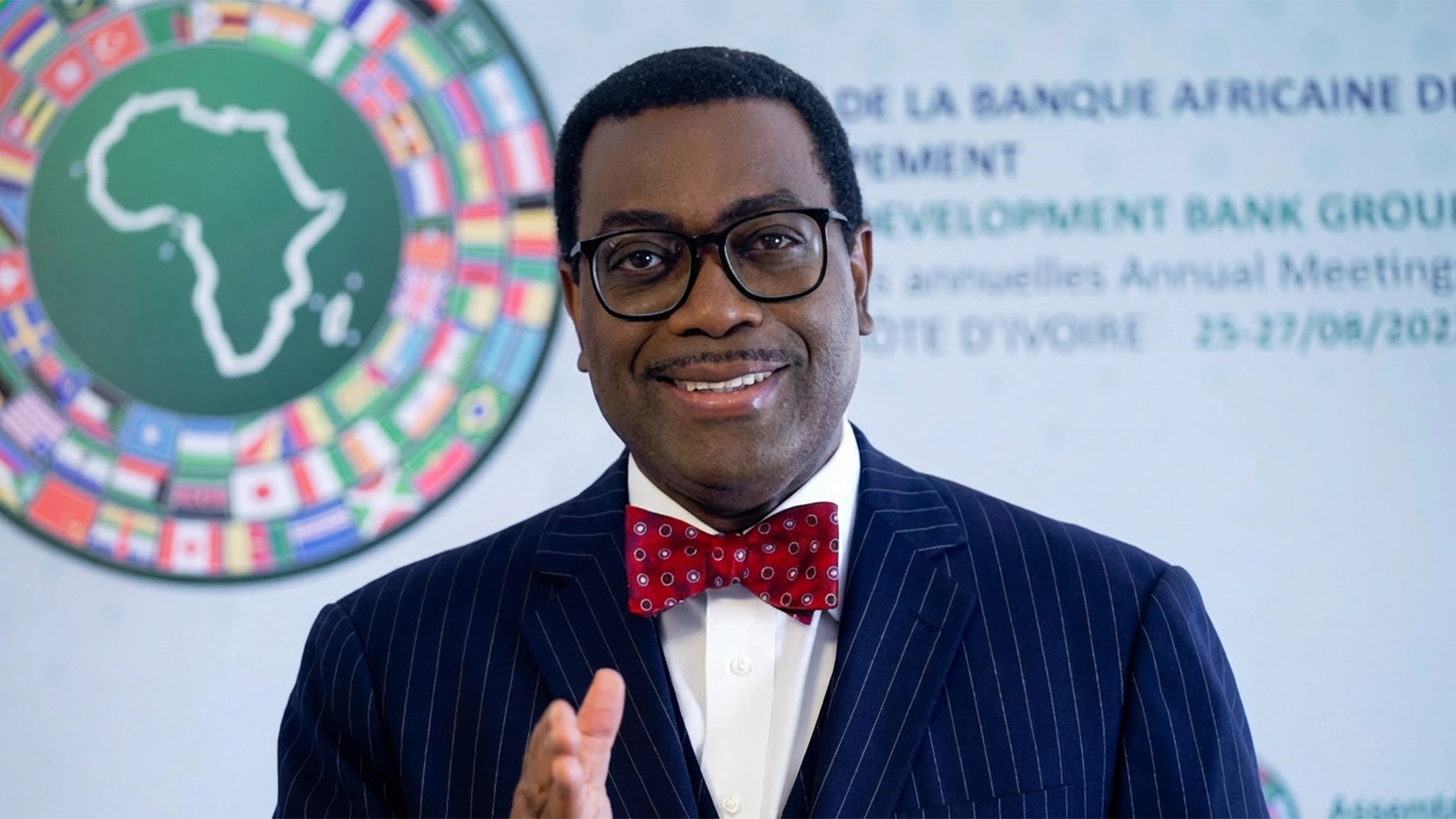
Former President of the African Development Bank (AfDB), Dr Akinwumi Adesina, has urged African governments to invest more in youths to boost economic growth.
According to him, Africa’s population growth can support economic development if governments equip youths with the skills and resources needed to establish businesses, create jobs and develop new technologies.
Adesina made the call while delivering the keynote address at the inaugural Seyi Tinubu Colloquium in Lagos on October 12, 2026, with the theme, “Africa Next: Building the Demographic Asset Class.”
He harped on the need for African governments to invest more ineducation, healthcare, skills development, technology and access to finance to improve the productivity of the continent’s growing youth population.
He made reference to the projections that Africa will account for about one-quarter of the global population by 2050 and more than half of global population growth during the period expected to come from the continent.
He, however, said population growth alone would not guarantee economic prosperity without investment in human capital, saying “The more important questions are: What will they be able to do? What will they create? What businesses will they build? What technologies will they develop? What problems will they solve?”

Describing “Demographic Asset Class” as a population whose health, education, skills and productivity are developed to generate economic value, Adesina stressed that education should be treated as an investment in national productivity, just like infrastructure such as roads, railways, electricity and digital networks.
He further identified healthcare, nutrition and social protection as necessary components of human capital development.
According to him, African governments should align education and skills development with economic needs, particularly in manufacturing, agriculture, agro-processing and digital technology.
The former AFDB boss also identified software development, data science, cybersecurity and artificial intelligence as areas with opportunities for young Africans to compete in the global economy.
On artificial intelligence, Adesina urged African youths to develop technologies suited to the continent’s languages, markets and social needs rather than depend solely on solutions developed elsewhere.
He said AI could improve education, agricultural productivity and healthcare while helping African businesses access international markets.
Adesina also called for better access to finance to enable young people to turn their skills and ideas into viable businesses.
He introduced the concept of a “Social Balance Sheet” to assess how government policies and institutions affect people’s ability to contribute to economic development.
Adesina identified poor education, inadequate healthcare, unemployment, unreliable electricity, weak infrastructure and limited access to finance as factors that constrain productivity.
He said young people should not be blamed for unemployment and business failures when institutional weaknesses prevent them from using their skills.
Highlighting the different initiatives introduced by the Nigerian government including Nigerian Education Loan Fund (NELFUND), the Tertiary Education Trust Fund (TETFund) and the Investing in Digital and Creative Enterprises (i-DICE) programme he said that NELFUND could reduce financial barriers to higher education, while TETFund investments in laboratories, faculty training, energy and digital infrastructure could strengthen tertiary institutions.
Adesina revealed that AfDB had contributed $178million to the $618 million i-DICE programme, which supports technology and creative enterprises, digital businesses and small and medium-sized enterprises.
He further referenced $100 million provided to support the establishment of a Youth Entrepreneurship Investment Bank model in Nigeria, alongside investments from the Nigerian Sovereign Investment Authority and the Development Bank of Nigeria.
He said improved access to financing could help young entrepreneurs overcome collateral requirements and establish sustainable businesses.
Adesina urged African leaders to ensure that investments in education and skills were matched with access to capital, infrastructure and markets.
He said the continent’s economic prospects would depend partly on how effectively governments developed the capabilities of young people and created opportunities for them to contribute to economic growth.

