 Follow Us on Google News


 Follow Us on Google Discover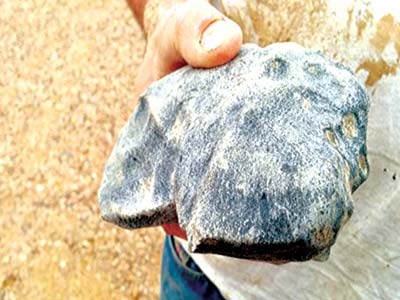
Falling meteorite caught on camera, found in Australian outback

THE threat of Near Earth Objects (NEOs) hitting the planet is becoming more real even as the United States National Aeronautic Space Agency (NASA’s) new programme is prepared to tackle the danger head on.
According to Phys.org, NASA’s Washington-based Planetary Defense Coordination Office (PDCO) is set to spearhead the ongoing search for asteroids and comets passing near Earth’s orbit, and will work with disaster relief agencies to develop emergency response plans.
The space agency says there are no known threats to date, but near approaches in the recent past are reminders of the potential hazards.
According to the report also published in DailyMailUK online, astronomers around the world use ground-based telescopes, including NASA’s space-based NEO Wide-field Infrared Survey Explorer (NEOWISE) infrared telescope, to track NEOs.
According to Wikipedia, the Wide-field Infrared Survey Explorer (WISE) is a NASA infrared-wavelength astronomical space telescope launched in December 2009, and placed in hibernation in February 2011 when its transmitter turned off. It was re-activated in 2013. Its observations supported the discovery of the first Y Dwarf and Earth trojan asteroid, tens of thousands of new asteroids, and numerous previously undiscovered star clusters.

WISE performed an all-sky astronomical survey with images in 3.4, 4.6, 12 and 22 μm wavelength range bands, over ten months using a 40 cm (16 in) diameter infrared telescope in Earth orbit. After its hydrogen coolant depleted, a four-month mission extension called NEOWISE was conducted to search for near-Earth objects such as comets and asteroids using its remaining capability.
The All-Sky data including processed images, source catalogs and raw data, was released to the public on March 14, 2012, and is available at the Infrared Science Archive. In August 2013, NASA announced it would reactivate the WISE telescope for a new three-year mission to search for asteroids that could collide with Earth. Science operations and data processing for WISE and NEOWISE take place at the Infrared Processing and Analysis Center at the California Institute of Technology in Pasadena.
Also, Australian scientists have caught a shooting star. They used cameras connected with the Desert Fireball Network to see the bright, hot streak of a meteorite that fell through the atmosphere in November. They triangulated on its position and, penultimate week on New Year’s Eve, dug up the 1.7-kilogramme rock from a small crater in a dry lake in the Australian outback. “Most people are doing something else on New Year’s,” Phil Bland of Curtin University in Perth, Australia, told The Washington Post. The find is another example of how networks of radars and cameras are transforming meteorite hunting.
Before, search parties had to comb deserts meticulously, hoping to get lucky. Now, eyes on the sky are catching meteorites in the act. The networks are helping to connect meteorites to the parent asteroids from which they hail, and also hastening discoveries, before rain and wind can erode fragile minerals inside the fallen rocks.
Meanwhile, data are sent to a global database, and once NEOs are detected, orbits are monitored by the Center for NEO Studies at NASA’s Jet Propulsion Lab in California.
Then, further characterization is done using NASA’s Infrared Telescope facility, Spitzer Space Telescope, and interplanetary radars.
These programmes will continue under the new PDCO, and have long been funded by the NEO Observations Programme.
Each year, roughly 1,500 NEOs are identified, and more than 13,500 have been discovered since the NASA-funded searches began in 1998.
A strike from a mid to large sized asteroid or comet would have catastrophic effects around the world; it’s widely thought that a comet strike spurred the extinction of the dinosaurs.
NASA’s new PDCO will operate within the Planetary Science Division, in the Science Mission Directorate in Washington, according to Phys.org.
The office will work to characterize any potential impact threats.
Each year, roughly 1,500 NEOs are identified, and more than 13,500 have been discovered since the NASA-funded searches began in 1998.
NASA has already identified more than 90 percent of NEOs larger than one kilometer, and has turned its sights on smaller, football field-sized objects.
Associate administrator for NASA’s Science Mission Directorate in Washington, John Grunsfeld, said: “Asteroid detection, tracking and defense of our planet is something that NASA, its interagency partners, and the global community take very seriously.
“While there are no known impact threats at this time, the 2013 Chelyabinsk super-fireball and the recent ‘Halloween Asteroid’ close approach remind us of why we need to remain vigilant and keep our eyes to the sky.”
The PDCO will expand upon existing partnership with the Federal Emergency Management Agency (FEMA), and the Department of Defense, among other U.S. and international agencies.
The space agency is working with the European Space Agency Asteroid Impact and deflection Assessment to develop methods for deflecting or redirecting hazardous objects that make me on course to strike Earth.
In the event of any pertinent discoveries, like an upcoming close pass or potential impact, the office will issue notices and coordinate response plans.
“The formal establishment of the Planetary Defense Coordination Office makes it evident that the agency is committed to perform a leadership role in national and international efforts for detection of these natural impact hazards, and to be engaged in planning if there is a need for planetary defense,” said Lindley Johnson, longtime NEO programme executive for the office, with the title of Planetary Defense Officer.
The National Science Foundation (NSF) supports the new programme.
“NSF welcomes the increased visibility afforded to this critical activity,” said Nigel Sharo, programme director in the agency’s Division of Astronomical Sciences.
“We look forward to continuing the fruitful collaboration across the agencies to bring all of our resources—both ground-based and space-based—to the study of this important problem.”
The PDCO will also be preparing for circumstances in which impact cannot be prevented. In such a case, NASA will provide information regarding impact time, location, and effects to Federal Emergency Management Agency (FEMA), who would then prepare an emergency response.
“FEMA is dedicated to protecting against all hazards, and the launch of the coordination office will ensure early detection and warning capability, and will further enhance FEMA’s collaborative relationship with NASA,” said FEMA Administrator Craig Fugate.
Talks of a centralized asteroid-detecting programme have been underway for years, and now, a recently passed $50 million budget for 2016 will go towards NEO observation and planetary defense.

