 Follow Us on Google News


 Follow Us on Google Discover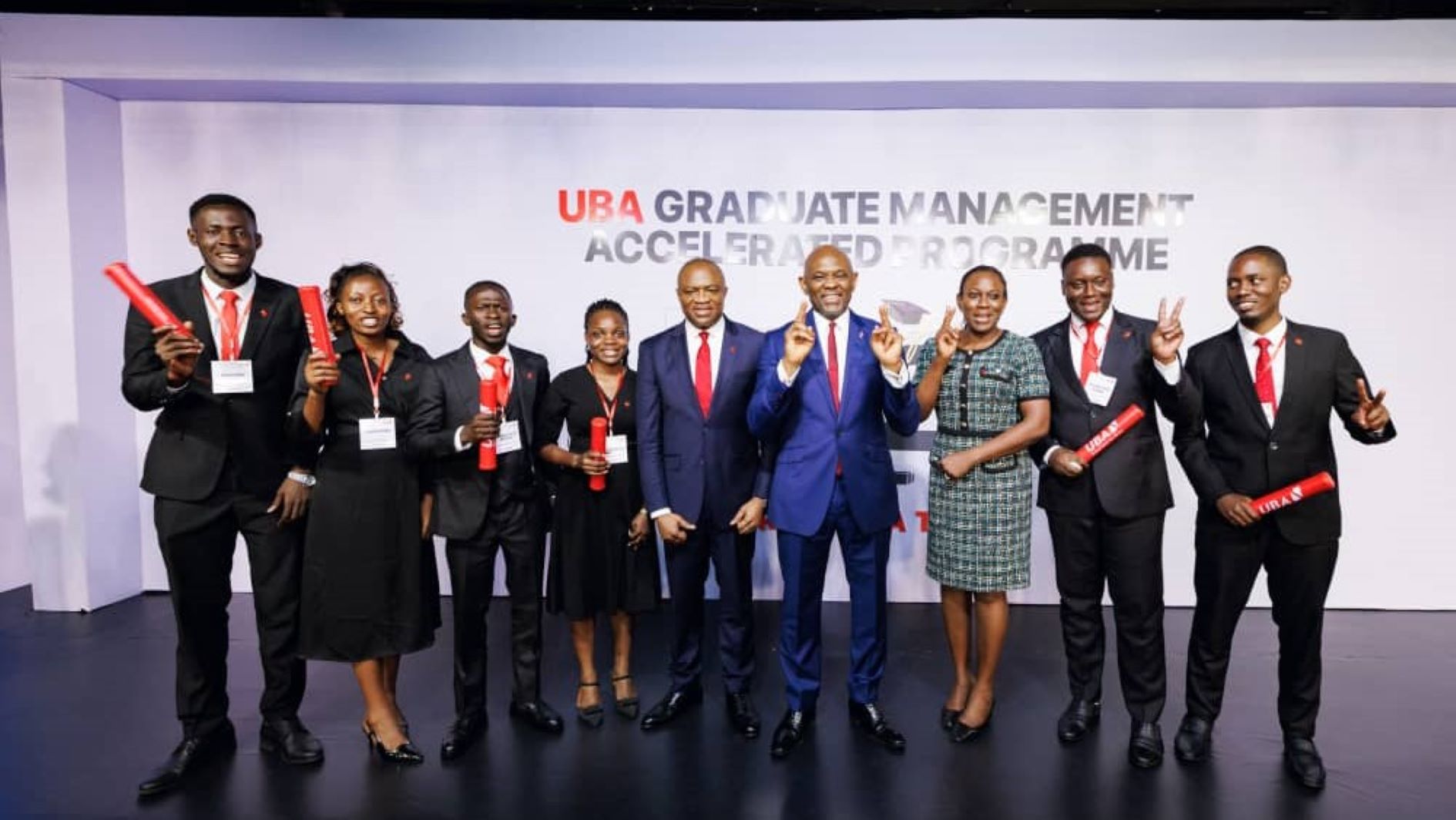
In an era where youth unemployment and skills mismatch remain pressing concerns across Africa, initiatives that deliberately bridge the gap between education and employability are increasingly taking centre stage. One such intervention is the United Bank for Africa (UBA) Graduate Management Accelerated Programme (GMAP) which has continued to position itself as a pipeline for grooming future leaders on the continent.
At its latest milestone, the bank graduated 720 young professionals drawn from across Africa, reinforcing its commitment to building a workforce equipped not just with technical banking skills, but with the discipline and resilience required to thrive in a rapidly evolving global economy.
The combined graduation ceremony for Cohorts 19 and 20 was more than a formal event; it was a convergence of ambition, preparation and institutional vision.
Cohort 19, comprising 306 participants from multiple African countries, and Cohort 20, with 414 Nigerians, reflected the programme’s expanding continental footprint and diversity.
The Group Chairman, Tony Elumelu’s message to the graduates was clear and grounded in lived experience.
He said success is rarely linear, urging the young professionals to embrace hard work, discipline and resilience, especially in the face of Nigeria’s economic realities.

“There are times you are tired physically and mentally, and times you try several times without success, but the natural thing to do is to give up. I say no, don’t,” he told the audience, underscoring perseverance as a defining trait of impactful leadership.
Elumelu also drew attention to Nigeria’s demographic advantage, noting that with over 60 per cent of the population under 30, the country holds immense potential if its youth are properly harnessed. In his view, programmes like GMAP are not just corporate initiatives but strategic interventions in addressing unemployment and underemployment.
Beyond rhetoric, GMAP appears structured to deliver on this promise. According to the Group Managing Director/Chief Executive Officer, Oliver Alawuba, the programme has produced over 3,900 alumni, with hundreds more currently undergoing training.
Describing the initiative as a “leadership supply chain,” Alawuba emphasised that the bank is investing deliberately in human capital to remain competitive and future-ready. Yet, he was quick to remind the graduates that their journey had only just begun.
“You will face pressure, complexity and setbacks. That is not failure; it is the training ground of leadership,” he said, framing real-world challenges as essential components of professional growth.
His remarks point to a broader shift in corporate training philosophy, one that prioritises adaptability, execution and continuous learning over theoretical knowledge alone.
In a financial services sector increasingly shaped by digital disruption, such attributes are becoming indispensable.
From the human capital perspective, the scale and competitiveness of the programme highlight both its prestige and the demand for structured career pathways.
The Group Head of Human Resources, Modupe Akindele, revealed that the bank receives about 14 million applications whenever recruitment opens.
This figure underscores the intense pressure in Nigeria’s job market, while also reflecting the aspirational value attached to programmes that offer clear career progression. Through multiple screening stages, including reasoning tests and workplace simulations, only a fraction of applicants make it into the programme.
Successful candidates undergo a rigorous blend of academic training and on-the-job exposure, gaining experience across core banking functions such as treasury, digital banking and compliance.
The goal, Akindele noted, is to produce not just employees but leaders capable of assuming managerial roles within a few years.
Indeed, the ambition is bold – within three years, some of these graduates are expected to rise to positions such as branch managers and heads of department. If achieved, it would represent a significant acceleration in leadership development within the banking sector.
For participants, however, the experience goes beyond structured learning. Anthony Alaka, the overall best graduating participant, described the programme as a transformative journey defined by responsibility, innovation and purpose.
In his valedictory speech, he highlighted how exposure to diverse aspects of banking not only built technical competence but also strengthened critical thinking and problem-solving skills; qualities essential for navigating complex financial systems.
Equally significant is the programme’s cross-border dimension. Participants like Muhindo Ali Suttan from Uganda illustrate how GMAP is fostering a pan-African learning ecosystem.
Through a mix of virtual training, in-country practical sessions and eventual convergence in Nigeria, trainees gain insights into different banking environments and operational models.
This approach aligns with UBA’s broader identity as a pan-African institution, operating in multiple countries and seeking to harmonise talent development across its network.
It also reflects a growing recognition that Africa’s economic future will be shaped by collaboration and knowledge exchange across borders.

