

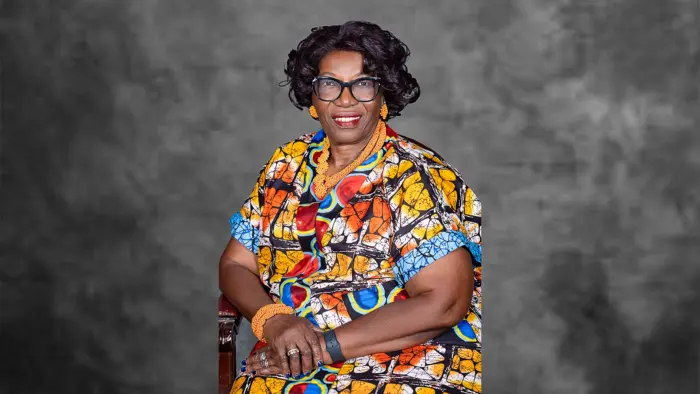
With over two decades of experience, Olusola Fadina has dedicated her career to supporting vulnerable children who have suffered abuse, neglect, or trafficking. Her foundation, Olusoga & Alaba Sonoiki, provides essential services, including educational support, healthcare, and moral guidance. Olusola also works with parents to address issues of abuse and neglect, fostering healthier communication within families. In addition to her foundation work, Olusola writes profiles for prospective adoptive families. She is married and has six children of her own.
What inspired you to set up a not-for-profit organisation that caters to the needs of the young ones?
My inspiration for the Olusoga & Alaba Sonoiki Foundation (the Sonoiki Foundation) comes from a proud family legacy of community service, a profound personal loss, and a direct encounter with a community in need. My parents set a powerful example. My late father, Chief Isaac Olusoga Sonoiki, was a dedicated councillor in Ikenne- Remo and was passionately involved in civic development. Over twenty years ago, he fought to ensure our town built a large water reservoir- a structure that still stands tall today, reliably serving the people. Growing up with that model of selfless leadership, combined with my long career as a social worker and child welfare administrator with the Department of Human Services (Children & Youth), instilled in me a lifelong love for youth development. This came from the intersection of a lifelong professional calling, a profound personal loss, and a direct encounter with a community in need. For decades, after emigrating to the United States of America, I dedicated my professional life to child welfare; I served as a social worker and eventually rose to become an administrator with the Department of Human Services, specifically within the Children and Youth Department, protecting and supporting abused and neglected children.
When I retired in 2018, my deep love for children didn’t disappear; I knew my service was not over. The exact vision for the Foundation revealed itself during a time of profound grief, when I lost my beloved mother, Princess Adeola Alaba Sonoiki. During her funeral ceremony in my native town of Ikenne-Remo, Ogun State, Nigeria, I witnessed an image that shocked me to the core: local children scampering for leftover meals, and seeing that raw, immediate vulnerability in their eyes affected me deeply. In that moment of grief, I resolved to turn our family’s sorrow into a sustainable legacy of hope. In 2021, we founded The Sonoiki Foundation in honour of my late parent. To give the organisation a strong anchor of trust, we based our programs within the very church where my late father worshipped. Incidentally, the Church’s history also revealed that my grandfather, the late Chief Emmanuel Adebayo Sonoiki, was the first person to engage in adult education and teach the elderly to read the Holy Bible in the Yoruba Language. Our goal is to combine my professional expertise with the church’s spiritual and moral framework to alleviate poverty, keep children focused on their education, and raise them to be responsible, thriving citizens.
Can you share some of the success stories you have recorded so far?
Since inception, we have been blessed to record significant milestones across education, healthcare, and spiritual mentorship. However, none of these achievements would be possible without the extraordinary dedication of our coordinator, Mrs. Catherine Temitope Adeniyi. She leaves no stone unturned: she maintains constant liaison with our pharmaceutical partners. She ensures our scholars’ welfare, tuition, and daily needs are met meticulously, on time, and regularly. She has truly been the operational anchor for all our success stories. Our success has come from working closely with the community; we have turned our vision into a tangible, life-changing program. Through Mrs. Adeniyi’s steadfast management, we have realised that education is a core tool for breaking the cycle of poverty. We currently fully sponsor the education of two young women at Olabisi Onabanjo University: one pursuing a degree in education and the other in accountancy. We are also sponsoring a student through high school, and we regularly donate laptops to other youth attending institutions of higher learning to bridge the digital divide.

Beyond financial aid, we focus on community education. Beyond financial aid, we recently hosted a powerful public lecture titled “The Power of Home Education in the Life of a Child,” led by Mrs R. Awodipe, a renowned local high school educator. This was a true eye-opener for parents and guardians, sparking an interactive question-and-answer session that clarified their role in guiding their wards. We intend to make these educational lectures a permanent fixture. Every year on the second Saturday of October, we host an annual health fair for the entire community. We bring in consultant ophthalmologists from University College Hospital Ibadan (UCH), alongside paediatricians, dental doctors, and hygienists. We provide completely free medical screening, dental treatments, and eyeglasses to children, adults, and the less privileged in the community.
We have been incredibly fortunate to receive generous pharmaceutical sponsorships from industry leaders like Vita Biotics, Fidson, Emzor, May & Baker, and Shalina. Additionally, my church family in Philadelphia, The Living Word Church Philadelphia, and the Labakcare Organisation provide tremendous, unwavering support to make these health fairs a reality. They have provided tremendous, unwavering support to make this healthier a massive success. n partnership with the Methodist Church of Nigeria, Ikenne-Remo, we actively anchor the annual Children’s Day celebrations. This week-long program engages children through academic debates, quizzes, and educational lectures. We also support the annual Easter and Galilee activities by providing stipends that allow our youth to participate in Diocesan Bible quizzes and talent competitions, where they consistently excel. Finally, to bring smiles during the festive season, we host our annual Joy to the World Christmas programme. It is a day filled with games, activities, and gifts presented by Father Christmas. Seeing the pure, unadulterated joy and excitement on these children’s faces every December is perhaps our most rewarding success story of the year.
How do you get support in terms of funding?
As the CEO of the foundation, living outside Nigeria presents a unique challenge in navigating and tapping into local funding networks. However, I have been incredibly blessed to be surrounded by a deeply devoted circle of family and friends who have championed this vision from its very inception, regardless of our financial landscape. A pillar of support has been my dear friend and colleague at the University of Ife, now Obafemi Awolowo University. Reverend Bolanle Oyeledun has taken it upon himself to spearhead corporate outreach, soliciting partnerships from numerous pharmaceutical companies for our Annual Health Fair programmes. His dedication has yielded immense support, enabling us to secure and distribute essential medications to cover at least three months for every patient seen at our clinics. Distance has not diminished my community’s generosity in the United States either. My family and church friends in Philadelphia pitch in yearly with vital financial and medical donations; furthermore, organisations like Labakcare, a US-based non-profit under the auspices of Mrs. Labake Fadeyibi, have generously stepped forward to provide funding and resources to keep our core programme running.
What makes you passionate about this cause more than any other?
My passion stems from witnessing the immediate, tangible transformation in the lives of these children and their families. Although I operate in a different setting today, this Foundation lets me continue my life’s work with youth, which brings me immense joy. One of our greatest rewards followed our Children’s Day lecture on home education. It has been a true blessing to see parents and youth cultivate an entirely new dynamic of trust. In a culture where children are seen but not heard, the lecture’s outcome has been magnified for me: seeing children come up with real, burning, passionate questions for their parents and caregivers. Young people now feel free to approach their parents with difficult questions, breaking down communication barriers that existed before. Seeing tertiary students thrive and progress in their respective universities also fuels my drive. Ultimately, the unwavering support of the Presbyter, Rev. Dr. Emmanuel Olusola, of the Methodist Church of Nigeria, Ikenne-Remo Diocese; the Superintendent, Reverend Oshundina; and the dedicated team of the Children’s Church gives me the spiritual and structural foundation to keep pushing this vision forward.
What is the hardest part of running a non-profit, and what are the daily obstacles you overcome to keep the foundation afloat?
Without a doubt, the hardest part is the geographical distance and not being on the ground to oversee day-to-day operations. Operating a foundation across continents requires immense trust and coordination. Fortunately, an exceptional management team in Nigeria supports me and handles daily tasks effortlessly. They ensure our college scholars are well supported, maintain continuous liaison with pharmaceutical partners, and coordinate closely with the church and medical teams. I hold our coordinators, Mrs. Catherine Adeniyi and Rev. Oyeledun, in the highest esteem. Their exceptional leadership ensures the Sonoiki Foundation runs smoothly.
What are the major issues facing Nigerian youth, and what solutions can you offer?
Nigerian youth face a web of complex crises that strike at the very fabric of our nation. Addressing these challenges requires urgent coordinated intervention from the federal, state, and local governments, as well as active participation from religious and social organisations. Drawing from my professional background in child welfare administration, I see three critical areas requiring immediate action.
Firstly, is eradicating the get-rich-quick mindset. We are witnessing an alarming shift toward instant gratification among young people. The solution must begin with a massive moral reorientation. We need to reinstitute core values into children from infancy. This requires a united front between strong home upbringing, robust school curricula, and community-wide character-building initiatives that honour hard work and integrity.
Secondly, we need to combat the substance abuse epidemic. The skyrocketing rate of drug abuse, especially the consumption of lethal mixtures like Kolos, narcotics, and prescription drugs like tramadol, is becoming endemic, particularly in urban areas. To combat this, government-backed educational awareness campaigns must penetrate every level of society. Crucially, the government must establish and heavily equip rehabilitation centres staffed with certified drug addiction counsellors and social workers to rescue our youth from dependency.
Thirdly, is ending child abuse and economic exploitation. It breaks my heart to see children as young as six years old hawking goods on dangerous streets and bridges during school hours to support their families. This is a severe form of child neglect. We need district enforcement of child protective laws alongside explicit legal bans on street hawking and begging for school-age children.
Lastly, is the institutional welfare framework. Poverty is the root cause of these symptoms. Federal and state governments must enact comprehensive social welfare policies implementing targeted nutritional and financial assistance programs for vulnerable families with children under the age of 18 to ensure youth can stay in the classroom where they belong rather than being forced onto the streets. The impact of poverty on access to schooling is explored further in reporting on out-of-school children.
Where do you see your foundation five years from now?
The Sonoiki Foundation looks to the future with absolute optimism. Five years from now, we expect to have expanded our outreach and scaled our services to impact an even larger community. Because we firmly believe that education is the ultimate tool to break the generational cycle of poverty and elevate a community’s economic well-being, we intend to significantly increase the number of secondary and tertiary scholarships we award to less privileged youth. We have set powerful, laudable goals in motion, and I do not doubt that the foundation will grow into a thriving, self-sustaining institution that continues to honour my parents’ legacy for years to come. We also plan to work with local hospitals to secure a steady stream of medical professionals each year at minimal cost. We also plan to coordinate with the Ogun State Ministry of Health to further educate the community on the benefits of registering their families for the National Health Scheme as we continue to expand our outreach to rural communities in Ogun State.
