

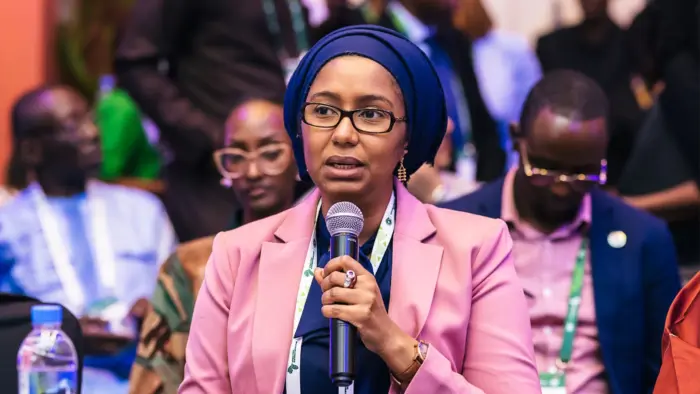
Governments across the Sahel have called for increased investment in agriculture and livestock, as countries in the region seek to close financing gaps, strengthen food systems and create economic opportunities for a rapidly growing population.
The call was made at a High-Level Ministerial Roundtable on the Sahel held during the Africa Food Systems Forum (AFSF) 2026 and convened by Heifer International.
Ministers and government representatives from Niger, Mali, Senegal and Nigeria, alongside officials from the World Bank, African Development Bank (AfDB), International Livestock Research Institute (ILRI) and other development partners, examined how governments and the private sector can unlock more capital for agriculture and livestock value chains.
The discussions centred on strengthening infrastructure, improving access to finance, expanding regional markets and developing mechanisms that can reduce investment risks for farmers and agribusinesses.
With nearly 400 million people living across the Sahel and about 65 per cent of the population below the age of 25, agriculture and livestock remain critical to livelihoods and economic development. About two-thirds of the region’s population depends on the sectors for their livelihoods.
Yet farmers and agricultural businesses continue to contend with limited access to finance and markets, inadequate infrastructure, climate pressures and wider economic shocks.
Safia Boly, Senior Vice President, Africa, Heifer International, said the region’s economic potential is often overshadowed by its humanitarian challenges.

“The Sahel brings a formidable economic opportunity that is little known,” she said, noting that population growth is simultaneously creating greater demand for jobs, incomes and markets.
For Nigeria, the conversation is particularly significant as the country seeks to strengthen its agricultural and livestock sectors while addressing food security, employment and the need to diversify its economy.
The roundtable identified three priority areas for investment: productive and market infrastructure; financing and risk-sharing mechanisms; and stronger coordination between governments, investors and businesses around viable opportunities.
Participants also stressed the need to move beyond fragmented interventions towards investments that support entire value chains — from production and processing to finance, infrastructure, distribution and access to markets.
Unlocking opportunities for women and young people
The investment conversation also carries implications for the region’s women and young population, who play significant roles across agricultural value chains but often face barriers to finance, markets, technology and productive assets.
For young people, expanding agriculture beyond primary production into processing, logistics, livestock enterprises, technology and other related services could create new avenues for employment and entrepreneurship.
However, participants noted that this will require businesses and producers to have access to the capital, infrastructure and markets needed to scale.
Livestock and dairy, agricultural value chains and climate-resilient production were highlighted as areas with significant investment potential.
Representatives of the World Bank, AfDB and ILRI shared perspectives on financing, research, innovation and partnerships required to mobilise capital into these sectors.
Country representatives also outlined areas where investment could make a measurable difference.
Niger highlighted opportunities in irrigation, livestock feed, dairy processing and poultry, while calling for greater co-investment rather than reliance on traditional aid.
Mali presented an estimated 215 billion CFA francs in proposed livestock and fisheries investments, including plans covering 75,000 hectares of irrigated agriculture, 125 water points and 10 livestock markets. According to the Malian delegation, the investments could generate about 80,000 jobs.
Senegal focused on the need to capture more value from its agricultural and livestock resources by expanding local processing and reducing dependence on imported processed products.
Nigeria, meanwhile, highlighted opportunities to strengthen its agricultural and livestock sectors and attract increased private-sector investment.
The discussions also acknowledged that financing cannot be considered in isolation. Investors’ decisions are shaped by the broader business environment, including infrastructure, market access, regional trade, climate risks and the capacity of farmers and agricultural enterprises to participate competitively in value chains.
Boly said collaboration between governments, development finance institutions, philanthropic organisations and private investors would be central to unlocking the region’s agricultural potential.
“The partnership is at the heart of the way we operate,” she said.
The outcome of the roundtable is expected to guide further engagement between governments, investors, development finance institutions and private-sector players on priority investment opportunities and potential co-financing.
The next phase will focus on addressing the infrastructure, financing and market constraints identified during the discussions, while strengthening coordination around agriculture and livestock investments.
For a region with a youthful population, rising food demand and significant agricultural resources, the message from the roundtable is clear: investment in agriculture is not simply about producing more food. It is also about building businesses, creating jobs, strengthening regional trade and giving millions of young people — particularly women and youth — a greater stake in the region’s economic future.
