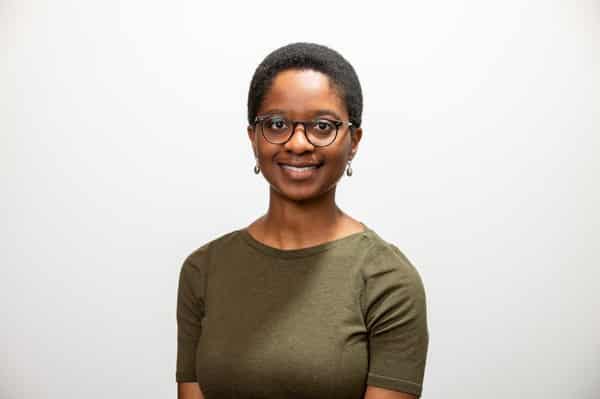
In an exclusive interview with The Guardian’s Ifeanyi Ibeh, Dr Onaopemipo Abiodun, a renowned health systems researcher, shares insights on her work, which focuses on analyzing data to assess trends in health programs and systems. With experience working across multiple countries, Dr. Abiodun highlights the importance of primary healthcare, health financing, and quality improvement initiatives in achieving universal health coverage. Dr. Abiodun also discussed her contributions to various projects that aim to inform health policies and improve healthcare outcomes in low- and middle-income countries. She also provides a glimpse into her projects and her perspectives on the future of global healthcare.
Before we dive into your research, let’s start with something simple, how do you usually describe what you do to someone outside the health research world?
I describe my research this way: I collect and analyze data on health programs and health systems with the aim of assessing trends that can indicate whether these programs are improving the provision of health services or improving health outcomes, and whether certain parts of the health system are working to provide health care effectively and improve health outcomes as they should.
Health systems research is such a complex and evolving field. What first drew you to it? Was there a particular experience or moment that made you realize this was the path you wanted to take?
During my undergraduate studies at the Massachusetts Institute of Technology (MIT), I majored in biology because I was fascinated with science and discoveries on how the body works and how different mechanisms work together to maintain our health and the way our bodies function. However, growing up in Nigeria, I also saw how the weaknesses in our health system made it difficult for people to access needed health care. And I’ve always wanted to pursue a career that would improve Nigeria’s development. This desire inspired me to get into health systems research. I wanted to see medical interventions, which have been discovered through biological research and have been proven to work, reach the larger population of Nigeria and other countries struggling with health system weaknesses. So, I decided to pursue a career as a health systems researcher to inform health policies that are geared towards making needed health care accessible and equitable.
Over the years, you’ve worked across multiple countries and health systems. If you look back at your journey so far, what’s one research project or breakthrough that you’re most proud of?
I am proud of the summation of the work and expertise that I’ve built over the years. I’ve had the opportunity to evaluate quality improvement programs that seek to improve maternal and HIV care. I’ve also worked on health financing projects in low and middle-income countries and conducted research on primary care quality and its association with health outcomes in a low-resource setting, among other projects. So, I am proud of the contributions that I have made to different projects that aim to improve the accessibility and quality of healthcare worldwide, and the part that I have played in ensuring that good health is accessible to all, not just the lucky few.
Can you share an example of a project you worked on that directly influenced a government’s decision on healthcare policy or funding?
I have had the opportunity to work on several public health research projects that have sought to inform and support policies to strengthen health systems as relates to health financing, health quality improvement approaches, and primary health care. As an example, I was part of the U.S Agency for International Development (USAID)-funded Health Finance and Governance (HFG) project, which supported several low and middle-income countries to strengthen their health finance and governance systems through research and implementation activities. As a part of my work, I reviewed and finalized reports on diagnostics conducted to advocate for domestic resource mobilization for health, improve government health budget execution, and inform the implementation of state health insurance schemes in Nigeria. These diagnostics included fiscal space analyses, financial gap analyses, political economy analyses, and public financial management assessments. I also analyzed financial gaps to sustaining various projected coverage levels of HIV care and treatment services in Lagos and Rivers states, Nigeria. These diagnostics helped to elucidate the financial, political, and bureaucratic environment influencing health financing policies in Nigeria and highlight opportunities for improvement. With the support of the HFG project, Lagos state increased its HIV/AIDS budget in 2017. HFG’s work also resulted in several states engaging in the process of passing laws for their state health insurance schemes.
Health financing and primary healthcare are major challenges, especially in low and middle-income countries. What’s one of the biggest misconceptions people have about healthcare funding, and what has your research uncovered that could change the way we approach it?
A misconception that I’ve come across is the prioritization of hospital/specialist- level care while overlooking primary health care, which is a wholistic approach to health that requires effective first-level care. The 2008 World Health Report by the World Health Organization (WHO) describes this issue as “a disproportionate focus on specialist, tertiary care, often referred to as ‘hospital-centrism.’” Certain factors, such as the political power of key stakeholders and the history of health systems, give rise to this phenomenon.
However, PHC is an essential part of a health system. Evidence from several studies shows the association between the supply of primary care—first-level health care—and better health outcomes. My PhD thesis also shows an association between primary care quality and better health outcomes among study populations in India. This growing body of research can be used to make the case for the prioritization of PHC in health systems worldwide.
You’ve done extensive work evaluating antenatal, maternity, and HIV care programs. Can you take us inside specific projects?
I have had the opportunity to contribute quantitative analyses to the evaluation of 2 projects aimed at improving the quality of services related to antenatal, maternity, and HIV care. The first was a quality improvement (QI) approach, known as Standards Based Management Recognition (SBMR), implemented in Cote d’Ivoire by Jphiego, which is an NGO affiliated with Johns Hopkins University. This project was funded by CDC/PEPFAR. This QI approach entails the use of evidence-based health service delivery norms to standardize the quality of health services. The project applied the SBMR approach to standardize HIV care C treatment services, including services for maternal and newborn health and the prevention of mother-to-child transmission of HIV/AIDS (PMTCT), by using checklists to monitor the attainment of health service standards based on national and international guidelines. The 2nd project is the second phase of a nurse mentoring program implemented in Bihar, India by CARE India, working closely with the Government of Bihar, with support from the Bill and Melinda Gates Foundation. The program entails the training of nurses and midwives on obstetrics and newborn care with mentorship from previously trained nurses.
These projects demonstrate potential approaches to support health providers in lower-middle-income countries and can serve as examples to be adapted by policymakers in similar contexts. My experience working on these projects also showed me the importance of incorporating routine practices of quality monitoring and improvement in health systems.
Health challenges differ so much from one country to another. Yet, your work has been impactful across multiple regions. What is it about your approach that makes it effective and scalable, even in vastly different healthcare environments?
I have had the opportunity to contribute to a variety of projects over the course of my career as public health researcher, including program evaluation of quality improvement and nurse mentoring approaches for antenatal, maternity and HIV care C treatment services; primary health care systems assessment; health financing research and project administration in the context of low- and middle-income countries, including India, Nigeria, Haiti, and Cote d’Ivoire, with public health organizations in Sub-Saharan Africa and the US. While specializing in health systems research, I have built skillsets in quantitative and qualitative research, project coordination, as well as written and verbal communication which are cross-cutting and applicable to different research study designs and public health research topics. The projects that I have worked on are connected by the common thread of addressing various components that work together to provide health services to a population. Findings from these projects are invaluable to the field of health systems research because they provide insights that can inform efforts to strengthen health systems and promote public health in several contexts.
Your research has been cited by fellow public health researchers and presented at global conferences. How does it feel to see your work making such a broad impact? And what has been one of the most significant moments of recognition in your career?
I have enjoyed collaborating with my professors, supervisors, and colleagues over the years to coauthor technical reports and book chapters that bring public health research findings to wider audiences, thereby informing future policies and research studies. I am also grateful for the awards that I received during my graduate studies in public health. These awards not only supported the completion of my degree but also encouraged me in the pursuit of my goal to develop expertise needed to conduct research that informs the design, implementation, and evaluation of health systems polices, all for the sake of creating strong health systems that support a healthy population. It has been a fulfilling journey, and I am grateful for the contributions that I have made and the recognition that I have received so far.
Collaboration is a huge part of global health research. Have you worked on any major international research consortiums, expert panels, or advisory committees where your input played a key role?
Yes, collaboration is essential in global health research. All the projects that I have contributed to have involved more than one organization, and I have been part of research consortiums. For instance, during my PhD program at Johns Hopkins University, I was part of a study to assess the primary health care system in Bihar, India. This study was conducted under the Bihar Technical Support Program, a partnership between CARE, the Bill C Melinda Gates Foundation, and the Government of Bihar. This research consortium also included Johns Hopkins University and Oxford Policy Management. I worked with other study teammates to conduct primary and secondary data analyses, develop materials for data collection, and facilitate team meetings to monitor the progress of the study. It was a great opportunity to collaborate with colleagues and contribute to this project in several ways.
Looking at where global healthcare is heading, what do you think will be the biggest challenges in the next decade? And based on your experience, what solutions should we be focusing on right now?
Two major challenges to tackle over the coming years will be the drop in foreign aid for global health and the rising burden of chronic conditions. High-income countries have funded the provision of key health services in low- and middle-income countries for a long time through bilateral and multilateral organizations. Given the U.S.’ withdrawal of much of her foreign aid for health and the talks of aid cuts among other donor countries, it is imperative that LMICs prioritize funding their health systems through ways that do not rely heavily on external assistance or place a financial burden on care seekers.
Governments need to ensure that their health budgets are executed effectively. This way, the funds that are already available are used accordingly. Budget allocation for health will also need to be increased. The approaches used—be they taxation, health insurance, or a combination of approaches—will require the coordination and buy-in of key stakeholders within and outside the health sector to be successful.
The rising burden of chronic conditions, like heart diseases, diabetes, and cancer, is another major cause for concern. Primary health care is an important means through which the prevention, detection, and long-term management of chronic conditions can be carried out, so governments need to prioritize strengthening their PHC systems in the coming years. PHC encompasses first-level care, i.e., primary care. My PhD thesis showed that better primary care quality is associated with a lower likelihood of hospitalization for a set of chronic conditions, which include lung disease, heart disease, and diabetes, among a group of adults in Bihar, India. These conditions are among the leading causes of chronic disease deaths globally. As such, my thesis adds to the evidence of the importance of PHC in combatting the rising burden of chronic conditions, especially in LMICs, which account for the majority of chronic disease deaths.
If you had to give one piece of advice to policymakers, what would it be?
I would advise health policy makers to put the well-being of the populations they are responsible for at the forefront of their decision making. Policy makers face other competing priorities, such as winning political favor and catering to the desires of influential stakeholders who do not represent the needs of vulnerable, overlooked populations.
To ensure that high-quality healthcare is accessible to all, policymakers need to keep the well-being of all members of their population at the forefront of their work.
Keyphrase: Onaopemipo Abiodun
Meta Description: Health systems researcher Dr Onaopemipo Abiodun shares insights on primary healthcare, funding gaps, and quality improvement initiatives to strengthen health systems in low- and middle-income countries.
Tags: healthcare, Onaopemipo Abiodun, public health, health