 Follow Us on Google News
 Follow Us on Google Discover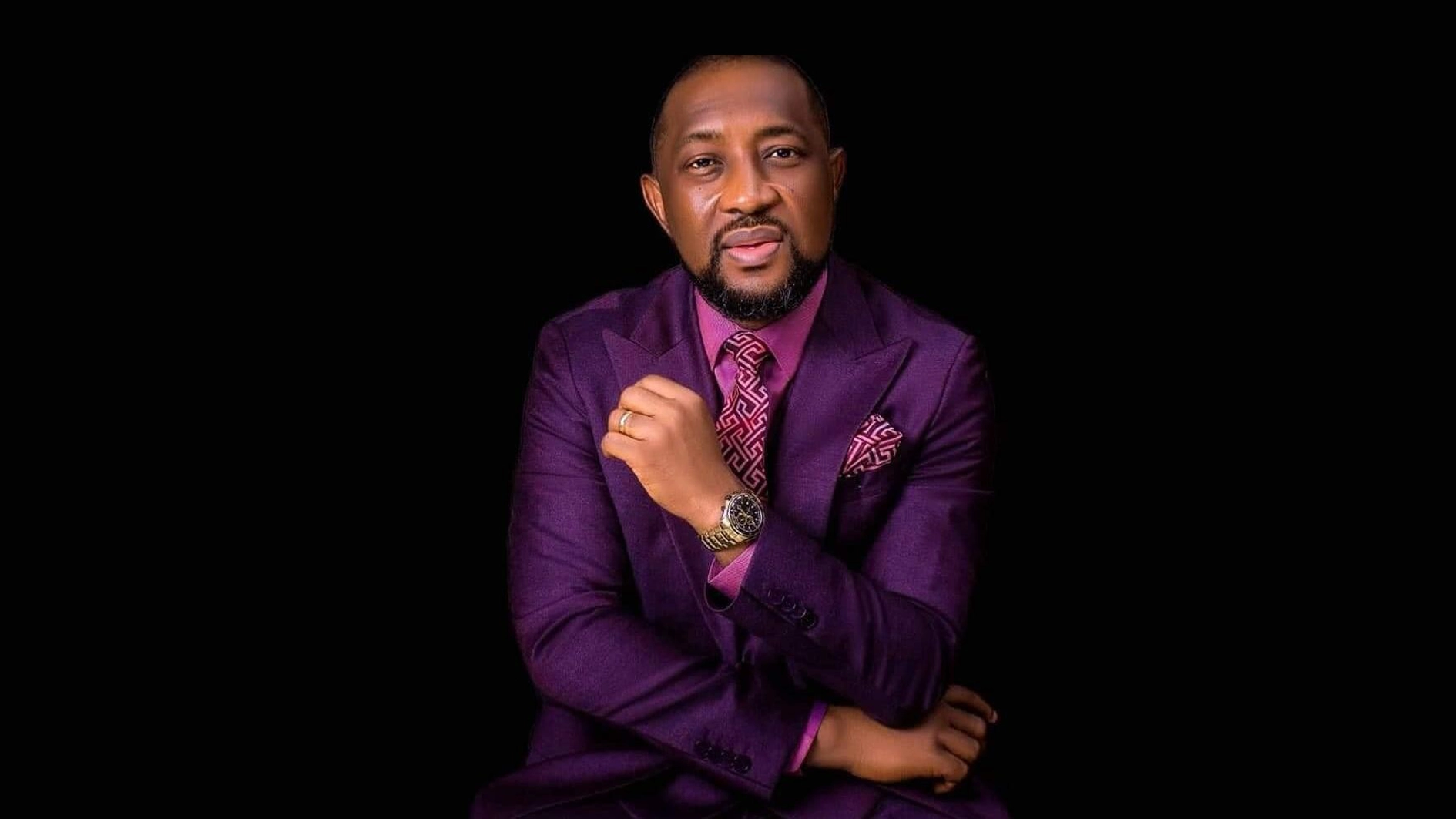
Ahead of the 2027 elections, many Nigerians are anxious about the role of the judiciary, amid concerns over the integrity of the electoral process and post-election adjudication. Reflecting on the aftermath of the last general election and future elections, the Founder and Lead Pastor of Gateway International Church, Pastor George Izunwa, in this interview with ANN GODWIN, says politicians would naturally adjust if judges uphold justice and act with integrity. Izunwa, who is also the Founder/Coordinator of Impact Ministers Mentoring Outreach, speaks on the secret behind his impactful and steady growth in ministry for three decades.
What, in your view, are the biggest threats to credible elections in 2027?
For me, the judiciary is the biggest concern. When they say the judiciary is the last hope of the common man, it matters a lot. But as long as the judiciary in Nigeria is messed up, things will not be okay whether in politics, religion, business or whatever. The biggest challenge I have in the governance of Nigeria is not just the executive or the legislature; it is the judiciary. The judiciary is where people can go and get things right.
In the upcoming elections, the place most Nigerians are more confused and scared of is the judiciary. In the last elections, it was the same thing. If the judges are upright, politicians will naturally adjust.
Nigerians are fighting the wrong people, throwing stones at politicians. But if the country can get the judiciary working rightly, the police working, anything can augur well and be done rightly.
When it comes to political parties, anybody can go anywhere but the issue is after the voting, how does it work out? In the last elections, we were here in Rivers State and I don’t know how many people in this state can say boldly that they voted the way the elections were reported; that the outcome of the election represented their votes. I don’t think so. Most of the people in the state felt that the last elections were rigged; whether right or wrong, that is their thinking. Across Nigeria, people feel the outcome of the election does not represent what they did and that is why there is apathy.

Yes, there is growing voter apathy, especially among young Nigerians. What do you think is responsible for that?
The apathy is there because there is national capture; it’s like the political elites have captured the nation and are daring anybody to confront them and when young people come out to confront them they attack them. This is supposed to be a democracy but it’s like a democracy of the gun and democracy of the rich. Look at the coming elections – political parties are bold to ask aspirants to take a form with N100 million, N50 million, N30 million. If you want the youth to get involved, how many young people from 20 to 40 years can afford to buy a ticket for N100 million or N50 million? Now the people that are doing these things are not illiterate; they are not people who are not exposed. They travel around the world; they know how systems run, so they are doing what they are doing deliberately and nobody is challenging them. As clerics, we have to keep telling them the truth and praying; but the rest is left for the civil society organisations (CSOs).
Has the electoral system has improved since the last general election? If no, what gaps still exist?
The truth is our electoral body is not independent. They answer Independent National Electoral Commission (INEC) but they are not independent. They are manipulated by any government in power. You can’t trust what is going to come out from them and that is a challenge for the CSOs and the masses.
So, if INEC fails, you can go to the judiciary. But the judiciary is our biggest concern and challenge. People focus on the judiciary but sadly, they consistently fail; you see conflicting rulings everywhere. When we were kids, judges were the most respected people because we saw them as incorruptible. But today look at those they are lifting up as benchers; it’s sad because we have accepted it as a norm.
With the above concerns you highlighted, what specific reforms would you like to see before the 2027 elections?
Well, if the live electronic transfer of results is instituted, we will be sure that as the voting is going on we are seeing the results; not after it’s done, they will go and review it and give us the sanitised one. That’s one area.
We expect that such a reform should be implemented. They know that it can be done but they don’t want to do it; that has been their challenge. In any country under heaven, the legislature can make a law, but you can challenge the law. But in Nigeria, any law they make, you can’t challenge it because the people that are supposed to say, ‘this is not right’ are not speaking. Even when some CSOs make an attempt, the court does nothing. The Constitution is skewed. Even in the U. S., they can make a referendum and you take them to court and win. But in Nigeria, it doesn’t work. I don’t know if their hands are tied by their own intent or by the law; but these things are things that should be challenged. So, for me, I still insist that if the judiciary in Nigeria is working, impunities will not be there or they will be reduced.
Beyond the judiciary, what qualities should Nigerians look out for in the candidates?
You see, in Nigeria we have what is called the kingmakers in every party who select people as their anointed candidates for various positions for certain reasons, either for returns, loyalty and all of that. So, because they are gatekeepers, they choose the worst and push it to the people. If I am a young man of about 40 years and as a civil servant with great visions resigns to seek political office and they say the form is N100 million and I don’t have it, for me to get it, I need a godfather who has his conditions, which are not people-oriented. At that point, what do I do?
So, you can see that the system is messed up. If it’s something you can vote and your vote counts, then we go to primaries and in the primaries we say these are the kinds of people we are looking for. If the parties are having open primaries and people can actually vote, you can encourage good people to join the parties; but the parties don’t allow open primaries. They skew things in a way that the party leaders reach a consensus and say, ‘vote for this person.’ So, this is a big challenge as the system makes it very difficult to really push in very credible individuals.
Insecurity remains a major concern in the country. What role should the church play in addressing this challenge?
Security is a major concern, and we have been praying about it but it got worse in the last administration because the late president Mohammed Buhari was sleeping on duty. I know that he had the ability to say stop, to fight them, but he put tribalism above national interest and he was feeling like fighting them was against his people. But the problem with that is that the people he felt he was protecting are not his people. The Fulani are suffering: the Hausa are suffering; Muslims and Christians are suffering. Every part of the country is messed up because instead of addressing evil, they allowed tribal and religious sentiments to come in. They could have fought this from the beginning with vehemence; but sadly insecurity in the country now has become a hydra-headed monster; they can’t control it. It’s killing them. The North is devastated. In some parts of the North, they are paying tribute to these people. It was a wrong thing that politicians played us into.
You don’t play with evil; you don’t decide that evil is normal or is acceptable because the person speaks your language or is a member of your religion. No, when the snake you train grows it can eat you. But right now, we need to fight.
What we need is for the army, the leaders to understand that this is not religion anymore; this is the life of the people being destroyed. At this point, the nation needs to wake up; President Bola Tinubu needs to wake up. The North is bleeding and it’s coming down to the Middle Belt. Sadly, when you go to the Middle Belt, some politicians don’t even care about the pain of their people; they are just interested in political positions.
Do you think the offer by U. S. President Donald Trump should be supported?
We cannot put our trust in America. I love and respect America but America is only interested in America. All these years, I have never known any country in Africa that America helped to stand. Even Liberians that are ex-slaves of America, how did America help them? America is for Americans, Nigeria is for Nigerians. We can partner with them, work with them, get intelligence, get training from them but we must take responsibility for our people.
So, people shouldn’t think that America coming in here will change anything serious. If America is coming in here, the first thing they will think about is what they can benefit from. Their interest to protect anywhere they have ever intervened is their benefits. What is their interest in the North? It is Nigeria that has interest in those places and we have to intentionally protect them.
The question Nigerians should ask is: In many places these things are going on, is mining going on there? Are they protecting the assets? Who is sponsoring them, equipping them? These are the critical questions that need to be asked. If we can get answers to these questions, then government can sit down, partner with the U. S. or anybody and get things done. We want peace in Nigeria.
Will this usher in development?
Insecurity is really not the main cause of underdevelopment here; investors have been leaving Nigeria because investment truly doesn’t work well here. Why? Take the power issue for example. If today, the president of this country and his team are able to give Nigerians just 12 hours of uninterrupted electricity, investors will return to Nigeria because there are many parts of Nigeria where the insecurity challenge is not an issue. Yes, it is a problem but our key issue is energy infrastructure.
My thinking when Tinubu came into power was that as he tried to make some things work in Lagos, he would replicate that in Nigeria. But I am still watching to see if he can still do anything. Tinubu is almost four years in office and I haven’t seen any power issues he has addressed. If he has done so in different areas, I wish he will get it down to us in Port Harcourt. If they address power, things will improve.
So, deplorable infrastructure across Nigeria is driving away investors. Look at the East West road; they have been working on it since the administration of Olusegun Obasanjo; that is since 2006. Nigerian leaders have no conscience. If these roads are working, distribution of goods and services becomes easy and development can come in. There is a lot they can do to change the narrative, but they are not doing it.Things are getting worse in Nigeria because politics is a career; politics is the only job they know and if they leave it they go down. That is why some politicians don’t want to leave office. So, for the young, if you are waiting for the current politicians to review laws and say come in, it will be difficult. You have to force your way into power circles.
Let’s leave national issues and talk about your calling. Gateway International Church, which you founded, recently celebrated her 30th anniversary. What factors have helped you to sustain the growth of the church since its establishment?
The first thing that comes to my mind is a deep sense of call. From the beginning of the church, I have moved with an understanding that God called me. I have not worked as if I am pursuing an ambition, clout or popularity. So, it helped me to calm down, to focus and to take the journey as I know God is leading me.
The second thing that has helped me is consistency. Consistency to me is doing the right thing when it is working, when it is not working until it begins to work. So, I have carried a deep sense of call and I have chosen to be consistent in my journey. I don’t spend all my life reviewing new doctrines, new approaches, and all that. I believe God gives each person his own style, his own approach and pattern and you progress in it; so I have kept to that.
The third thing that has helped me is having a very supportive wife. My home has not given me any headache. I have not had unnecessary battles and distractions from the house, instead it has been encouragement, strengthening, and back up in prayers. So, that has been very key to me.
Another part of it is the people God sent to me early. If you look at my leadership team, you will be surprised that many of them have been here with me from the beginning of the church. And if you have worked with someone for this number of years without crisis and confusion, and they are still excited in the work and believe in you and the vision, it’s only God that could have done that. So, I have seen that.
Another factor is spiritual relationships. When the church was young, I got connected to the ministry of Bishop David Oyedepo and I got a lot of inspiration from there and I followed his assignment until now. I have worked with men that are connected to him directly. Also, when I submitted to Dr. Paul Enenche in ministry, I found that his stretching, his continual motivation and impartation have helped the journey. It kept me from funny relationships that trip off many pastors.
There are people you associate with and they put a cover over your assignment. Essentially, loving God, following Him, serving Him, living for Him and making prayer a backbone of my life has been my secret.
You have been deep in medical outreach, empowerment and many other areas, can you throw more insight on such programmes?
We have the George Izunwa Medical Outreach. If you go to our website and Facebook, you will see that we have carried out medical outreach in different communities in various states. For instance, we treated about 4,000 persons in Imo State for free. We did so many surgeries in Bakana in Rivers State; we have treated about 3,000 persons, carried out so many surgeries free of charge, and given out hundreds of eye glasses. We have also done outreach in Eliporanwa community in Port Harcourt, Rumuolumeni, and just last month we did in Rumueme community in Port Harcourt where over 3,000 persons benefitted and over 40 surgeries done for free of charge because we have a hospital. So, when we go out, our doctors assist as well as the church’s medical team and volunteers.
We do empowerment initiatives; we give scholarships; we honour outstanding teachers. We do special empowerment for widows and the elderly where we honour elders. They don’t have to be our members; we also teach them how to live better. So, church is beyond religion. If you do only religion, you can’t impact society; we are very intentional about that. These are some of the activities we do.
You are also making great impacts through the Impact Ministers Mentoring Outreach; how about that?
When I started, I told people that I didn’t plan to mentor pastors; I started mentoring by accident. When we moved into our old site at Eliporanwa, I noticed a lot of churches around there were not doing well. So, I talked to some pastors there and told them that we will be praying together and get moving. About eight pastors came and we prayed; then more people started coming. Before I knew it, the number increased to 32, and then to 80. Initially, we just gathered and prayed every Saturday but later we began to structure it. We would have the prayer, a little teaching, sharing, and from there we had the first retreat in a hotel and by the second time we were doing it, we needed two hotels and we paid. It was expensive but the pastors were grateful; it was after that one that one of them said we needed to give it a name because all these while, it didn’t have a name. So, I prayed about it and God said, call it “Impact” and from there God began to take us forward. We started going from city to city, nation to nation. We have done Impact in Liberia, Cameroon, Germany, the U.S., South Africa, the UK and other countries. Today we have Impact pastors across the globe. It has just been beautiful.
I believe it is because discipleship is meant to have an impact in society. I believe that my work in Port Harcourt is impacting. One day, I went to play golf and a young man saw me and said that my teaching changed his life. He said he had made up his mind to chase his wife out but that he listened to my message from his house to the office and when he got to the office, he stayed in the car and couldn’t enter the office, but went back to the house and apologised to his wife. He said his home was new and peaceful. I believe that if they are carrying out what we teach them, they will have more results.
What are your final words?
I believe that God will help Nigeria. Faith means you don’t lose hope. Even against hope, you still have hope. I know that Nigeria has a future and I believe that by prayer, we will get there.

