 Follow Us on Google News


 Follow Us on Google Discover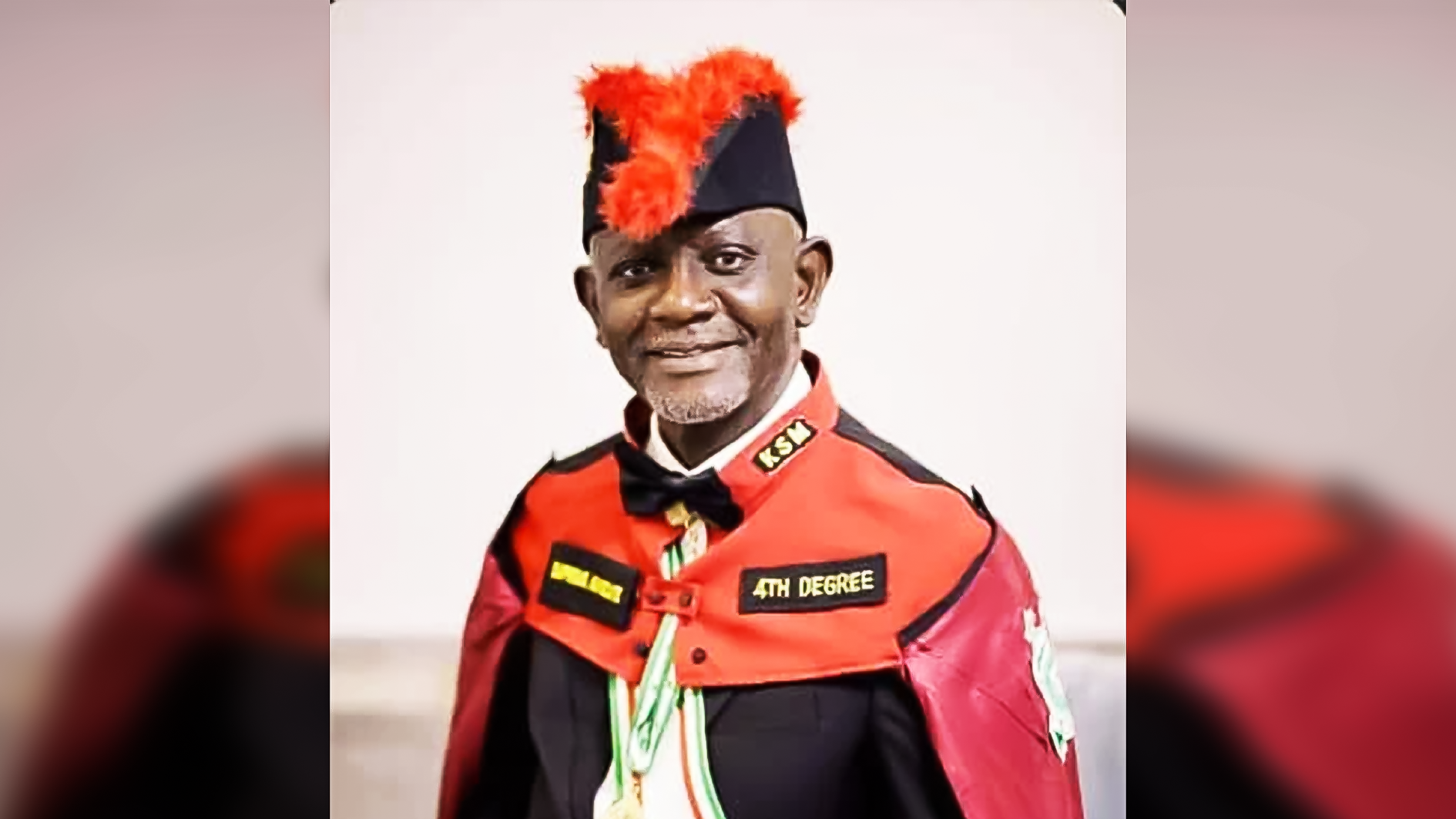
Sir Steve Adehi is a Senior Advocate of Nigeria (SAN) and President of Papal Knights Association in Nigeria. Last December, he was elected the Supreme Knight of the Order of Knights of Saint Mulumba Nigeria at its 46th Supreme Convention held in Kaduna. In this interview with TONY ONYIMA, Adehi shared his vision and priorities for the foremost Catholic lay apostolate in Nigeria.
Congratulations on your recent election. What emotions and sense of responsibility come with leading one of the most respected Catholic lay apostolates in Nigeria?
We thank God that the elections have come and gone. At first, it was the desire to lead the Order. And then we put our efforts into selling ourselves as the right candidates for the job. But when the results came out and I saw the overwhelming numbers that voted for me, I felt really humbled.
At that stage, I knew I had a big responsibility on my shoulders, because I saw the way a lot of people were looking at me. Some were coming to greet me and hug me and whisper in my ears, ‘we believe you can turn this Order around. We believe you can make this Order great again. We believe you can take us back to the glorious days of this Order.’ And even after the elections, I’ve been to so many places, functions, many Sub-councils, even churches. Wherever I go, even in courtrooms, you will find somebody who just runs from somewhere and meets you and says, ‘congratulation. SK, we see what you’ve already started doing. We are very hopeful you will take us back to those glorious days.’ Every time I hear that, it increases the burden on me. I know that a lot of people have high expectations that I’m going to do so much and I really don’t want to let them down. By the grace of God, we are not going to let them down. So yes, emotions were high, and then the sense of the burden that is on me. This actually helps me to stay focused and try to do the right thing so that I will not disappoint the many people who have hope in my ability to take them back to the glorious days.
The Knights of Saint Mulumba has existed in Nigeria for seven decades. How do you intend to build on the legacies of your predecessors while leaving your own imprint on the Order?
Well, I can see what the great men who have led us before have done. They have put in their very best to bring the Order to where it is now. The circumstance under which they led is a little bit different from the present time. Now, there’s a lot of improvement in technology, and then we have a good number of younger people in the knighthood, and more educated people. So to that extent, I want to acknowledge the fact that they’ve done so much in the area of charity, in the area of making interventions here and there.
But we want to do more. I’ll give you an example. Every regime has had to do fundraising to have money to see the administration through. But we intend to have an endowment fund so that we can use the interest accruing from the endowment to augment the operational expenses of the Order. This will ensure that those coming after us will also find money to take off. Over time, we would have built a resilient and sustainable Order. If we’re able to have that financial discipline, then the Order will be liquid enough to undertake ambitious projects. Right now, KSM has no funds for administration, because if you look at what we do, even in our tellers, there is no provision at all for administration. All the things we pay for are itemised. Every money that is collected goes to satisfy those items.
Besides the endowment, what would you describe as the central vision of your four-year tenure and what key priorities should members expect under your leadership?
We have identified so many crucial areas for which we have set up various committees to look into. These are all specialised areas. For instance, the issue of security has been there and we all know that the churches have been under attack for a long time now. If you go to the northern parts of the country, you will see that a number of churches have been wiped out. Even in the South, we have some of these attacks. The politics of whether it is genocide or not is irrelevant. The fact is that people are being killed. Therefore, we have set up a security committee made up of knights who are experienced in security matters. Some of the members have peacekeeping experience and some actually took part in the Northeast operations. We brought them together to give us a blueprint on how we can secure our parishes. Yes, we might not do it with arms, but then at least we can set up a framework to gather intelligence to protect ourselves.

So, this committee has actually submitted an interim report, which we have shared with the secretariat of the Catholic Bishops’ Conference of Nigeria (CBCN). I think a few bishops also have it. By the time they give me the final report, we’ll share it with the bishops again and see if it’s a model we want to adopt.
Apart from that, we have also put together an experienced media team. You notice that recently, some people derive joy in attacking the church. So, that team is there to react instantly to these issues. We had a good response to some of the issues like the Dirty Christmas controversy that came up last December. It was for the effectiveness of this group and the efforts of others that we were able to do a detailed response to that issue. Even the needless attacks on Bishop Matthew Hassan Kuka, arising from his appearance at our conference, were sufficiently responded to.
You may have also noticed that recently all the Catholic knights met under the aegis of Joint Alliance of Catholic Knights (JACK) and in collaboration with Catholic Bishops. The meeting took notice of the fact that there’s voter apathy in the country. We’ve looked at elections from 1999 till the last one in 2023; you find that the number of those who take part in the voting process is declining significantly. Consequently, we have sent a proposal to the bishops to lead a campaign to mobilise people to go out and register and vote.
Christians, Catholics in particular, should realise that voting in an election is a crucial part of responsible citizenship. They should also be part of the political party politics. They should also be part of those defending their votes on election day.
There’s a committee responsible for this. We’ve done some enlightenment jingles, which we have distributed to our Metropolitan and Sub-councils for publication. We want people to be aware of their rights and obligations.
Then we have the Investment Committee, which is supposed to advise us on our various investments. Our investments have not been doing too well. This committee should be able to advise us on how best to turn around the fortunes of our various investments. That way, we should be able to do much more for our brothers in the Order who have invested in these things, because since they made those investments they’ve not had a return. But if this team is able to help us and manage these investments for us, we should be able to give them some returns.
Recently, the Catholic Bishop of Makurdi Diocese, His Lordship, Most Rev. Wilfred Anagbe, charged the knights to speak out more and defend the faith. Does it mean that the knights have not been doing such? Under your leadership, do we expect to hear more from the knights on key national issues?
Well, for over 72 years the Order has been operating without so much media fanfare. The Order has actually been speaking out and doing a lot behind the scenes. Perhaps that’s why some of the bishops don’t actually know the details of what we have done. I just mentioned to you the security committee, which has submitted an interim report. We have shared the report with the Catholic Secretariat. So, if His Lordship is not aware, maybe it’s because we are doing this thing quietly behind the scenes.
The truth is that the knights are actually doing a lot to help the church in the face of these attacks. We are losing members in some of these attacks. In the pre-colonial past, the knights had the responsibility to take up arms to defend the church. But we cannot do that now, because society is more organised now. You have the military and the police to protect people in society. We cannot take the laws into our hands. So, the only thing we can do to help is to speak out through advocacy and advise the bishops on how we can go about protecting lives and properties in our various parishes.
The Order is known for its emphasis on spirituality, discipline, and fraternal love. How do you intend to deepen these values among members in a rapidly changing society?
Last January we had our Supreme Executive Board (SEB) meeting. We started with a business retreat and then a spiritual retreat. During those three days, I emphasised the fact that we needed to do much more on our spirituality, because it’s becoming very obvious now that some people do not even know the reason they are in the Order. And so I have given the charge to all the Metropolitan Grand Knights to pass on to their Sub-Councils’ Grand Knights that more time should be created for spiritual matters during our meetings. It is not enough for us to have a 30-minute meeting and then have a five-hour entertainment after the meetings. That defeats the essence of our being together. We have zonal meetings too, where we do another 30 minutes and entertain for four hours. I have directed that we should shift focus from too much lavish entertainment, and go more into the spiritual growth of members. Every member should be able to recite his rosary. Every member should be able to pray confidently. Every member should be able to know much about the church. I think it requires training and re-training of existing knights and in the process people can prepare for their degree examinations. I have given strict instructions to the MGKs for that to be done. All GKs must really make provisions to see how they can improve the spiritual activities in their various sub-councils.
Charity is one of the pillars of the Order. Will your administration initiate any landmark charity projects or social interventions across the country?
We have a lot of charitable projects already going on. For instance, the Ladies of Saint Mulumba (LSM) have just undertaken a major charity where over 200 women were given between N250,000 to N300,000 seed money to start businesses. The initiative, which they called ‘Touching Lives,’ is to empower less-privileged women to take care of their families through their various businesses. We are going to encourage the women to do more in collaboration with KSM. Our prison apostolate and all other charitable works will continue. We are working very hard to get interventions from partners from abroad to help us to do much more in that area.
We have churches which are under attack, with their bishops, who need our assistance. We have internally displaced persons (IDPs) in the camps and all that. We have too many areas opening up and needing assistance. That’s why we are now going beyond our shores to see if we can get partners to fund some of our activities, so that we should be able to do much more than we have done before.
The Order seems to have an aging membership. How do you intend to rejuvenate the membership with younger knights?
Recently, I sent out a memo to the Metropolitan Grand Knights directing them to beef up the number of knights we have based on constitutional requirements, particularly as it concerns age requirement. A fairly good number of knights are old and have paid their dues. So, we need new members who will come into the Order to bring in new energy, because the way the world is structured now, if you are not including young people in your affairs, you will be missing out a chunk of the population. So, I agree that we need to bring in new members, and we are working towards that from the directive I gave the MGKs.
In an age driven by technology and digital disruptions, how can the knights modernise their operations and outreach without losing their essence?
One of the committees I set up on assumption of office is ICT committee. We didn’t have that before. Actually, we have some very new committees which we have brought to bring us up to speed with modernisation. With this, we intend to improve what we do in the Order in terms of visibility and administration. We intend to make administration accessible to our members. Knights should be able to get any information on the click of a button. So, the team is working on improving ICT seriously.
We also intend to reach out to more people with our spiritual and church activities through social media. We should not be seen only talking about interventions alone, but we also should be seen to be spreading the gospel.
Will the degree examinations be fully Computer-Based Tests (CBT)?
I had a discussion on this recently with the examination officer. Already, our exams are online. We want to improve it. The exam officer and the chairman of the ICT are looking into the possibilities. Last year, we had some lapses. They are working to see how we can improve on what we have currently.
Would you consider creating new degrees in the Order?
No. We were all admitted as knights to serve God and the church. So, whatever degree you belong to should not really matter. So, for what we have now, I think it’s just convenient. First, you come in as first degree, then move to second, third and fourth degrees by which time you would have spent at least a minimum of 21 years in the Order. I think that that’s good enough. The number of degrees is not a major challenge. There are many people who are hungry; there are many people who are unjustly in prison. There are many people who cannot even afford to treat malaria. There are many people who cannot go to school. There is a lot of injustice in the system. These are all major challenges than the number of degrees in the Order. We joined the Order to serve God and man with our time, treasure and talent. Your service is measured by the degree you attain in the Order.
What is the current membership strength of the Order?
Right now we have about 302 Sub-councils with nine Metropolitan Councils fashioned along the nine ecclesiastical provinces of the Catholic church. We are spread across the country. Together with the ladies, we have 24,000 members, excluding the youth.
Talking about the youth, why is the Youths of Saint Mulumba (YSM) not functioning optimally?
YSM has some structural defects, which we are working to correct. There is no budget for YSM in the SEB budget. While we have dues for every activity, there is none for YSM. It is only through the ability of some of the Sub-Councils that the YSM currently functions.
I also discovered that some of our leaders have not been truthful about their reports on YSM, maybe because they want to meet targets. I’m sure they didn’t intend any harm. Some Sub-councils report that they have YSM, but the body never meets. Again, the school calendar has affected the formation of this important arm of the Order.
So, we will change the structure and dynamics of the YSM. We are considering making the YSM parish, schools or university based organisation under the supervision of Metropolitan councils. When you really have functional YSM in parishes, you should be able to meet and be represented when you have Metro activities. But what you see most of the time is that the Sub-councils will get a few young persons to attend events and disappear thereafter.
Recently, I had a discussion with the Vice Chancellor of Veritas University, Abuja, on how to encourage knights and other Catholics to send their children and wards to the Catholic-owned university.The university is doing well academically and in the moral formation of students. You need to see the number of awards they have won all over the country, and the number of competitions they’ve taken part in. The university now has about 7,000 student enrolment. Unfortunately, we have people from other faiths and denominations more than Catholics in the university. Even the Catholics who are there, what are we doing to engage them?
So, we are considering setting up YSM in such Catholic-owned universities. You know, any Catholic young person between the age of 16 and 25 can join YSM. If we’re able to get YSM established in Catholic-owned universities and run it well, under the supervision of Metropolitan Councils and appointed chaplains, we should be able to get a large number of youths. By the time these people graduate at between 22-25 years, a good number would like to join KSM as adults. So, I’m really very keen on this, and I want to push it through to see how far we can go.
What will you do to solve the frictions between some Grand Knights and LSM Presidents in some Sub-councils?
Honestly, those frictions can be avoided if each person understands his or her role in the Order’s service to God and the church. For the first time, the LSM and KSM had a retreat together at the Supreme level. At the retreat, I called for cooperation and respect between both of them. There is no competition between the positions. They need each other. In our constitution, the Grand Knight is the Chief Executive Officer. But he should exercise his powers with respect and understanding. The LSM President should consult the GKs to get approvals for their projects. Both the GKs and the LSM Presidents should understand that KSM is a family Order. We need to work together. There needs to be peace for us to enjoy the Order. So far, there has been peace for the past two to three months. I think there is some measure of improvement. We’ll keep on drumming it into their ears that it’s not a competition; it’s not a war; it’s not a fight.
Do you have plans to change the uniforms of the Order?
We have a Chancellor who is in charge of that. We spoke about it at our last SEB meeting.
Some people feel that we should tweak it a little bit. We may add some new things and retain some of the old things. Not a complete overhaul. But certainly we are looking at some small changes to bring it in line with international best practices.
Some of the Orders we copied have gone a little bit ahead to do some changes. We can as well also look at them and adopt some of the things they have done, or bring some of the things that are common in our environment, so that we can add all that together to have something.
Some people, even Catholics, wrongly perceive knights. How do your leadership intend to correct some of these wrong perceptions?
I can assure you that no matter what you do, you can’t get everybody to believe that you are not doing something different. The truth is that these people criticising KSM are not members of the association. If you are not a member of the association, there’s a limit to which you can know what is happening in the association. And so because people do not know what is going on there, they assume wrongly.
But to respond to some of these perceptions, we have changed a number of things. For instance, our admission process is now open to the public. Everybody can see how we do our admission. The burial of a knight is open to everybody. We invite everybody to come in to say prayers with us for the dead, but people are still not believing. And then, most importantly, we call banns of admission at the parishes, in the applicant’s home parish and in his urban parish, so that people can react to it if they know anything that will make the man an embarrassment to the church. But nobody ever comes out to tell you anything. So, people always say what they want. Even in the legal profession I belong to, people still say all manner of things. For instance, someone shared a story with me recently about his call to bar experience. He said that his father was asking him for a ring given to him after his taking oath of Call to Bar. So, the boy asked: What ring? The boy’s father was acting on ignorance because he is not a lawyer. He didn’t have the opportunity of coming into the hall to see how the Call to Bar is done. So he just assumed that it was a cult thing. I can assure you that no matter how you try, people will still think that there’s something different. But I’m satisfied that the bishops have not seen anything wrong with what we are doing. Some of the bishops have stayed up with us during admissions. They’ve stayed up with us during most of our ceremonies. So, I think it’s lack of information. When people don’t know, they just go out and spread rumour.
Your new office will demand considerable time and commitment. How do you intend to balance the demands of leadership of the Order with your professional and family responsibilities?
I’m conscious that I am a family man. The moment I leave the office and go home, that is it till the next day. I try to balance a great deal. That’s why I go to work as early as 7 a.m. and I’m in the office till when I’m able to finish and go home. I’m also the National President of Papal Knights Association, which is a very unique group on its own.
We’re not many in numbers, so the demands are not much. But then you still have a leadership role to play there. You represent them in activities and all that. So, it still makes you a leader there. But KSM is different. We are many, and the demands are smart. Like today, I’ve done a lot of KSM work. There are some days too you are able to have your quiet time. But you know, one has to find a way to balance this thing so that one part doesn’t suffer.
We are trying to ensure that most of the programmes we are doing now are not too stressful on everyone. For instance, we are toying with the idea of holding a regional investiture this year. This means that we’ll just have three fourth degree investiture this year instead of nine. So, these are all things we are trying to do to ensure that we do not overstretch people in the course of serving God and humanity.
Finally, what message would you like to send to the Knights and Ladies of Saint Mulumba, Catholics, and the wider Nigerian society at the beginning of your tenure as Supreme Knight?
Well, I just want to appeal to all the faithful to remain focused on God because there are many promises Christ has made. So we should stay focused and believe that Christ can fulfil all that He has promised. I also want to remind the knights that we are on a mission, which is not going to be easy. I’m making a passionate appeal that they should come along with us on this journey. We’re trying to transform the Order for the better, and without their assistance, without their cooperation, without their buy in, and without their prayers, we cannot succeed. We realise that, and that’s why every opportunity I have, I have to tell them the plans and the passion I have to accomplish them. I see a lot of them are committed. I see a lot of people walk up to me to say, ‘when you are ready to start this thing, get back to me, I’ll give you something.’ A lot of people are making commitments already because they can see the genuineness of the effort and the commitment we are putting into this reform. The reforms are not easy. I beg them to make some sacrifices.You have just asked me how I’m able to manage my time. I am already overstretching myself in the interest of the Order. I also expect a measure of this from the knights and ladies. I urge them to be patient with us and support us in our quest to turn the Order around positively.

