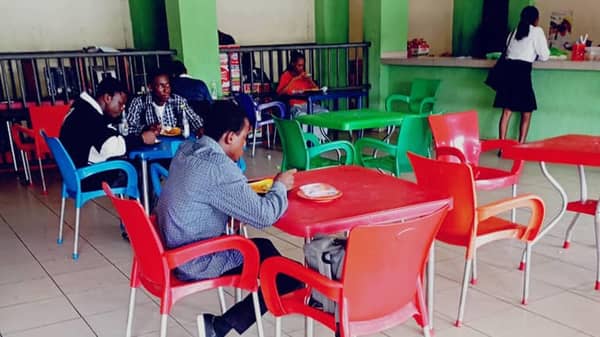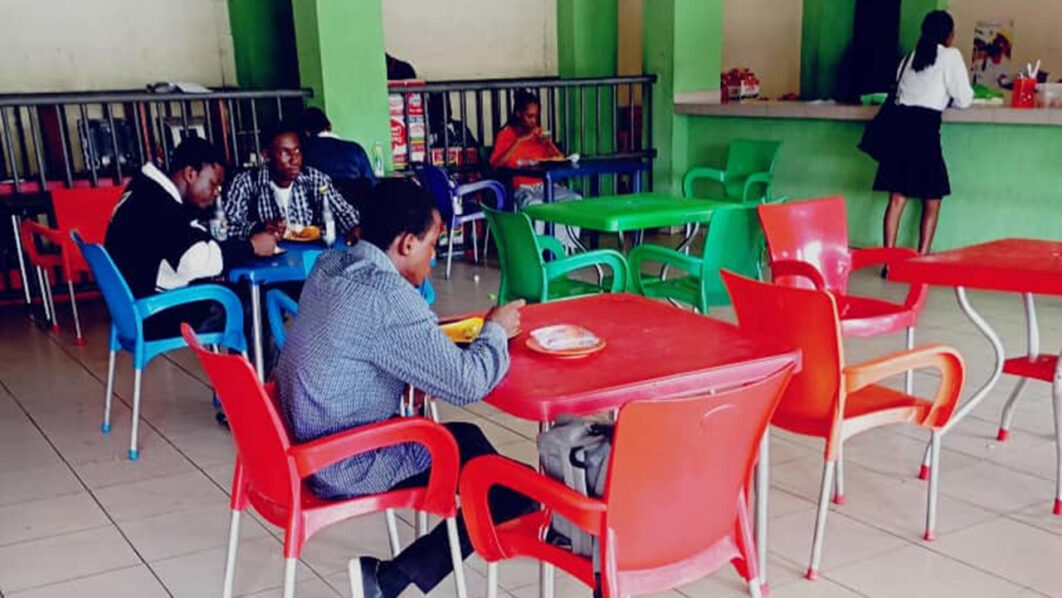
With the steady rise in the prices of goods and services, students of the Rivers State University have begun to devise alternative means of survival. Findings showed that some students have begun to practice ‘one-zero-one meal’ formula per day, entailing they eat in the morning, skip afternoon meals and sometimes eat at night. Also, some students who used to buy at least three lumps of meat on a plate of food now eat without meat while some just go with one meat. However, students from rich homes still eat their choice meals.
To generate more income to support themselves through school, some students have begun to engage in after-school work like conducting home lessons for kids in primary and secondary schools, cleaning, etc.
Checks at various restaurants in the university showed a reduction in the patronage of the restaurants by students. The Guardian learnt that a plate of rice with two lumps of meat that was sold for N500 before now costs between ₦1500 and N1700 while a plate of garri and soup which sold for between N300 and N500 in 2023 now sells for N1500. The prices of beans, plantain, moimoi, among other foods, have also doubled.
A food vendor, who gave her name as Agnes, said that most students now look out for cheaper meals.
“To buy food now some students will first ask if I can sell without meat. If I say no, they will leave and I will be at loss. So, we sell some food without meat nowadays just to move on. The students are trying to adjust to survive the same way most Nigerians are also adjusting,” she explained.
Sharing his experience, a 200-level student at the Department of Physiology, who identified himself as Simon, said: “I have had to miss meals several times a week just to get relevant books for my studies. Sometimes I go without breakfast or lunch just to make sure I have money for dinner so that at least I can sleep well and face the next day.”
A first year student in the Department of Journalism and Media Studies, Favour, who spoke in the same vein, said: “I’ve started cooking my own meals after staying without food for three days. I realised that it’s cheaper to cook than eat out,” she said.
A final year student of Economics, Anointing, also said: “The situation is dire, with many students resorting to extreme measures to survive. I’ve had to sell my laptop and other personal belongings just to make ends meet.”
The case of Bright, a 300 level student Public Relation and Advertising, sounded amusing though the harsh reality for many: She said: “Growing up, I hardly ate food without meat but now it’s very difficult to even see food.”
Since the removal of fuel subsidy by the Federal Government in May 2023, the cost of living in the country has continued to surge with the poor getting poorer. For instance, the price of rice, which is a staple for many Nigerian students, has risen from ₦100 to ₦400 per cup in the last one year while a custard rubber quantity of garri sold for N2,000 early this year now sells for N4,500. Also, the prices of yam, potatoes, tomatoes, fish and meat have all skyrocketed, thereby impacting the lives of students negatively.
The students have, therefore, urged the Federal Government to review its anti-people policies, which are pushing the general cost of living high.
“We are dying of hunger; it has not been easy, you cannot read and understand when you are hungry. We need urgent intervention,” Bright said.
An economist and a PhD student at the University of Nigeria, Nsukka, who teaches Economics at the University Secondary School, Nweke Peter Chukwuma, stated that the economic challenges of Nigeria would not be solved at once, adding that the government needs to tackle them systematically by being intentional and deliberate.
*This story is facilitated by the Step-Up for Women In Journalism Initiative (SWIJ) with support from the Wole Soyinka Centre for Investigative Journalism (WSCI), under its Report Women Project.
Rivers students devise survival strategies amid economic woes