What is said is not as important as what is acted. That is why the minimal pair of a society is a nuclear family where children will not listen to their parents if what their parents do is different from what they say. Anybody can lay claim to fighting corruption by mere saying. But it will be puerile and of no effect if what is done or undone is pointing to the contrary.
Nigeria people are naturally honest, reasonable and patriotic people. It is various leaderships such as the colonial masters with their dishonesty tagged diplomacy, the elites through their political rigmarole and the military through their adventure into politics without grounding in it and forcing misguided political economic misadventure culminating in teaching the populace ways and means of being corrupt. The January 1966 coup was a wind that blew this country no good.
President Bola Ahmed Tinubu, who, inspite of his trajectory as an avowed democrat and accomplished progressive, refused to be critical of the previous administration headed by his friend in the last eight years to avoid the loss of fame by his party which would have been inimical to his strategy for the recovery of the country from toeing the path of failure. Now, he has been enabled by God and majority of right thinking Nigerians to be in the saddle. Even if each of the contenders to the office of the president of the federal republic of Nigeria, had promised to remove the petroleum subsidy, not all of them will have been sincere, competent or strategic enough to let the removal achieve the desired goal as being prosecuted by President Tinubu just now.
The lamentations of a political failure exemplified by the leadership of the Nigerian Labour Congress, Joe Ajaero, should be taken with a pinch of salt. It is a scenario of a typical Labour party leadership and membership whose pattern of behaviour is a similitude of a drowning person seeking salvation by trusting the chaff in a strong current of a deep river. They do seek victory by hook or crook. What they don’t achieve through ballot papers, the do waste their time to twist facts before the election tribunal. As this seems to be drawing water from a mirage, they seek a repeat performance of the unfortunate situation of ENDSARS one with both the episode of a clamour for an interim government and now incitement of the people against a government of less than one week. Nevertheless, history has way of repeating itself. The one-sided killing of the northern and southwestern political and military leaderships in the two zones during the January 1966 coup, taught the two zones a lesson.
In the same vein, the concentration of the IPOB activities during the ENDSARS with the destruction of major places in the southwest taught the zone a lesson, never to allow themselves to be used against themselves by the self-centred, aggressive, and inconsiderate communities in this country. Those beating the drums of war on the basis of the withdrawal of PMS subsidy should not expect the North and the Southwest, who naturally will be keen to protect their votes and relish their victory to join them in this retrogressive action. Indeed, if not for the weakness of successive leadership in the past, the deregulation of PMS price needn’t have waited till now. It ought to have happened when other petroleum products prices such as engine oil lubricants, diesel and even kerosene that touches the lives of the downtrodden took place a number of decades ago.
As a matter of fact, the sledge hammer on the systemic and endemic corruption in Nigeria should be on the two aspects of the economy. The PMS subsidy and the multiple exchange rate regime of the Central Bank of Nigeria. The above intertwined. One is dictated by the other. By the time easy dollar is no more available to finance the dubious supply of PMS to make a round trip and make a huge profit without anything to grow the economy through the nefarious process but to undermine it, pressure on naira will be let loose. Gains from the subsidy when ploughed into the economy will raise production level to create jobs, revenue to the states, prosperity to the citizenry, and export of finished products will improve.
This way naira will eventually gain strength against other foreign currencies. The naira cost of buying PMS as well as other goods and services will reduce since the economy of the world including Russia, prior to the invasion of Ukraine was and still is dollarised. This will result as naira continues to firm up against the dollar.
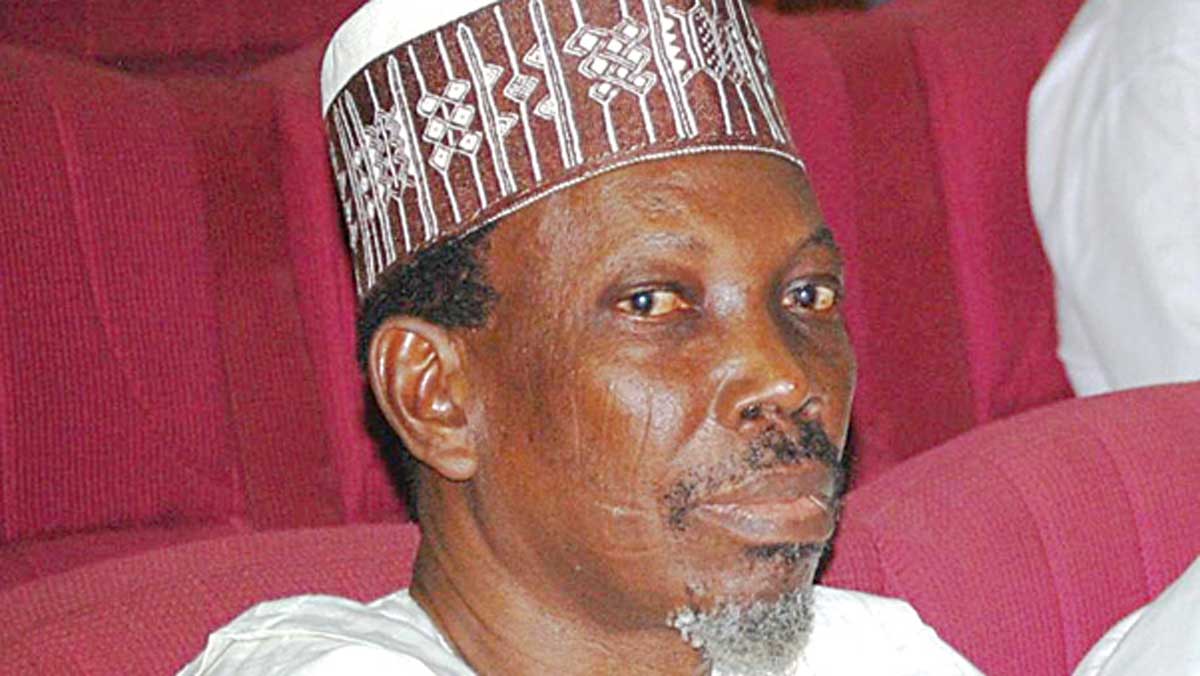
• Abubakre is the first Muslim professor of Arabic Literature from Southwest Nigeria, and was the former Federal Commissioner, Public Complaints Commission, Osun State between 2012 and 2018.