GDN SIDEBAR
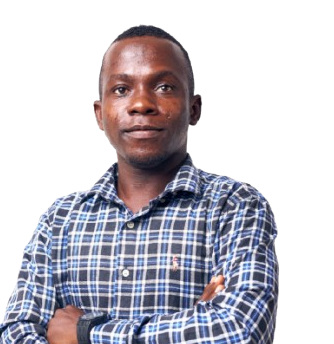
Joel ‘Kachi’ Benson has built his career around stories many people would rather not confront. From Bakassi to Daughters of Chibok and Madu, his documentaries have widened the scope of nonfiction film in Nigeria and beyond. But it is Mothers of Chibok, his haunting film on grief, endurance and unresolved loss, that has stayed closest to him.
Born in Lagos with roots in Aba, Benson’s early life took him through Enugu, Nbawsi, Aba and back to Lagos. Those experiences shaped his understanding of class, struggle, survival and the quiet dignity of ordinary people.
His path into filmmaking was not conventional. He was largely self-taught, learning through observation, practice and proximity to real lives. That journey drew him to documentary filmmaking, where emotional honesty and lived reality matter more than spectacle.
Over the years, his films have earned both acclaim and reach. Bakassi broke ground as Nigeria’s first virtual reality film, Daughters of Chibok won the Venice Lion, and Madu went on to win an Emmy. Yet beyond the recognition, his work is marked by patience, care and deep respect for the people whose lives enter the frame.
In this interview with Guardian Life, Benson reflects on his journey, the burden of filming pain, and why Mothers of Chibok remains one of the hardest stories he has had to carry.
Walk us through your background, from your early life and education to the experiences that shaped your journey into documentary filmmaking?
I was born in Lagos, with roots in Aba, and my early life moved across different places and experiences that shaped how I see the world. From Lagos to Enugu, Nbawsi, Aba, and then back to Lagos, I think all of that gave me perspective very early, not just on people, but on survival, class, struggle, and dignity.

I didn’t come into filmmaking through a straight line. I was largely self-taught, learning by being around filmmakers, asking questions, shooting, editing, and finding my way through practice.
What drew me in very strongly was nonfiction. I was deeply drawn to real stories, to factual storytelling, and to the possibility of using film as a mirror for society, a way to spotlight communities and realities that are often unseen, underserved, or misunderstood.
Over time, documentary filmmaking became the form that felt most honest to me. It gave me a way to tell stories rooted in truth, but also stories that could create impact. That has remained central to how I think about the work.
How many documentary projects have you been involved in since you began your career, and which ones have been most defining for you?
I have worked on a number of documentary projects over the years, and each one has shaped me differently. But a few have been especially defining because of what they demanded of me emotionally, creatively, and ethically.
In Bakassi, which was Nigeria’s first-ever VR film, was a landmark project for me because it pushed the boundaries of form and immersive storytelling. Daughters of Chibok, which won the Venice Lion, was also deeply significant in how it brought global recognition to a story rooted in pain, memory, and resilience. Madu, which won the Emmy, became another defining moment, not just because of the scale of its reception, but because it showed how a deeply personal Nigerian story could travel across the world and still remain intimate. And then Mothers of Chibok is certainly one of the most important for me on a human level. It asked for patience, sensitivity, and a deep sense of responsibility.
These projects expanded me, not just as a filmmaker, but as a human being.
As a documentary filmmaker, how do you decide which story is worth telling and which one is not?
For me, a story becomes worth telling when it gives us access to a truth we might otherwise miss, especially when it helps us see people beyond stereotype, beyond distance, beyond headlines. I’m drawn to factual stories because they open windows into lives and realities we may never encounter otherwise, and they can shine a light on communities that are often overlooked.
I’m also drawn to stories that inspire me in some way, not necessarily because they are easy or uplifting, but because they reveal courage, resilience, beauty, humanity, or some deeper truth about what it means to endure. And I do think the question is also whether I can tell the story in a way that protects the dignity of the people inside it. If the storytelling cannot hold that dignity, then I have to question my approach.
What is the hardest truth you have had to capture on camera?
One of the hardest truths to capture is the truth of grief that does not end. We often think of tragedy as an event, but for many people, it becomes a condition of living. Filming people who are carrying loss, uncertainty, or trauma in an ongoing way forces you to confront the limits of the camera. You realise that there are things the lens can witness, but never fully hold.
The hardest truths are usually the quiet ones; the silence after pain, the routine of survival, the dignity of people who keep going even when the world has moved on.
When you begin a project, are you chasing a story or a feeling?
It often begins with a feeling. Something unsettles me, stays with me, or keeps returning. Then I begin asking questions, and that feeling starts to take the shape of a story. The feeling is what pulls me in, but the story is what sustains the work. I need both. The emotional instinct helps me know there is something alive there, and the storytelling process helps me understand what it actually means.
What first drew you to the Chibok story, and when you began working on the project, what surprised you most about the reality behind the headlines?
My journey with the Chibok story really began in 2018 with Daughters of Chibok. That film was, in many ways, an exploration of grief — of what loss feels like when it becomes part of daily life, and of the emotional weight carried by families and communities after the girls were taken. It was my first real encounter with the depth of pain behind the headlines.
But I later went back to make Mothers of Chibok, and that return changed my understanding of the story. This time, I spent more time listening, staying, and paying attention not just to grief, but to resilience, courage, faith, and the quiet strength of the women at the centre of it. What surprised me most was how much life existed alongside the pain. Behind the headlines were women who were not only mourning, but also enduring, rebuilding, and continuing. That is what stayed with me — the realisation that the Chibok story was never only about tragedy. It was also about the strength it takes to keep living in the shadow of unresolved loss.
The Chibok story is deeply emotional and political. How did you balance sensitivity with the need to tell the truth?
When you are telling a story like Chibok, you cannot arrive with preconceived notions. You have to listen longer than you speak. You have to understand that you are entering people’s pain, not extracting content. At the same time, truth matters. Sensitivity should never become a way of softening reality beyond recognition. For me, the balance came from staying close to the lived experiences of the women themselves. If you anchor the film in their voices, their silences, and their realities, then the truth carries itself. The responsibility is to hold it carefully and not dilute it.
What was the most difficult moment for you personally while working on the film?
The most difficult moments were often the most intimate ones; sitting with mothers whose lives had been permanently altered, and recognising that no film can restore what was taken from them. There is a kind of helplessness that comes with witnessing that level of pain. As a filmmaker, you want to do justice to the story. But as a person, you are simply affected. You carry those encounters with you. Some stories do not leave you when production ends, and Mothers of Chibok is one of those for me.
Madu introduced you to a wider global audience. What did that moment change for you personally and professionally?
It opened things up, of course, but I think what mattered most to me was what it meant beyond me personally. I’ve always tried to see recognition not just as a personal victory, but as something that says Nigerian documentary stories matter and can stand on the biggest platforms in the world. Personally, it was affirming in the sense that it reminded me that stories rooted here can travel without losing their identity.
Professionally, it widened the scale of possibility. But I try not to hold on to acclaim too tightly. The real question for me is always: what does this make possible for the next story, for the people inside the stories, and for the wider documentary community in Nigeria?
How do you balance telling a deeply Nigerian story while making it resonate with a global audience?
I do not begin by trying to make a story global. I begin by trying to make it truthful. The more honest and specific a story is, the more likely it is to resonate beyond its immediate setting. Human emotion is universal, even when context is local.
So for me, the work is to stay rooted in language, in character, in place, in texture, and trust that audiences anywhere can recognise love, ambition, grief, resilience, fear, joy.
You do not make a story travel by flattening it. You make it travel by making it real. Did international recognition validate your work, or did it increase the pressure?
It did both, but I try to hold both lightly. Recognition is meaningful, but I don’t think it can be the centre of the work. These moments pass. What lasts longer is whether the work made an impact, whether it moved people, whether it opened doors for others, and whether it stayed true to the people whose stories were entrusted to me.
So yes, there is validation, and there is also pressure; not necessarily pressure to repeat success, even though people expect that; it is really a pressure to stay grounded and keep doing impactful work.
There’s often talk about “authentic Nigerian stories.” What does authenticity really mean to you?
For me, authenticity begins with truth; emotional truth, cultural truth, and the honesty to represent people as fully as possible. It means resisting the temptation to reduce lives to symbols or headlines. It means letting people exist in their full humanity.
I’m deeply passionate about Nigeria and Africa, especially about how we are represented and presented. So authenticity is not about performing “Nigerianness.” It is about telling stories with enough depth, care, and specificity that the people inside them can still recognise themselves. The more rooted and truthful a story is, the more universal it can become.
Do you think Nigerian filmmakers are doing enough to document real-life stories beyond fiction?
I think there is incredible potential, and I also think there is still a lot more to be done. Nigeria is full of real stories that deserve careful documentation; stories of history, identity, memory, politics, community, survival, and transformation. The challenge is that documentary filmmaking often requires a different kind of support system: time, trust, access, research, funding, and patience. Those structures are still growing. But I do think more filmmakers are recognising the importance of nonfiction storytelling, and that is encouraging.
How can documentary filmmaking shape how the world sees Nigeria today?
Documentary filmmaking can complicate the image of Nigeria in the best possible way. Too often, the country is reduced to extremes: crisis on one hand, spectacle on the other. Documentary allows us to go deeper. It allows us to show lives as they are actually lived.
It can help the world see Nigeria not as a headline, but as a place of real people, layered histories, and evolving realities. And just as importantly, it can help Nigerians see ourselves more clearly, too. Documentary is not only outward-facing; it is also a mirror.
What is one misconception people have about documentary filmmaking, and what has been your most difficult production experience so far?
One big misconception is that documentaries are simply about pointing a camera at real life and recording what happens. In truth, documentary filmmaking demands an enormous amount of intention, research, structure, ethics, trust-building, patience, and editorial clarity. It is not passive observation. It is a deeply active form of storytelling.
As for difficult experiences, the hardest productions are usually the ones involving vulnerable people and emotionally charged realities. Those stories ask more of you. They test not only your technical ability, but your judgment, your stamina, and your humanity.
How do you earn the trust of your subjects, especially when dealing with sensitive stories?
Trust is earned slowly. There is no shortcut. It begins with respect; being present, listening carefully, being transparent about your intentions, and allowing people to feel your humanity before they feel your camera.
It’s energy…and I think people can sense when they are being treated as subjects and when they are being treated as people. That distinction matters. You cannot force trust. You create the conditions for it, and then you honour it consistently.
What gaps do you see in Nigeria’s film and documentary space right now?
The biggest gaps are still around support, funding, and distribution. There are so many important stories in Nigeria that are not being told the right way, or by the right people, partly because documentary still does not receive the kind of institutional backing it needs.
We also need to keep expanding access and culture around nonfiction storytelling, including how documentaries are distributed and received in cinemas. I genuinely believe the audience is there and growing, but the ecosystem still needs stronger structures to support development, production, exhibition, and long-term sustainability.
What kind of legacy do you want your work to leave behind?
If there is one thing, I would want it to be impact. I want the work to matter in the lives of the people it touches, both the people who watch and the people whose stories are being told.
I want my films to leave behind a record of truth, dignity, and humanity. I want them to show that our stories matter, that they can travel, and that they can create change. And I hope the work also helps open doors for more documentary filmmakers from Nigeria and across Africa to tell bold, deeply human stories on their own terms.