 Follow Us on Google News
 Follow Us on Google Discover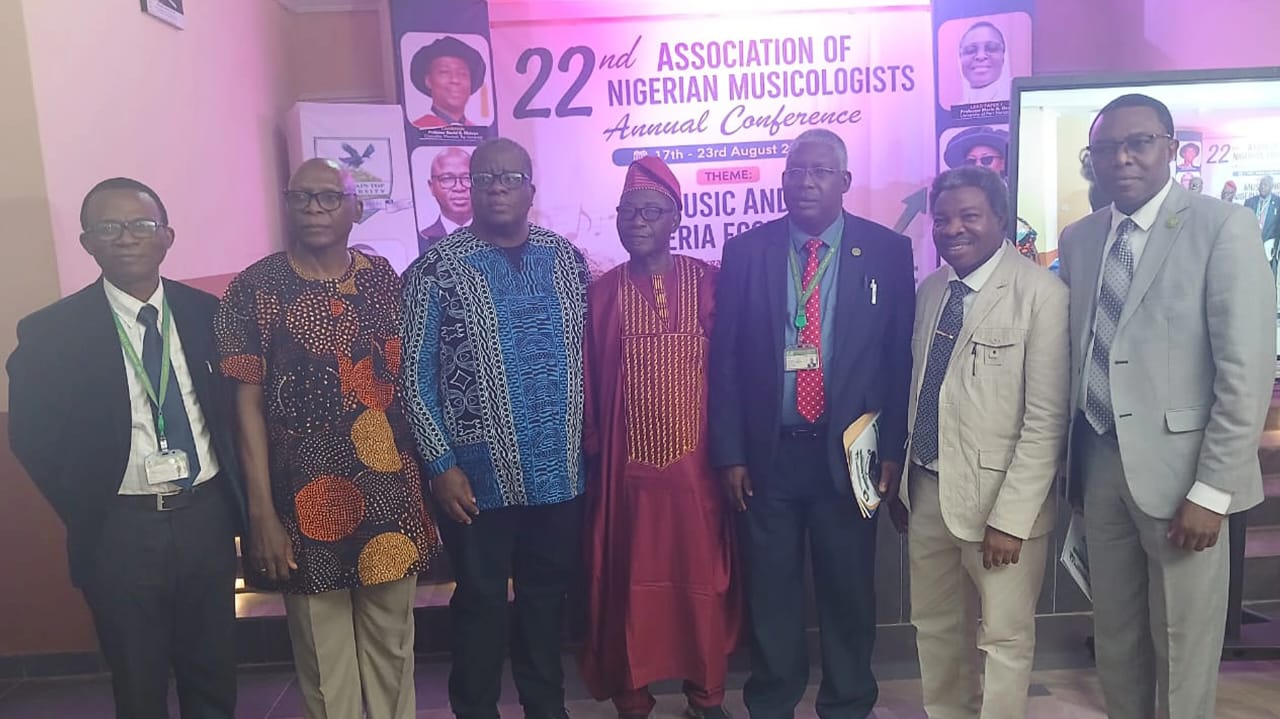
…Say music can drive job creation, cultural economy
The Association of Nigerian Musicologists (ANIM) has called on the Federal Government to leverage music as a tool for economic transformation, job creation and cultural preservation, saying the sector can reduce unemployment and generate significant revenue if properly funded and regulated.
The call was made at the 22nd yearly conference of the association held at Mountain Top University (MTU), Ogun State, and themed: Music and Nigeria’s economy in the 21st Century.
The five-day conference brought together scholars, students, creators and practitioners from universities, polytechnics and colleges of education across Nigeria that offer music as a course of study.
In his remarks at the opening of the conference, the National President of the Association, who is also a lecturer at Obafemi Awolowo University (OAU), Prof Femi Abiodun, expressed concern over the state of the Nigerian economy and said the association is asking what role music can play in addressing it.
Abiodun challenged music scholars and practitioners to move beyond academic discussions and begin to demonstrate how music composition, performance, education and technology could translate into measurable economic value.
“We will be looking at theories, themes, compositions and performances, but we must ask a fundamental question: How does your composition contribute to Nigeria’s economy?” he said.
Abiodun identified music tourism as another largely untapped opportunity, noting that the country is yet to adequately develop its rich musical heritage into a sustainable tourism economy.
While questioning the level of integration of Nigerian music into educational programmes, the Head of Music Department, MTU, Dr Bayo Ogunyemi, advocated a review of the curriculum to accommodate music at pre-tertiary education level.
He urged Nigerian institutions to move from teaching theories to producing musical instruments and technologies that could generate employment, revenue and export opportunities.
The scholar highlighted the role of music in keeping youth engaged and away from crime.
He said many students earn a living through recording and performances. He also pointed to the interdisciplinary nature of music, noting that students from computer science, physics and economics are excelling in music, and running studios that employ others.
He appealed to the government to provide more funding for music, describing it as capital intensive but also gainful.
He cited the Central Bank of Nigeria’s intervention funds and urged that more support be channeled to practitioners.
On policy, he said Nigeria’s copyright law enacted in 2022 needs urgent review to reflect developments such as artificial intelligence and digital streaming.
He criticised the practice of paying Nigerian musicians in naira for streams abroad, while their counterparts in other countries are paid in dollars, and called for a strong regulatory body to address the issue.
He also spoke on research into the domestication of musical instruments, saying there are ongoing efforts to scientifically calibrate traditional instruments.
He said if government supports mass production of locally made instruments, it will reduce economic pressure.
According to him, Nigerian polytechnics and universities should be producing high-quality musical instruments for local and international markets.
He challenged music educators to rethink their curricula to ensure that graduates could convert their knowledge and skills into sustainable livelihoods.
He tasked participants to ensure that the conference produce practical solutions capable of transforming Nigeria’s music sector.
The Chancellor of MTU, Dr Daniel Olukoya, in his virtual message, described music as an important component of the economy.
Olukoya said the university was committed to supporting platforms that advance scholarship, creativity and the transformative power of music.
He said the institution’s support for the conference reflected its commitment to the development of music and the arts, adding that the gathering should generate ideas capable of creating jobs, promoting industry growth, preserving culture and contributing to national development.
On his part, the Vice-Chancellor, Prof. Elijah Ayolabi, represented by the Deputy Vice-Chancellor, Prof. Gabriel Ajayi, said Nigeria’s music industry had become one of the country’s most visible cultural exports.
He challenged stakeholders to go beyond asking whether music contributes to the economy and focus on how much value the music ecosystem generates, who benefits from it and how creative professionals could better monetise their intellectual property.
Ayolabi also identified copyright protection, royalty collection, piracy, digital ownership and equitable remuneration as challenges requiring urgent attention in the era of digital streaming and social media.
He urged musicologists to connect scholarship with industry; entrepreneurship and national development, stressing that music education must increasingly connect theory with practice.
The Dean of the College of Humanities, Management and Social Sciences, (MTU), Prof. Babatunde Oni, described music as “infrastructure for identity, education, diplomacy, cultural preservation and economic development.” He added that the university’s music department had grown into a centre for music training, research and performance.

