GDN SIDEBAR
Ayomitide Evelyn Okungbaye’s London Fashion Day debut makes the case, look by look, that Nigerian heritage textiles belong in the everyday wardrobe – not just on the ceremonial calendar.
Tide Chen Lagos is making a clear stand with indigenous weaving by taking Seghosen and aso-oke out of “big day” ceremonial territory and putting them into silhouettes you can actually wear. In this collection, Sengwa: A Woven Realities Tale, designer Ayomitide Evelyn Okungbaye repositions these textiles by fusing woven heritage cloth with modern tailoring – presenting them at London Fashion Day Season 6 in November 2025 as her first significant showcase on a UK platform.
The collection arrives with a clear thesis: that Seghosen cloth, a handwoven textile indigenous to the Owo communities of Ondo State, and aso-oke, one of Nigeria’s most recognised heritage weaves, are not fabrics that need a ceremony to justify their presence. They are materials with enough structural and aesthetic authority to carry everyday luxury – if the designer has the discipline to let them. Okungbaye, for the most part, does.
While the looks oscillate between theatre and restraint, the brand shows a steady point of view. The strongest looks, in my opinion, are the ones that let proportion, structure, and fabric do the talking. Where the collection reaches for spectacle, it occasionally undercuts the argument it is otherwise making so well.
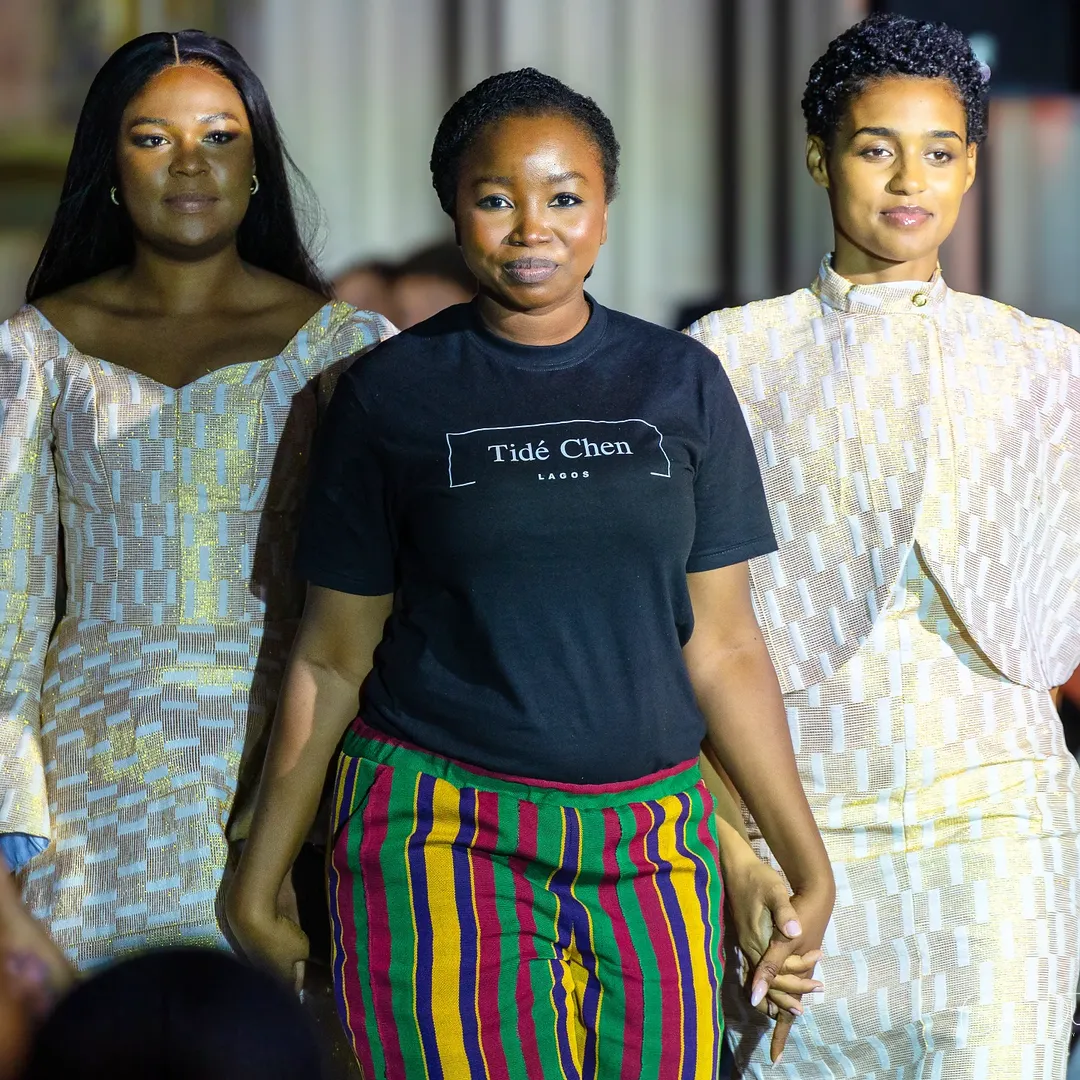
“Every time I bring this work to a new market, I am making an introduction that cannot be rushed. London was the introduction I had been preparing for.” – Ayomitide Okungbaye

THE COLLECTION: LOOK BY LOOK
Look 1: Red Jacket Dress with Train
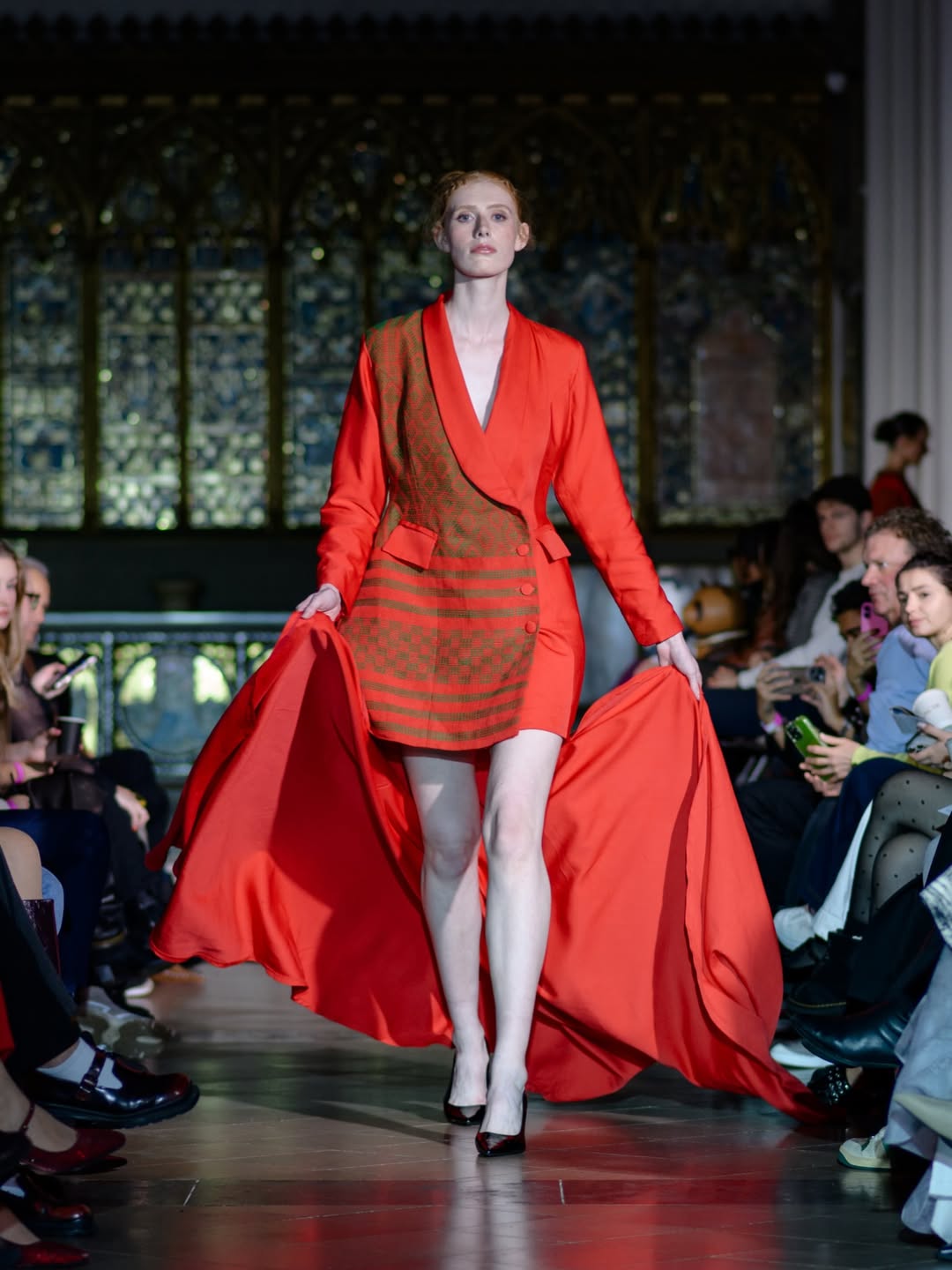
The jacket dress is a strong look, with soft lapels, a clean V-neck, and Tide Chen’s signature woven panelling that gives the red base depth and texture. It is also versatile – the dress works alone or layered over trousers for a more corporate, modest interpretation. The train, however, is where it loses me. For a brand that is pushing everyday wearability, the train feels heavy-handed and competes with what is already working. The dress does not need the extra trailing fabric to feel special. If it were shorter, detachable, or reduced to a lighter finish, this jacket dress would align more consistently with the collection’s central message.
Look 2 Striped Tube Top and Skirt with Trailing Panel
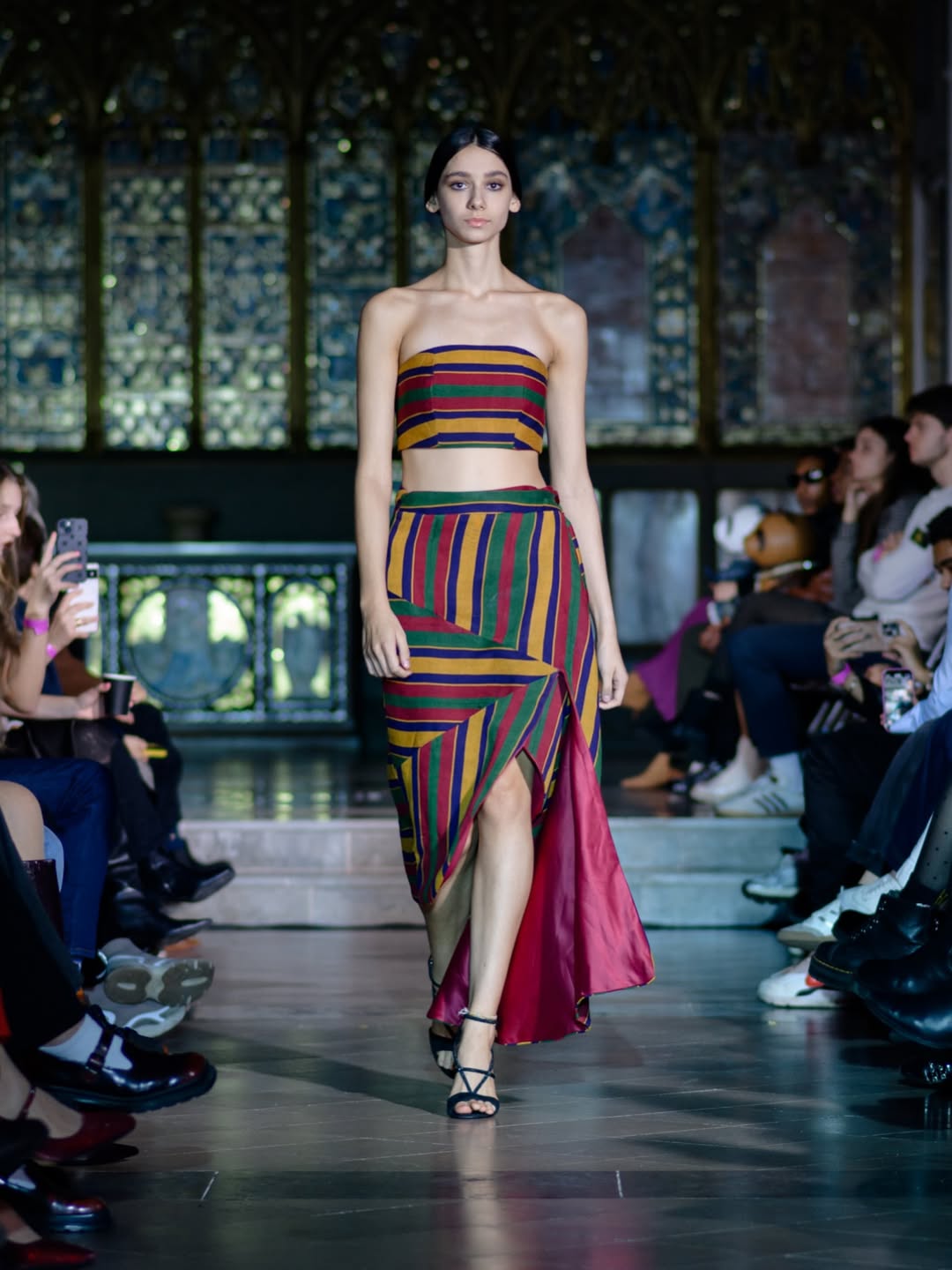
This look is a smart way to show skin with control. The top and wrap skirt carry a familiar cultural silhouette – the kind worn by women across many Nigerian communities, with layers of waist beads framing the hips – and the asymmetrical shaping of the skirt keeps the eye moving. Its wrap-and-trail detail nods to traditional styling without being constrained by it. With the right accessories – coral beads, bold jewellery, ceremonial footwear – this could shift easily into a modern bridal traditional look. The train works considerably better here than in Look 1 because it feels like an organic part of the styling language rather than an afterthought.
Look 3 Black Patterned Two-Piece with Hip Lines
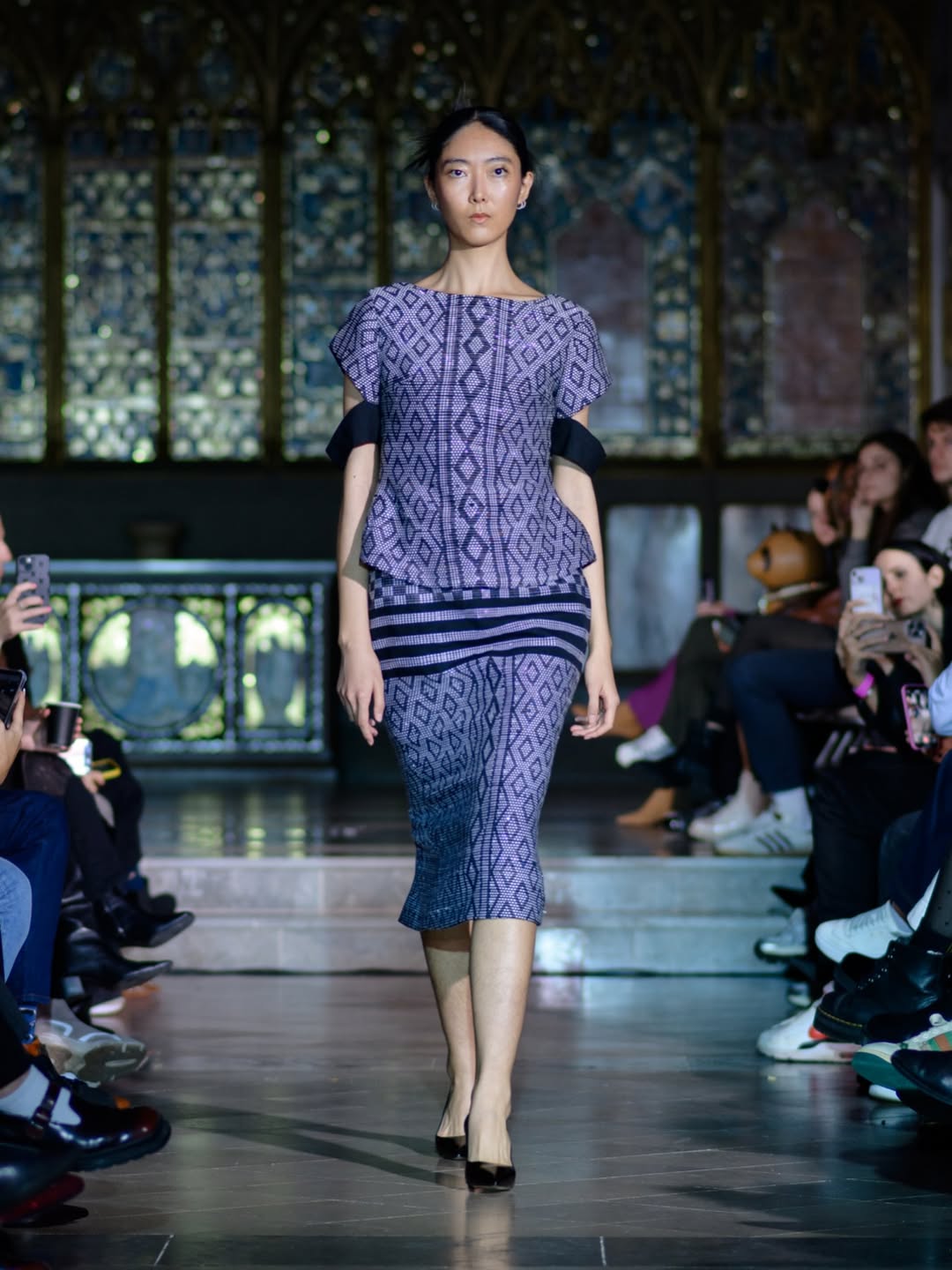
This is one of the collection’s most regal looks. The colour is rich, the pattern feels deliberate, and the architectural lines at the hips give the silhouette a flattering structural lift. It is the kind of piece that reads as subtly expensive without trying to announce itself – the sort of look that sits comfortably at weddings, gallery events, and formal dinners with minimal additional styling. The woven heritage cloth here is at its most authoritative, carrying the look without competition from embellishment or excess construction.
Look 4 Petal-Inspired Dress
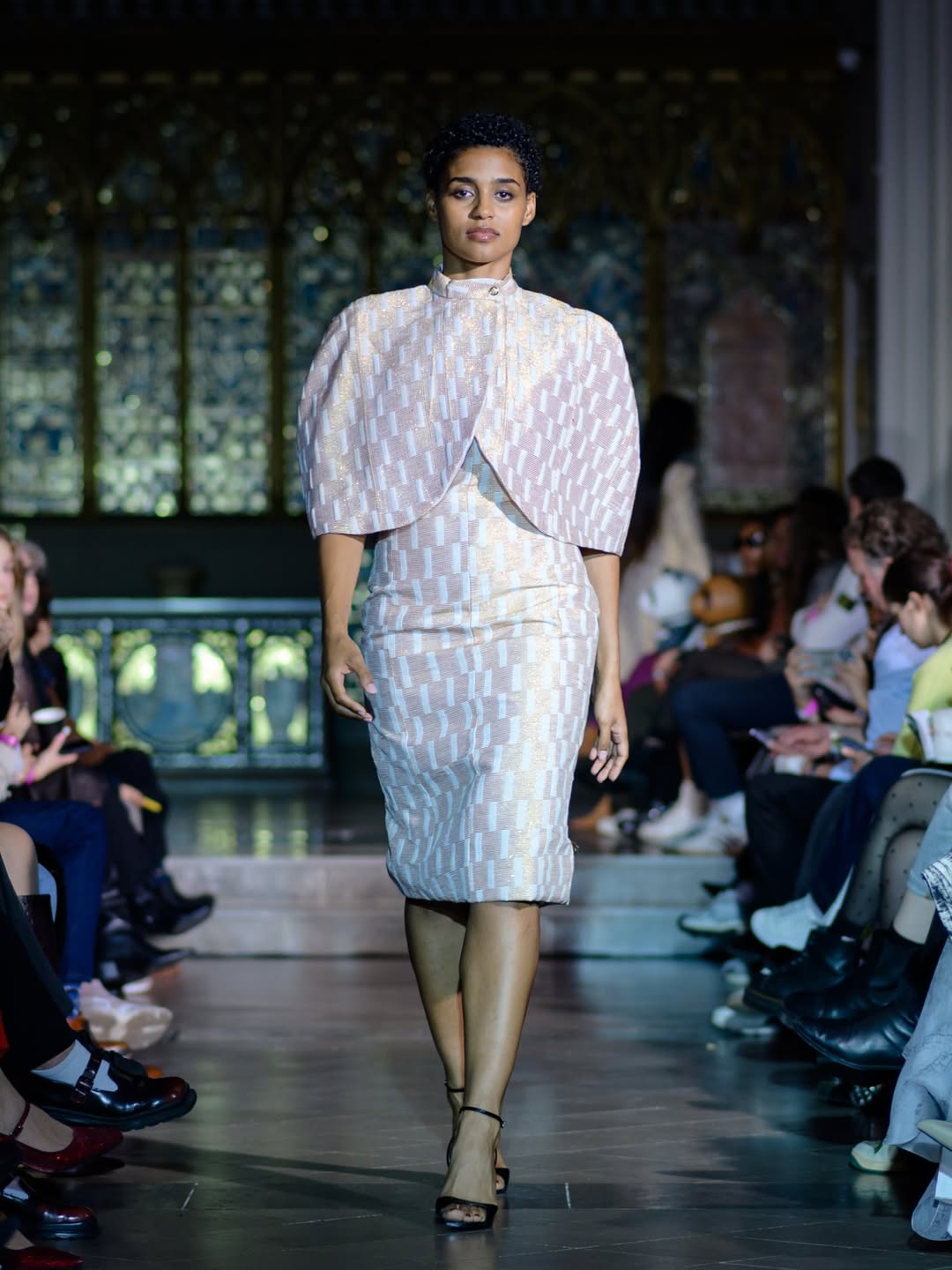
The sculptural outer layer of this look sits over a simple base like an inverted flower bloom. As styled and presented on the London Fashion Day runway, it is already elegant. The next level of development would be making the petal piece as functional as it is beautiful. If the sculptural outer piece, which softly frames the body like armour can be worn separately over trousers or a slip dress, that would give it real wardrobe value and extend the collection’s wearability argument. As a concept, it is strong, recognisably designer-level thinking, and neatly executed.
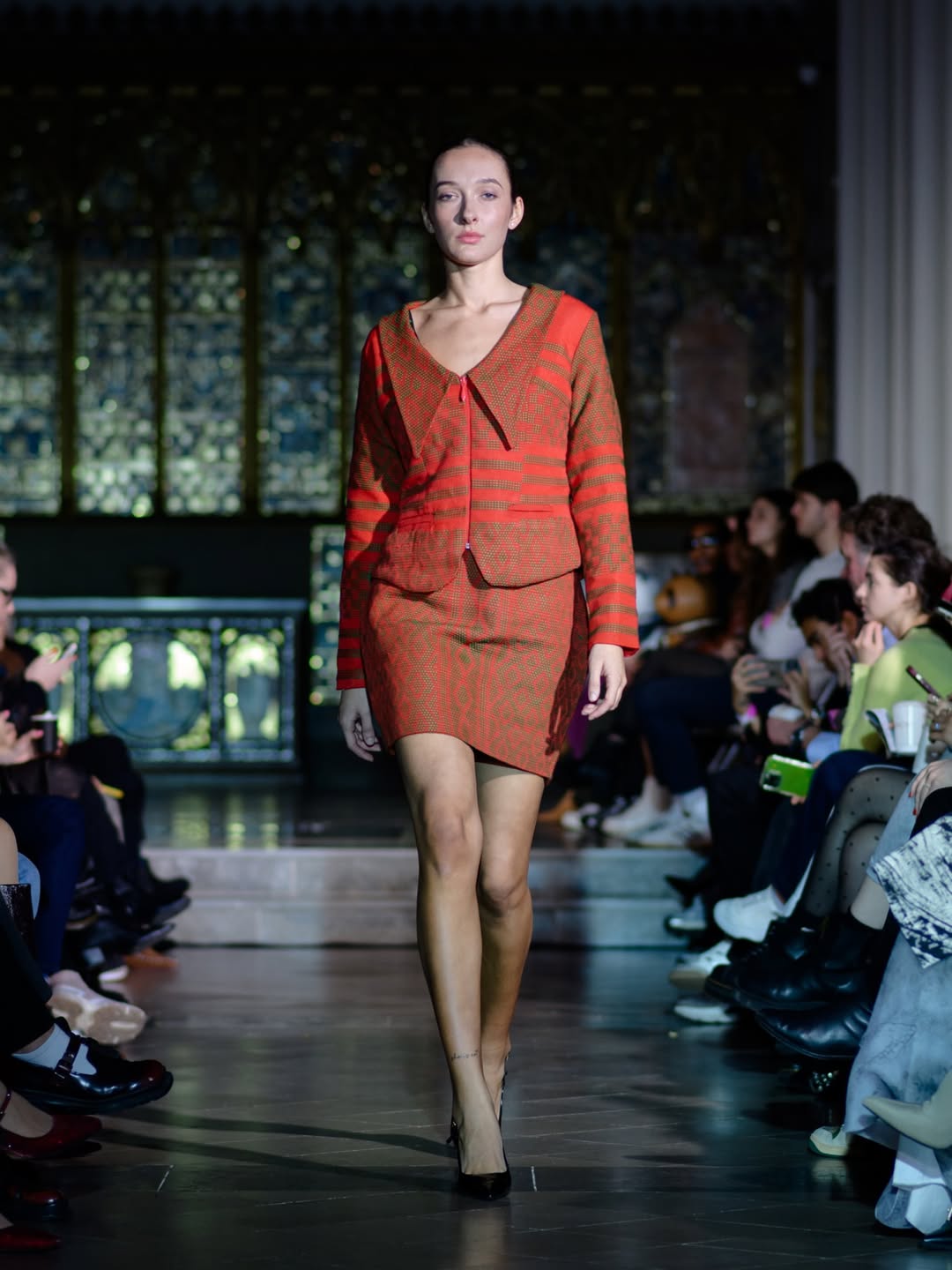
This is formal but wearable – the cleaner end of the collection’s spectrum. The silhouette stays disciplined enough to let the woven fabric shine, which is the correct decision. The piece would benefit from sharper fitting on the model so the proportions read as fully intentional rather than approximate. With tighter tailoring and a closer fit through the waist and hip, this becomes an easy power look suited to corporate events, speaking panels, and high-profile professional settings – a direct argument for heritage textiles in the international business wardrobe, which is exactly the market Tide Chen Lagos should be courting from London.
Look 6 Champagne-gold dress with blue lining
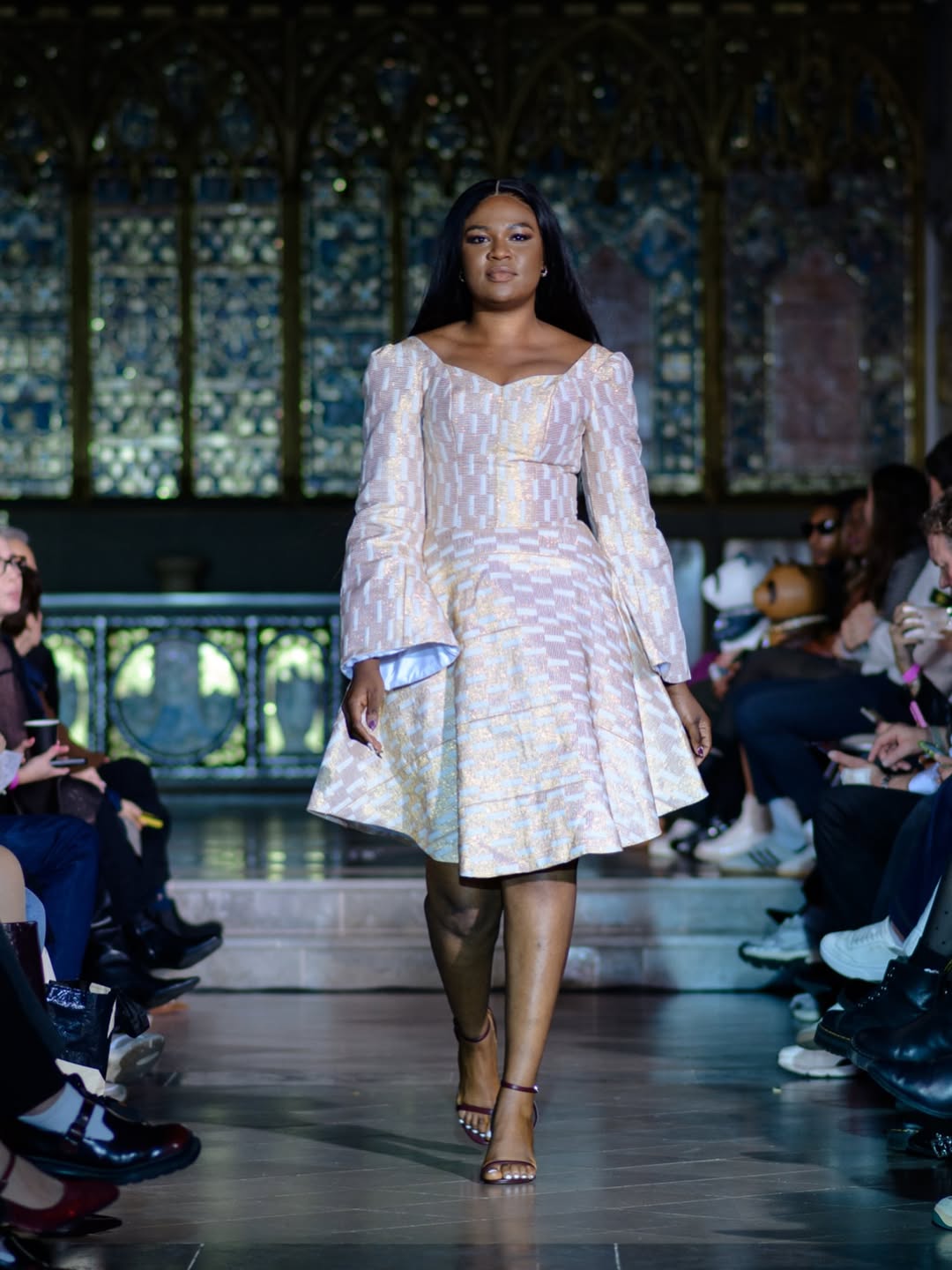
This is the simplest offering in the collection, and there is value in that. It is modest, accessible, and practical for church, formal gatherings, and family occasions – the widest possible market for a Nigerian designer’s womenswear. The blue lining is the only element I am unsure about: it feels slightly disconnected from the champagne base, and without the contrast being echoed elsewhere in the look, it reads as arbitrary rather than intentional. If that detail were reinforced elsewhere, even subtly, it would feel like a design decision rather than a finishing choice. Still, it is a clean, accessible look that demonstrates the collection’s range.
Look 7: Mixed-fabric trousers set
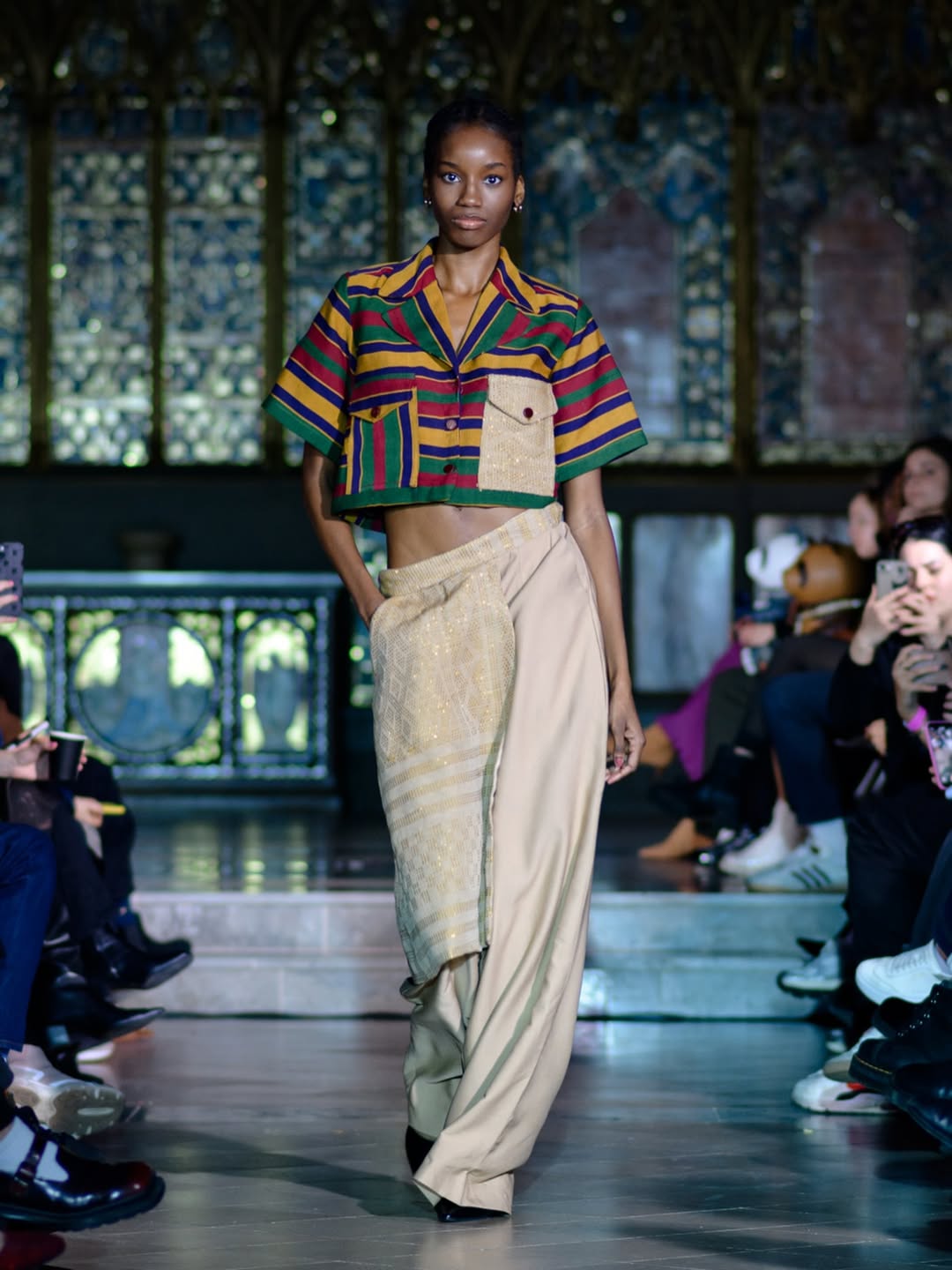
This is where Tide Chen’s case for wearable heritage feels most convincing. The mix-and-match logic is intentional, the colour play is confident, the asymmetrical cut adds edge, and the separates are clearly designed to be broken up and re-worn across different contexts. The styling possibilities are numerous: the trousers with a white shirt; the top with tailored high-waist pants or a satin skirt; the full look with heels and a statement bag. This is the piece most likely to generate genuine commercial interest from the kind of buyers attending London Fashion Day – it speaks the international contemporary wardrobe language while remaining entirely rooted in Nigerian textile heritage.
Look 8: Frayed-edge Seghosen set
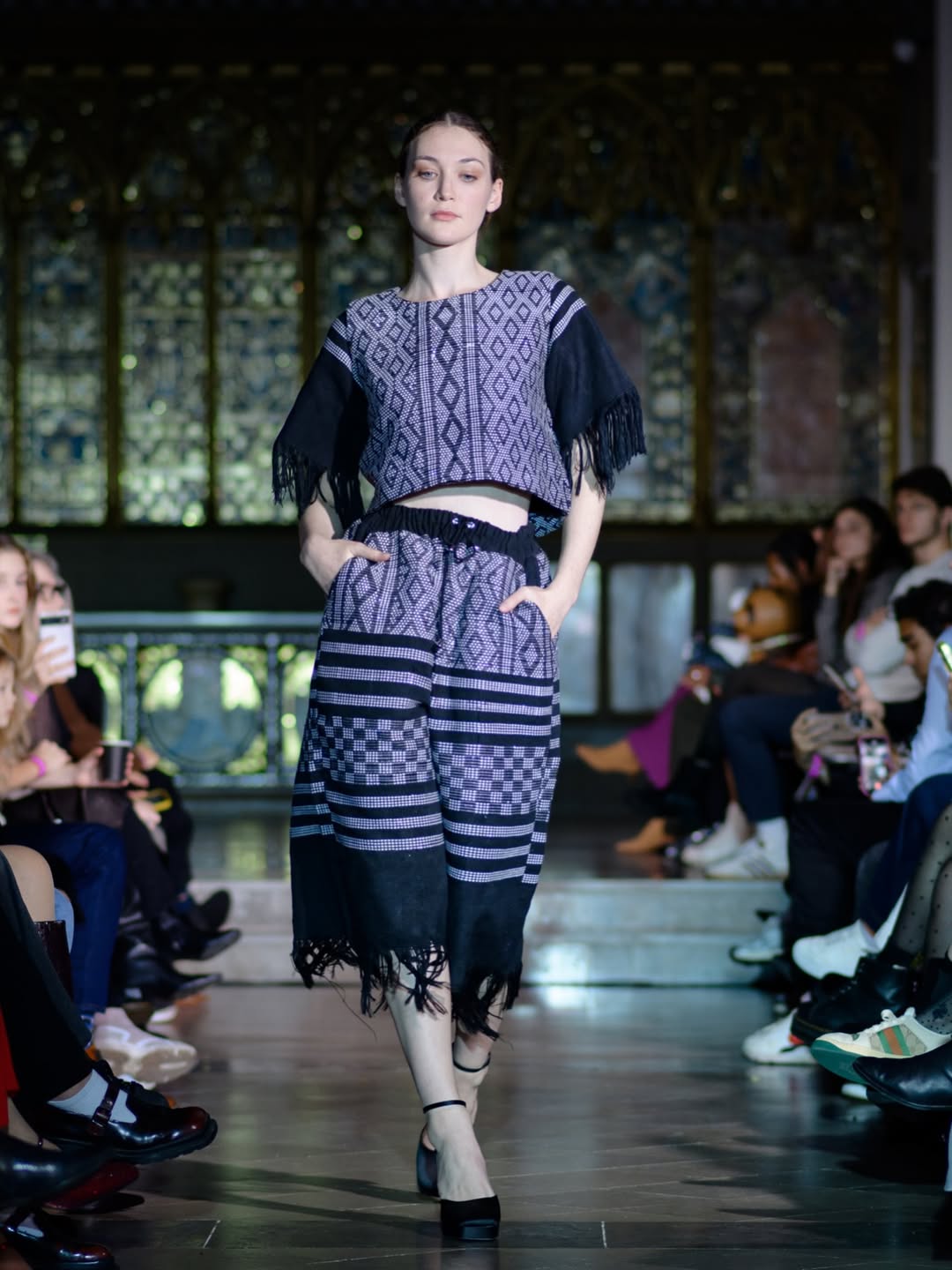
This is a smart use of finishing technique and perhaps the clearest single example of what Tide Chen Lagos’s ethos looks like in practice. The frayed edges soften Sehghosen’s usual ceremonial polish and make it feel relaxed and current without stripping it of its cultural identity. It is the kind of set you can dress up or down – for errands, casual meet-ups, or even travel without losing the textile story. The frayed ends give the silhouette a relaxed ease that is exactly what makes the piece work. It is the most immediately wearable look in the collection and the one most likely to convert a new international audience to the Tide Chen Lagos brand on first encounter.
Overall
Sengwa: A Woven Realities Tale has a coherent design language built on woven heritage textiles, bold colour decisions, and silhouettes that bridge tradition with modern tailoring. The jacket dress (minus the train), the black patterned two-piece, the trousers set, and the frayed-edge look all feel like clear steps towards what Tide Chen Lagos does best. When the collection stays disciplined and lets cut, fabric, and proportion do the work, it is sharp and memorable. The refinement I would push is restraint: when the tailoring is this good, the clothes do not need extra spectacle to carry them. The train on Look 1 is the clearest example – and removing it would strengthen the collection’s argument considerably.
WHY LONDON MATTERS
Presenting this work at London Fashion Day is not incidental to the collection’s argument – it is part of it. Ayomitide Okungbaye is not a designer who has come to London with a brand built on familiar reference points. She has not reinterpreted Ankara prints or offered a contemporary take on a textile the international market already recognises. She has arrived with Seghosen cloth – a material the London fashion industry has never encountered and she has presented it without apology or dilution.
That decision carries real commercial intelligence. London’s fashion market is actively seeking provenance-driven, heritage-rooted design that comes with a genuine cultural narrative rather than a manufactured one. Tide Chen Lagos has that narrative in full. The question the collection raises, look by look, is whether the designer will trust it completely and the answer, in the best pieces here, is yes.
The UK fashion industry would benefit from watching what Tide Chen Lagos builds next. This collection is the opening argument. It is a strong one.