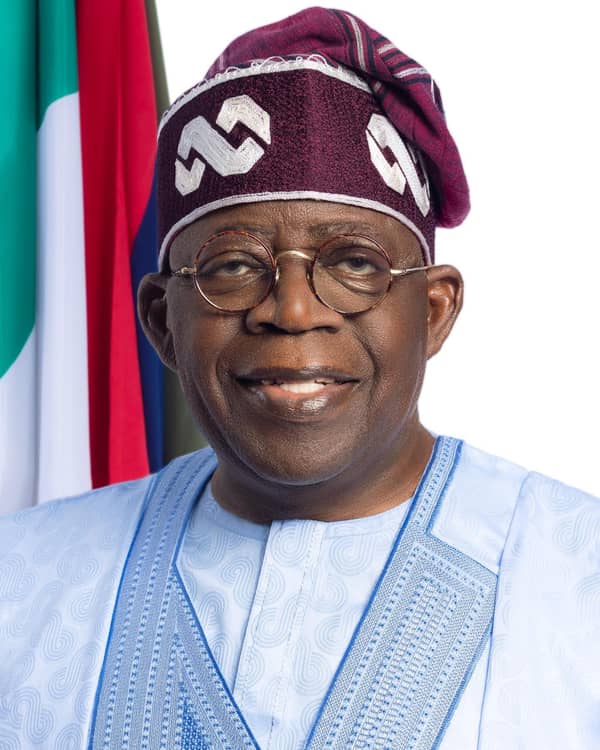
A civil society coalition, the Alliance for Energy Stability and Economic Growth (AESEG), has urged Nigerians to support President Bola Tinubu’s re-election bid in 2027, arguing that his administration has restored investor trust in the country’s oil and gas sector.
In a statement issued on Monday, AESEG president Dr Suleiman Garba Danladi said recent approvals by the Nigerian Upstream Petroleum Regulatory Commission (NUPRC) showed renewed confidence from international oil companies (IOCs) in Nigeria’s regulatory framework.
He pointed to the approval granted to Shell Nigeria Exploration and Production Company (SNEPco) and Nigerian Agip Exploration Limited (NAE) to acquire TotalEnergies’ 12.5 per cent stake in Oil Mining Lease (OML) 118 as evidence of this trust. Shell secured a 10 per cent share valued at $408 million, while Agip purchased 2.5 per cent for $102 million.
According to NUPRC, the deal was approved under Section 95 of the Petroleum Industry Act (PIA) 2021 after a rigorous due diligence process confirmed the companies’ technical capacity, financial strength, and managerial expertise to sustain deepwater operations in the Bonga field.
Dr Danladi described the transaction as a sign that the industry is being reshaped under Tinubu’s leadership, with stronger foundations for economic growth.
“Shell is consolidating its position in deepwater, Agip has reaffirmed its commitment, and the regulator is ensuring that government interests are safeguarded. This progress can only be sustained through continuity in leadership,” he said.
The coalition also cited the regulator’s recent decision to revoke an $860 million deal between TotalEnergies and Mauritius-based Chappal Energies over unmet financial obligations as proof of a stricter enforcement regime, which it linked to Tinubu’s political resolve.
“With these measures, speculative investors are being edged out while credible operators are encouraged. This shift strengthens revenue prospects, protects jobs, and enhances energy security,” AESEG said.
The group stressed the strategic importance of the Bonga oilfield, Nigeria’s first deepwater project, which remains vital to crude production and foreign exchange earnings. Ensuring its continuity in the hands of experienced operators, it argued, would aid efforts to raise national output towards two million barrels per day.
AESEG further warned that Nigeria’s oil industry was entering a critical phase, with IOCs gradually withdrawing from onshore fields while consolidating deepwater interests. The group maintained that political stability and policy consistency were crucial to managing this transition.
“The oil majors are watching closely. They are reassured by current reforms but require predictability. A reversal in 2027 could undermine the gains already achieved,” Dr Danladi cautioned.