 Follow Us on Google News


 Follow Us on Google Discover
Starzs to sign shipbuilding contract
Nigeria may see fresh investment by indigenous shipowners following the return of more than $27 billion in oil and gas Final Investment Decisions (FIDs) and the long-awaited activation of the Cabotage Vessel Financing Fund (CVFF).
The move, which operators said could begin to reverse years of decline in the country’s maritime industry, is coming amid reported losses of over $86 billion yearly to unfriendly policies.
Speaking on the sideline of the Nigerian International Energy Summit (NIES) in Abuja, the Managing Director and Chief Executive Officer of Starzs Investments Company Limited, Iroghama Ogbeifun, said the return of large-scale oil and gas projects was already influencing expansion decisions across the maritime logistics space.
The company, which operates a fleet of 11 vessels, Ogbeifun said, is at the verge of adding a new fleet that meets local demand to save capital flight from Nigeria.
Ogbeifun, who also sits on the governing board of the Nigerian Maritime Administration and Safety Agency (NIMASA) and chairs the Technical Committee of the Shipowners Association of Nigeria (SAN), said renewed project activity altered market sentiment.
“With the announcements coming from the oil majors, particularly around gas and deep offshore projects, we know that opportunities start from the engineering and construction phase, not just at production,” she said.
The fresh interest follows confirmation by the Minister of State for Petroleum Resources (Oil), Heineken Lokpobiri, that Nigeria approved 28 new field development plans valued at $18.2 billion in 2025.
Lokpobiri also said potential investments could rise to about $27.6 billion if Shell proceeds with its proposed $20 billion FID, signalling a decisive break from years of upstream investment stagnation.
For indigenous shipowners, the significance lies not only in the scale of the investments but also in their timing, as the oil sector downturn triggered by the COVID-19 pandemic and volatile crude prices forced operators to lay up vessels, renegotiate contracts, and absorb steep asset-value erosion.
Ogbeifun said some operators survived that period largely because of the type of assets they owned.
Tugboats, which support anchoring and crude export operations, remained in demand as long as Nigeria continued exporting oil.
However, she admitted that falling day rates and contract renegotiations hit balance sheets hard.
“When rates collapse, it is extremely difficult to rebuild value.The industry survived, but it came at a cost,” she said.
This comes amid the launch of the CVFF application portal as the Federal Government said the $25 million fund would be disbursed within 70 to 80 days at an interest rate of 6.5 per cent, with a repayment period of eight years, terms far more favourable than commercial bank loans traditionally available to shipowners.
NIMASA’s Director-General, Dr Dayo Mobereola, said the revised interest rate reflected the government’s commitment to easing the financial burden on indigenous operators.
He described shipping as a capital-intensive industry that requires “long-term, patient capital” to thrive.
The CVFF, established under the Cabotage Act of 2003, is funded through a two per cent surcharge on cabotage trade.
However, disbursement delays spanning more than two decades have fuelled scepticism and frustration within the industry. Its activation is now being interpreted as a structural turning point.
Beyond Nigeria, indigenous operators are also looking outward, as Ogbeifun disclosed that the lessons of the downturn had reinforced the need to think continentally rather than nationally.
“Africa is massive. If Nigeria sneezes, your business should not catch a cold. Operators need the flexibility to move assets to Mozambique, Congo or Angola when activity slows at home,” he said.
This regional outlook aligns with broader industry sentiment that Nigeria’s maritime sector must diversify revenue sources while leveraging its expertise in offshore support and port operations.
At the 16th Marine and Technical Summit of the Association of Marine Engineers and Surveyors (AMES) in Lagos, stakeholders had warned that Nigeria loses an estimated $86 billion yearly due to unfriendly government policies.
They noted that while Nigeria accounts for about 70 per cent of cargo movement in the West and Central African sub-region, indigenous shipowners are routinely undercut by foreign vessels that benefit from zero-duty regimes and minimal taxation. This imbalance, they argued, has steadily eroded local capacity and competitiveness.
On compliance and safety standards, Ogbeifun insisted that longevity in the industry depended on strict adherence to safety and governance standards, particularly when working with international oil companies that enforce rigorous compliance regimes.
Speaking on human capital, Ogbeifun stressed the challenge of providing mandatory sea-time training for cadets, a costly obligation many shipowners struggle to meet.
She argued that fleet expansion, driven by access to finance and new contracts, would naturally expand training opportunities for Nigerian seafarers.
“There is a direct link between fleet growth and workforce development. Without more ships, cadets remain stuck,” she said.
$27b oil sector FIDs to attract fresh investment from indigenous shipowners
Date: 9 February 2026 4:55am WAT
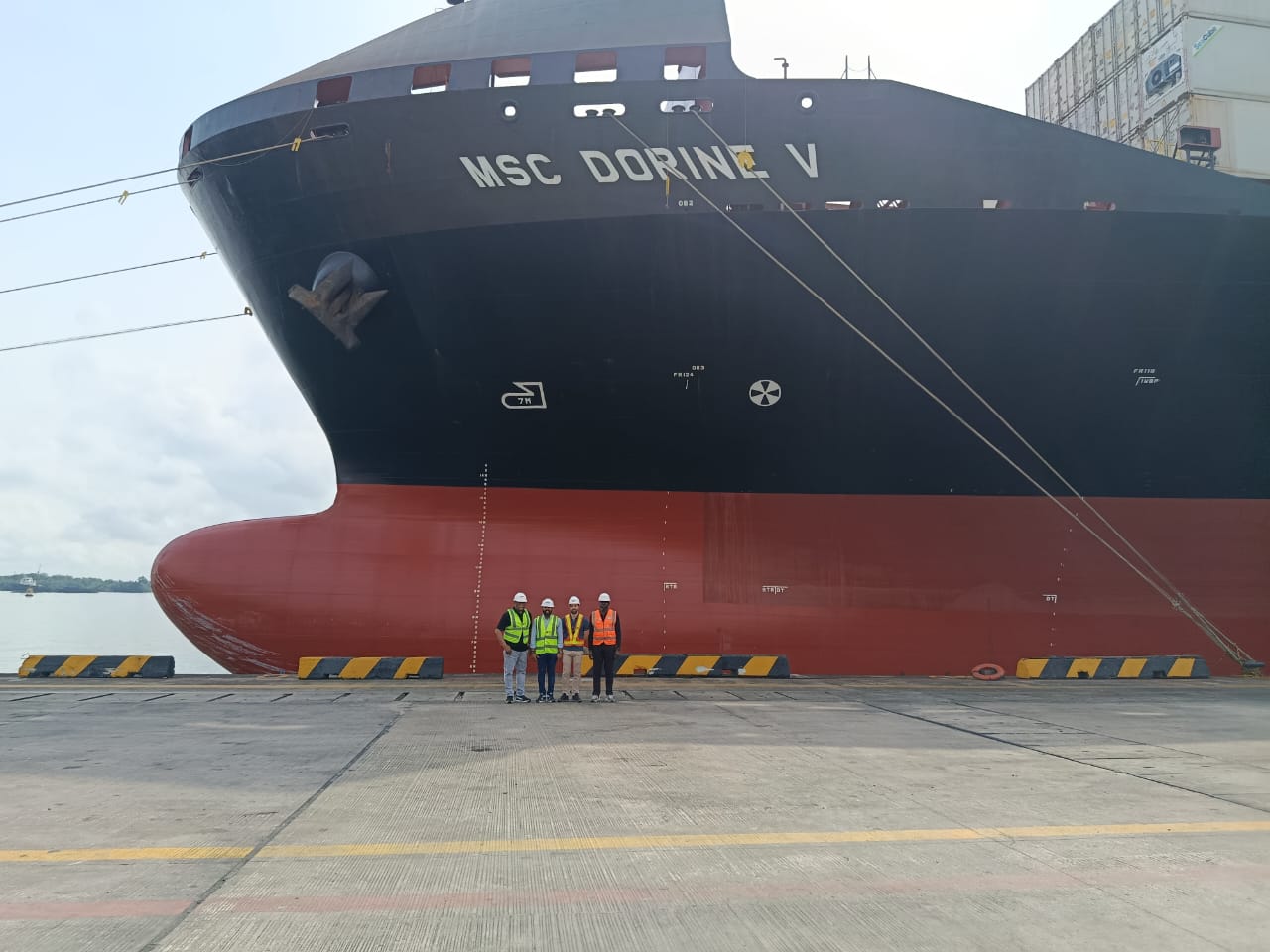
Vessel at Onne Port, Rivers State
Vessel at Onne Port, Rivers State

