 Follow Us on Google News


 Follow Us on Google Discover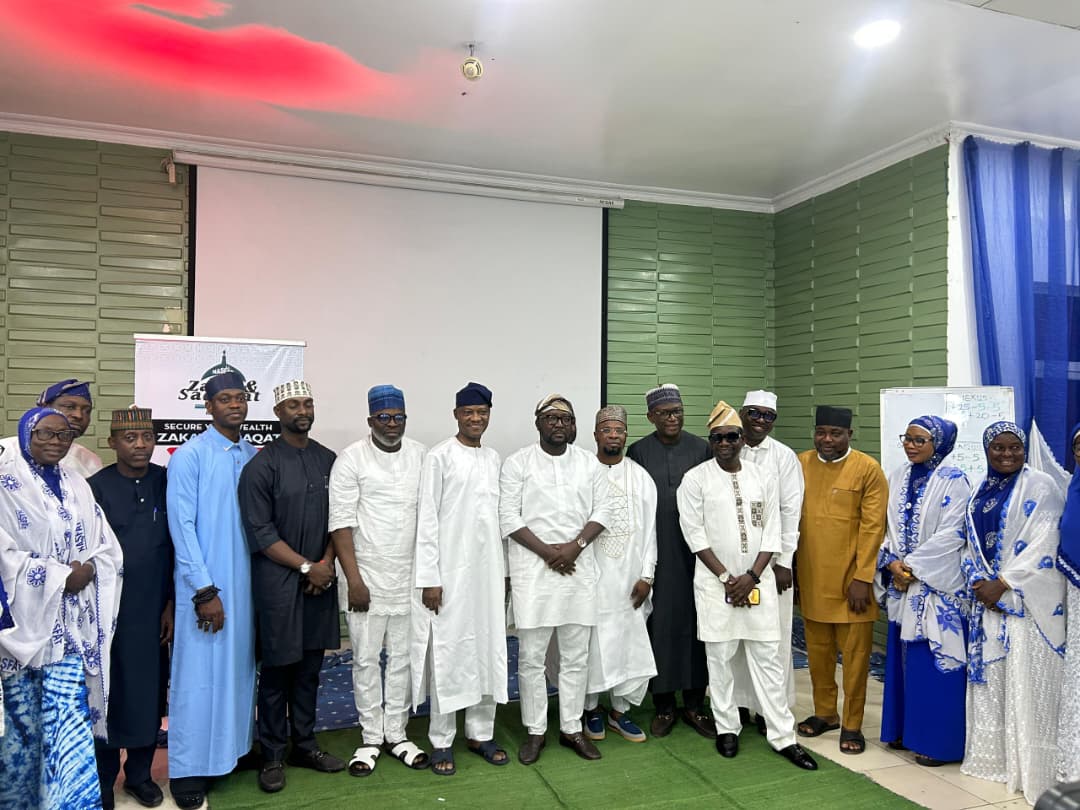
The Nasrul-Lahi-l-Fatih Society of Nigeria (NASFAT) has urged journalists, content creators, and media stakeholders to embrace ethical responsibility as a sacred trust, describing the media as a powerful tool capable of shaping faith, unity, and national growth.
The call was made at NASFAT’s Iftar with media and friends of the organisation, held on Saturday, February 28, at the Chartered Institute of Personnel Management of Nigeria (CIPM) Banquet Hall, Alausa, Ikeja, under the theme, Ethical Pulse: Media as a Catalyst for Dawah and Growth. The society’s Ramadan theme for the year is “He who saves a life saves humanity.”
The event brought together religious leaders, government officials, actors, and media practitioners to reflect on the growing influence of digital platforms and the moral duty attached to them.
In his welcome address, NASFAT President, Alhaji Abdulrauf Abdulwaheed Ayodeji, said the organisation deliberately chose this year’s Ramadan theme to emphasise the value of truth and responsible communication.
He noted that saving lives is not limited to medical or physical intervention but also includes protecting society from harmful narratives, misinformation and propaganda.
According to him, Ramadan offers Muslims an opportunity to reflect on compassion, patience and justice, while also remembering those displaced by conflict within and outside Nigeria.
He added that journalists and media professionals play a vital role in safeguarding civil rights and promoting unity, stressing that what is written or broadcast can either build trust or deepen division.

Morouf Onike, who delivered the welcome address at the Iftar, described media practice as an amanah — a trust that must be handled with fear of God and a sense of accountability.
“Whoever controls the narrative carries a heavy responsibility,” he said. “The media has become the new pulpit. What you say today cannot be withdrawn tomorrow.”
He warned against the spread of fake news, reminding practitioners that ethical standards are tested beyond the camera.
Onike referenced an episode of a NASFAT media appearance that gained thousands of views within days, noting that if harmful content could travel that fast, the consequences would be severe.
“Consider truth before trends,” he advised, urging journalists to prioritise accuracy over popularity.
The keynote lecture was delivered by Imam Abdulganiu Raji, who expanded on the Ramadan theme. He reminded the audience that the popular phrase, “the pen is mightier than the sword,” highlights the extraordinary power of information.
According to him, every profession contributes to saving lives, whether doctors, judges, teachers or security personnel. Journalists, he said, also save lives when they report responsibly and prevent panic or conflict through verified information.
He cautioned against three forces that often damage national unity: religious leaders who preach division instead of enlightenment, politicians who exploit ethnic and religious fault lines, and political media actors who profit from negativity.
Mobolaji Ogunlende, Commissioner for Youth and Social Development, delivered a goodwill message in which he highlighted the strong influence of social media on young people.
He observed that most youth engagement now happens online, making the media space a powerful determinant of behaviour and perception.
The commissioner cited recent viral incidents where unverified allegations spread quickly, leading to confusion and reputational damage before investigations clarified the facts.
He called on media professionals to fact-check rigorously and avoid sensational headlines designed purely for attention.
“National stability requires collective responsibility,” he said, adding that while government has its role, citizens and media actors must also take ownership of the narratives they promote.
Special Adviser to the Governor on Media and Publicity, Gboyega Akosile, also delivered a goodwill message. He described Nollywood as a significant arm of the media ecosystem, with strong influence over cultural values and public opinion.
Akosile encouraged filmmakers and actors to use their platforms to promote unity and positive storytelling.
Several Nollywood figures attended the event, including Lateef Adedimeji, Fathia Balogun-Williams, Adebayo Tijani, Kazeem Adeoti, Muyideen Oladapo, and Hafeez Abiodun.
Their presence reinforced the message that entertainment professionals share the same ethical responsibility as journalists and broadcasters.
As the evening concluded with prayers and the breaking of fast, NASFAT reiterated its commitment to promoting faith-based values, national unity and media accountability.

