 Follow Us on Google News


 Follow Us on Google Discover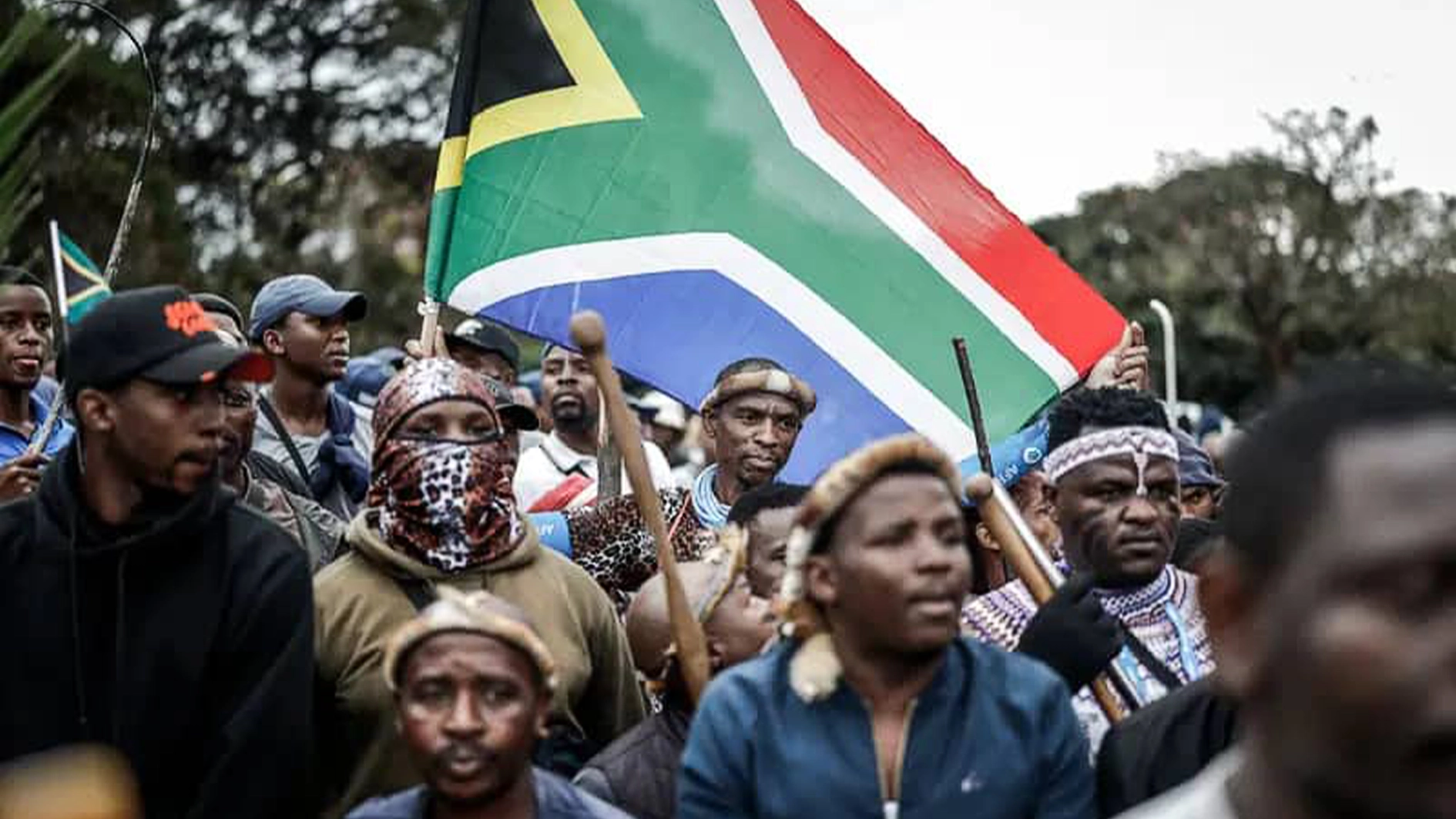
Fresh xenophobic tensions in South Africa have taken a new twist as some Nigerians who remained in the country after the Federal Government’s evacuation exercise reportedly armed themselves for self-defence.
The development comes amid fears of renewed attacks on foreign nationals and barely a day after the latest batch of Nigerian evacuees arrived home, highlighting the fragile security situation facing those who chose to remain in South Africa.
The Federal Government began the voluntary evacuation exercise in June following renewed anti-immigrant violence in parts of South Africa. The first batch of 262 Nigerians, accompanied by three government officials, arrived in Lagos on June 11 aboard an Air Peace flight.
The evacuation continued in phases as more Nigerians registered to return home.
The fourth batch, comprising 271 Nigerians, landed at the Murtala Muhammed International Airport, Lagos, on Friday, July 3, bringing the total number of citizens evacuated in four batches to well over 600.
Officials had earlier disclosed that more than 1,000 Nigerians registered for voluntary repatriation, with additional flights expected for those still willing to return.

Despite the evacuation exercise, some Nigerians opted to stay in South Africa.
A video circulating on social media on Saturday showed two groups confronting each other across a makeshift boundary marked with ropes, while police officers stood between them apparently to prevent a violent clash.
The footage identified one group as Nigerians, with South African protesters gathered on the opposite side.
The narrator of the video claimed the Nigerians were waiting for their opponents to cross the line before responding. Some individuals on the Nigerian side appeared to be carrying cutlasses and other light weapons.
A gunshot was also heard in the recording, heightening tension as chants erupted from the crowd.
The renewed unrest followed the expiration of an unofficial June 30 deadline issued by anti-immigrant groups demanding that undocumented foreign nationals leave South Africa.
Groups such as March and March have been at the forefront of the campaign against migrants, accusing them of taking jobs and placing pressure on public services.
Addressing supporters in Durban shortly before the deadline elapsed, the group’s leader, Jacinta Ngobese-Zuma, called for the mass deportation of undocumented migrants.
She alleged that South Africans had been displaced by illegal immigrants, worsening unemployment, and urged authorities to remove those who failed to leave the country within six months.
Following the deadline, protesters reportedly stormed houses and hotels where they believed foreign nationals were hiding.
One of the videos from the incidents showed a man being forced out of his home alongside his pregnant wife and children as he repeatedly pleaded with the crowd to spare his family.
Police confirmed that at least four foreign nationals; two Mozambicans, one Ethiopian and one Malawian; were killed in the latest outbreak of anti-immigrant violence.
The violence prompted several African countries, including Nigeria, Ghana, Malawi, Zimbabwe and Mozambique, to organise voluntary evacuation flights and road transport for their citizens. South African authorities said more than 25,000 people had been processed for departure in recent weeks.
The Nigerian government has repeatedly condemned attacks on its citizens in South Africa and urged the South African authorities to guarantee their safety.
Through the Nigerian High Commission in Pretoria, officials have maintained contact with affected Nigerians, advising them to remain calm, avoid flashpoints and promptly report threats to security agencies.

