 Follow Us on Google News


 Follow Us on Google Discover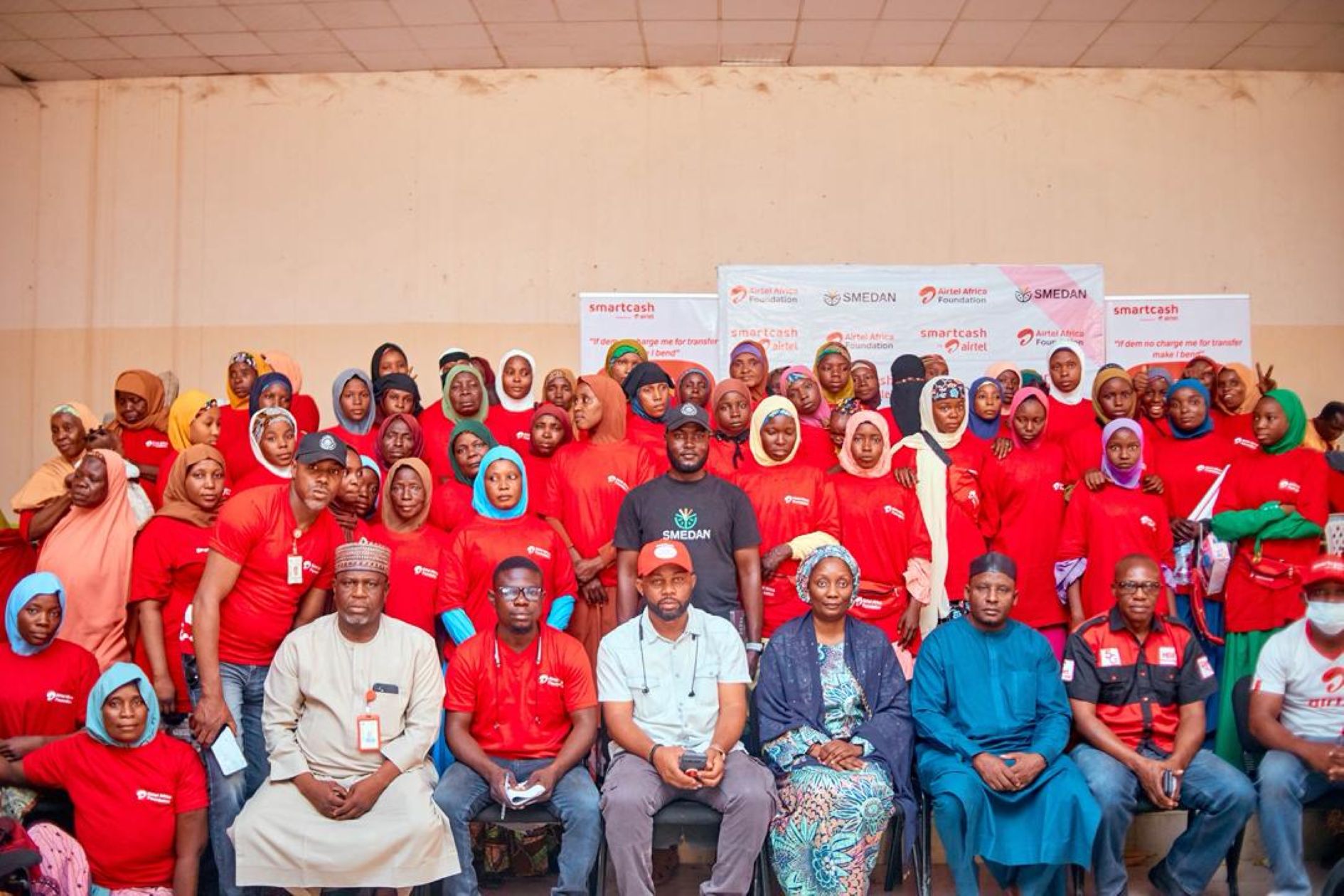
As part of efforts aimed at promoting gender inclusion, financial literacy and enterprise support programme for women in small and medium enterprises (smes), the Airtel Africa Foundation is changing narratives through the ‘Empower Her” initiative.
Delivered locally through Airtel Nigeria, the first phase has been deployed across six locations — Lagos, Oyo, Enugu, Akwa Ibom, Kano and the Federal Capital Territory Abuja— reaching close to 2,000 women this April.
The premise is rooted in the reality that Nigeria’s smes economy runs largely on informal systems. According to data from the National Bureau of Statistics (NBS), the informal sector contributes substantial growth to the nation’s Gross Domestic Product (GDP) and employs majority of working Nigerians.
That disconnect has become more visible in recent years. As inflation reshapes consumption patterns and input costs rise, small enterprises have had to adapt quickly. Margins are thinner, errors more costly, and access to reliable financial tools increasingly important.
For many operators, survival hinges less on demand than on how well costs are tracked, inventory managed, and capital preserved.
Within this system, women occupy a central role,I particularly in retail trade, food processing and agriculture. Yet their access to structured finance remains limited.

Programmes like “Empower Her” attempt to intervene at this level. Rather than focusing solely on access to financial services, the initiative centres on how those services are understood and used.
Training sessions introduce participants to budgeting, pricing, savings behaviour and basic financial planning. These are paired with practical onboarding onto digital platforms, including mobile wallets and agent banking systems.
For instance, a fish farmer learns to document input costs across each stage of production; a trader begins to separate business income from household spending; and an another adjusts pricing after understanding the full cost of goods sold. Ultimately, these mind-shifts represent a change in how businesses are run.
Chairman of the Airtel Africa Foundation, Dr. Segun Ogunsanya framed the Empower Her initiative as an economic lever rather than a corporate gesture, noting that when women gain financial clarity, the benefits extend beyond individual enterprises.
The architecture of the programme points to a wider trend in how Development interventions are being designed. Airtel’s collaboration with the Small and Medium Enterprises Development Agency of Nigeria (SMEDAN) and Smartcash Payment Service Bank brings together training, regulation and financial infrastructure within a single framework.
SMEDAN contributes enterprise development expertise, while Smartcash provides tools intended to reduce the cost and friction of transactions.
This convergence is not unique to one operator. Across Nigeria’s telecommunications sector, companies are moving deeper into financial services, driven by the overlap between connectivity and payments.
At the same time, government programmes and development partners are intensifying efforts around financial inclusion. Initiatives such as the Government Enterprise and Empowerment Programme (GEEP) point to a policy environment that increasingly recognises small businesses as crucial to economic boost.
For Airtel, Ogunsanya observed what distinguishes the current moment is the fusion of these efforts. Financial access is now being paired with capability-building and direct capital support.
Within the ‘Empower Her’ programme, selected participants receive micro-grants and equipment, including point-of-sale devices, enabling them to apply new practices in real time.
The importance of this integration lies in its potential to influence behaviour. By aligning training with access, programmes are attempting to shift habits, not just expand options. For businesses that have historically operated outside structured systems, even incremental changes can alter trajectories.
Yet the constraints facing women entrepreneurs remain deeply rooted. Access to credit is still shaped by collateral requirements that many cannot meet.
In agriculture, disparities in land ownership limit the scale at which women can operate. Across sectors, informal businesses face structural challenges that cannot be resolved through training alone.
The scale of the challenge is equally significant. Nigeria’s informal economy encompasses tens of millions of workers and enterprises. Programmes that reach a few thousand participants represent a starting point, not a solution. Sustained impact will depend on replication, coordination and the ability to integrate such efforts into broader economic policy.
In conclusion, Ogunsanya noted, ‘as the ‘Empower Her’ programme extends beyond its initial rollout, its relevance lies less in the number of participants than in the model it represents. It signals an understanding that the strength of Nigeria’s small-business economy depends not only on access to markets, but on the systems that support everyday transactions. Those systems, for now, are being rebuilt from the ground up—one business, and one set of books, at a time.

