 Follow Us on Google News


 Follow Us on Google Discover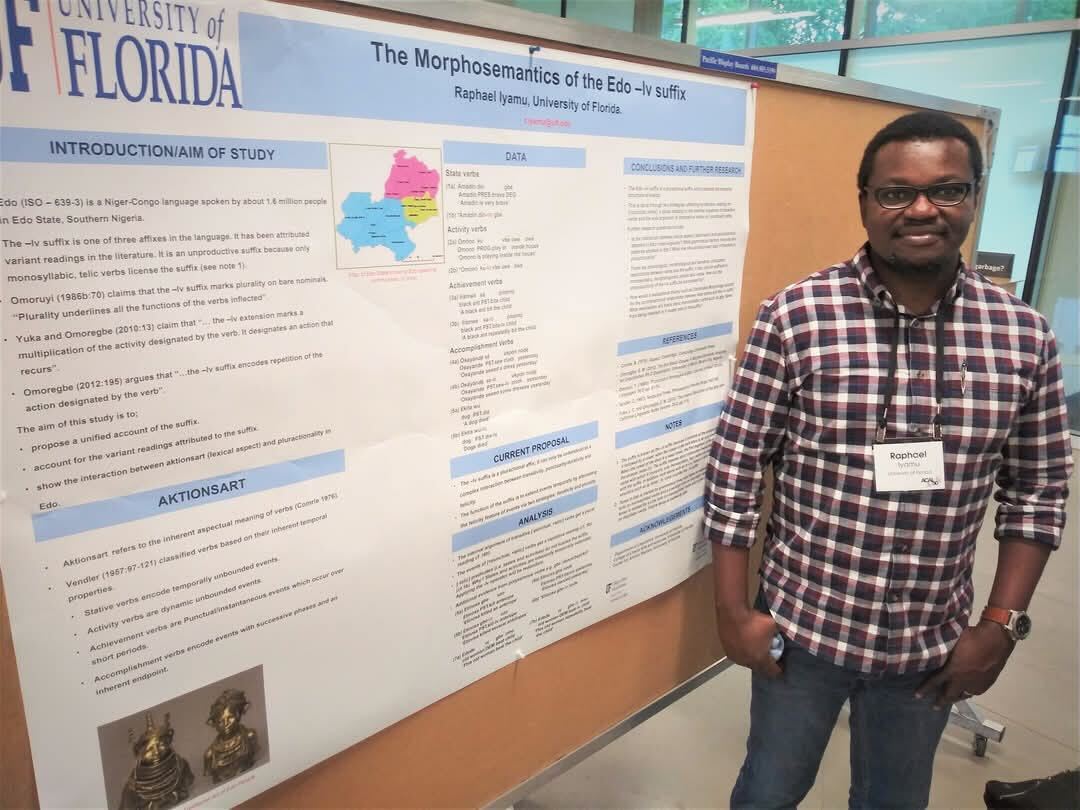
As artificial intelligence (AI) and Natural Language Processing (NLP) technologies continue redefining communication worldwide, a critical concern is the near-total absence of African languages in these rapidly advancing digital tools.
From voice assistants to automated translation services, billions of users interact with AI-powered systems daily. Yet, the vast majority of African languages remain digitally invisible, posing serious threats to linguistic diversity and long-term technological inclusion.
In a bid to address this growing disparity, the Department of Linguistics at Nnamdi Azikiwe University (UNIZIK), Awka, recently hosted a guest lecture by Dr. Raphael Osarense Iyamu, a Nigerian-trained computational linguist and a leading voice in the documentation and digitization of under-resourced languages.
The event under the university’s Corpus Linguistics course explored the theme: “Documenting African Languages for NLP: Challenges and Opportunities.”
“Language is power,” Dr. Iyamu told the attentive audience of students and faculty. “And in the age of AI, languages that are not digitally represented risk being left behind, not just culturally, but economically and socially.”
Dr. Iyamu, who hails from Benin City, obtained his Bachelor’s and Master’s degrees in Linguistics from the University of Benin before earning a Ph.D. in Linguistics from the University of Florida. Now a researcher in the Machine Learning for Endangered Languages (MELD) Lab in the U.S., he has built a career that bridges traditional linguistic fieldwork with modern AI applications. His expertise spans data annotation, machine learning, Python programming, SQL database design, and developing NLP tools specifically for African languages, making him one of a growing but rare class of computational linguists focused on Africa’s linguistic future.

The Benin-born Linguist has focused on linguistic fieldwork, language documentation, data annotation, and the creation of NLP tools for languages that lack extensive digital resources and has been an integral part of the Machine Learning for Endangered Languages (MELD) lab at the University of Florida. While we were glad to hear his talk detailing the technical, ethical, and logistical complexities of creating corpora and linguistic tools for African languages, many of which are rich in oral tradition but scarce in digital data, the best we could ever get from these japa’d researchers are things like guest lecture and the likes. Drawing from ongoing NLP projects across the continent, he offered strategies for data collection, annotation, and model development, while emphasizing the need for interdisciplinary collaboration and community involvement. Today, Iyamu stands at the intersection of language preservation and cutting-edge machine learning. His work includes linguistic fieldwork, the annotation of under-resourced languages, and the development of NLP tools designed for languages that lack digital representation.
Thousands of miles away from Nigeria’s bustling towns and fading dialects, groundbreaking linguistic research is being conducted, not in Lagos, Awka, or Benin, but in American laboratories and university campuses. One of the brightest minds behind this work is Dr. Raphael Osarense Iyamu, a Benin City native and computational linguist whose research focuses on developing NLP tools for under-resourced African languages.
Ironically, while Nigeria remains one of the most linguistically diverse nations in the world, it is also among the most vulnerable to language extinction. Yet, the very experts trained in Nigeria to reverse this trend, like Dr. Iyamu, often find their futures abroad, absorbed into foreign institutions that offer stronger research funding, better collaboration, and more stable academic environments.
It’s a bitter paradox. At the same time our indigenous tongues teeter on the brink, our most qualified scholars are forced to make their mark elsewhere. The consequence is not just the loss of talent, but a cultural, economic, and technological setback that may take decades to recover from.
Still, there is a way forward.
With targeted investment in local NLP research hubs, robust funding for fieldwork, and strategic partnerships with diaspora scholars, Nigeria can begin to reverse this brain drain. The country has the potential to become a global leader in language-centered AI innovation, if only it chooses to back its talent.
We often protest the Benin Bronzes kept in British and German museums, held as relics of a plundered heritage. But today, we risk exporting a new kind of treasure, our scholars and innovators, leaving them to power foreign breakthroughs while Nigeria watches from the sidelines. Dr. Iyamu’s work could be Nigeria’s gift to the world. But will it be ours to keep?
The future must be one where Nigerian linguists, trained and supported at home, lead the way in shaping global AI models—using our languages, our data, and most importantly, our voices.

