 Follow Us on Google News
 Follow Us on Google Discover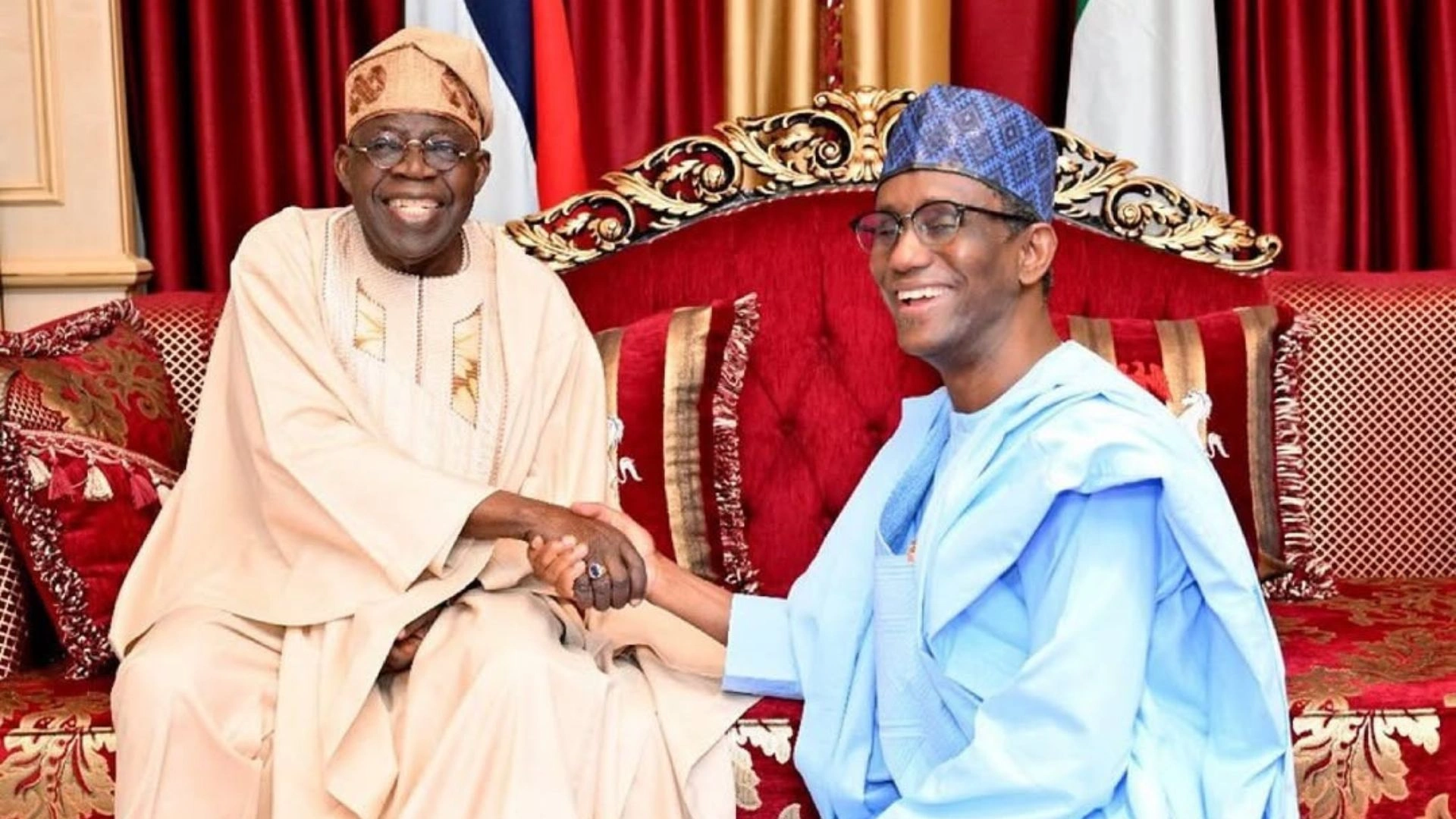
A public affairs and security analyst, Maxwell Olarotimi, has defended the presence of Nuhu Ribadu in President Bola Ahmed Tinubu’s delegation to the United Kingdom, describing it as a strategic necessity rather than a misplaced priority.
The comments follow reactions to a viral video showing Ribadu, President Tinubu’s National Security Adviser, and Minister of Arts, Culture and the Creative Economy, Hannatu Musawa, during the president’s state visit to Britain, an event hosted by King Charles III.
Criticism intensified amid renewed security concerns, particularly following recent attacks in Maiduguri, which heightened public sensitivity around leadership priorities.
Olarotimi argued that the National Security Adviser’s role extends beyond domestic coordination, positioning the office as a critical link between Nigeria’s internal security architecture and international partnerships.
According to him, Ribadu’s participation in bilateral engagements ensures that issues such as intelligence sharing, counter-terrorism cooperation and defence partnerships are embedded within diplomatic discussions.
He maintained that in an era where security threats are increasingly transnational, high-level international cooperation is essential to disrupting insurgent networks operating across borders.

The analyst also sought to clarify the operational structure of Nigeria’s security system, noting that the Office of the National Security Adviser functions primarily as a coordinating and advisory body.
He explained that while the NSA provides intelligence and strategic direction, operational responsibility lies with agencies such as the armed forces, police and intelligence services.
This distinction, he said, is often overlooked in public discourse, leading to misplaced expectations about the NSA’s role during security crises.
Olarotimi pointed to recent bilateral engagements involving the Tinubu administration, including visits to the United Kingdom, France, China, Türkiye and the United States, as examples of how diplomacy can translate into security cooperation.
These engagements, he noted, have focused on intelligence-sharing frameworks, training support, defence agreements and broader collaboration aimed at strengthening Nigeria’s capacity to tackle insurgency and organised crime.
He argued that such partnerships serve as “force multipliers”, enhancing domestic security efforts rather than detracting from them.
While acknowledging public frustration over insecurity, the analyst suggested that some of the criticism directed at Ribadu may be politically motivated, particularly in the context of evolving political dynamics ahead of the 2027 elections.
He warned against reducing complex security challenges to individual blame, urging a more nuanced understanding of how Nigeria’s security architecture operates.
The debate highlights a wider tension between public expectations for immediate security outcomes and the longer-term nature of diplomatic and institutional strategies.
For many Nigerians, the urgency of addressing insecurity remains paramount. For policymakers, however, the pathway increasingly involves a combination of domestic operations and international collaboration.
In that context, Olarotimi argues, the presence of the NSA at the centre of diplomatic engagements is not symbolic, but central to shaping the partnerships that underpin Nigeria’s security response.

