 Follow Us on Google News


 Follow Us on Google Discover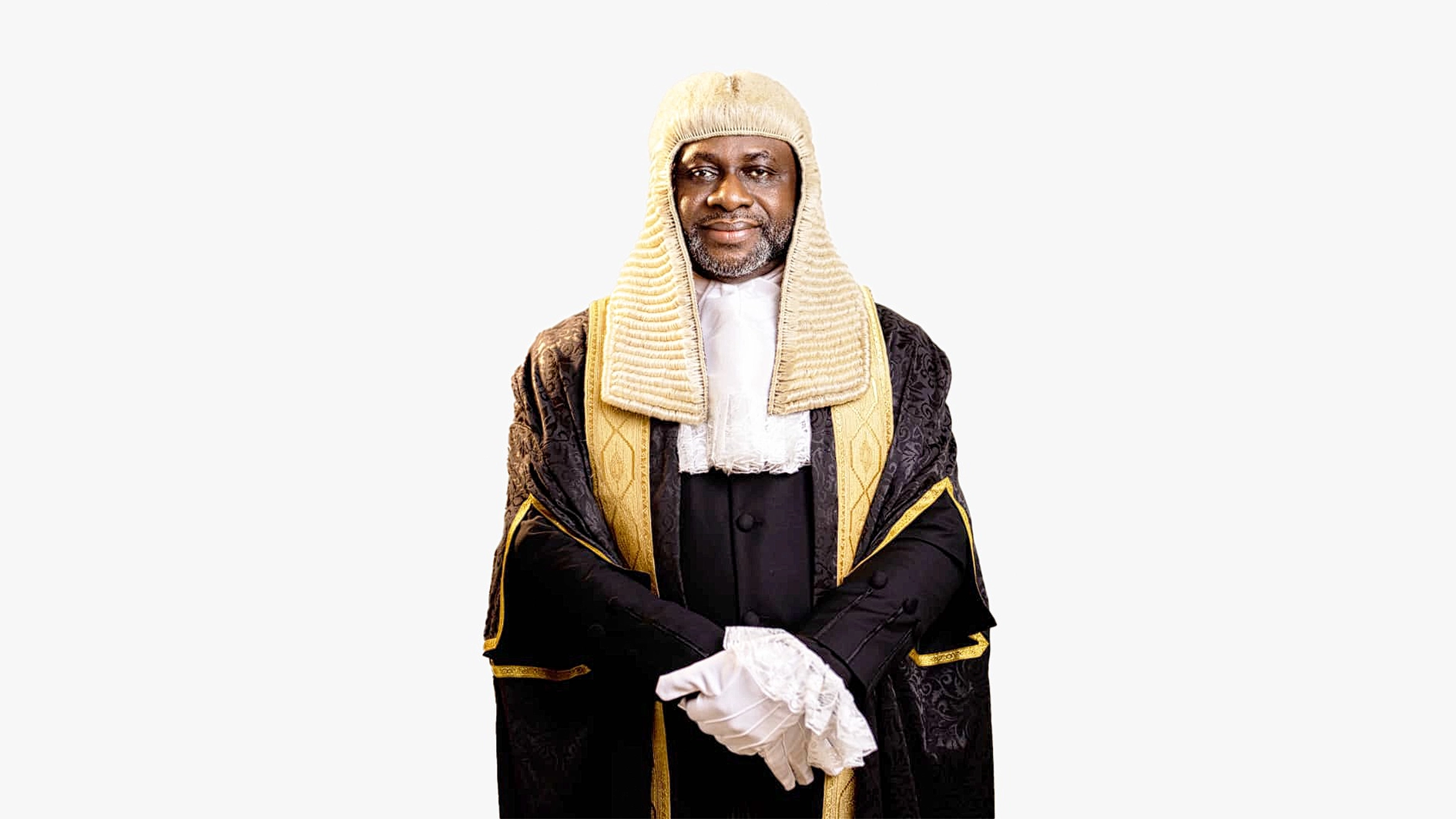
Senior Advocate of Nigeria (SAN) Godwin Sunday Ogboji, in this interview with AMEH OCHOJILA, called for greater political equity and rotational leadership at the presidential, governorship and local levels, warning that prolonged dominance of power by one group could threaten national unity and deepen resentment. The senior lawyer, who also spoke on state police, stronger electoral laws and judicial discipline, among others, said judges who issue conflicting orders deserve to be sanctioned financially in addition to dismissal.
With growing concerns over electoral manipulation, defections and the use of state institutions in politics, is Nigeria’s legal and judicial framework strong enough to protect the voter’s mandate in 2027, or are politicians still operating ahead of the law?
I think we have more than enough laws to curb all the excesses of politicians at any point in time. Laws are not the problem in Nigeria. We have elaborate and functional laws in the country. But, as you have already said, the problem is implementation and the willpower to ensure that the cause of justice prevails. When you talk about whether the law protects citizens participating in elections and having good results, elections have clearly shown us that if the people stand by their mandate, the election result will prevail. You will also agree with me that what happened in Osun showed that even with an APC government in the state, the Senate President and almost all the popular people in the state, the will of the people prevailed. It happened because the people were determined to guard and secure their votes. So, that is not about the law or politicians being ahead of the law. It is about the people saying enough is enough with the shenanigans of politicians. We are ready to stand by our votes. We saw that in the Osun election. It was a testament to the fact that when people agree to do the right thing and vote, they can secure their mandate. We must also commend the security apparatus because no election can be rigged without the security apparatus looking the other way. A lot of restraint was exercised before and during the election to prevent some of the unlawful acts that were predominant in the past. For me, we don’t lack laws; what we need is the strength of the people to stand ahead of time and defend their mandate at any point in time.
Some people argue that if state police become fully operational, governors may use the police to manipulate elections and intimidate opponents. What is your position?
That is a legitimate fear. But is the existing police not under the control and authority of the President? How is it functioning? The state government does not have operational powers over the police, but does the President unduly abuse the powers he has over the police? To some extent, you can say yes. But that is not the point. With the prevailing insecurity in the country, can we continue with the present security arrangement? The fear that governors might manipulate state police is legitimate because we are dealing with human beings, some of whom think whatever they say is law. If state police run riot, menacing, killing and harassing innocent persons at the behest of governors, we will not encourage that. But let us also look at the benefits state police can bring to society.
A lot of communities are under attack and cannot defend themselves because of the prohibition on the use of firearms by citizens. When we have institutional protection through state police, which will most often recruit people from the local communities, that will give them legitimate authority to bear arms and protect their communities. For me, that is a very big advantage. No matter the disadvantage in the use of state police by governors, if lives and property can be preserved and protected from mindless killing, it will be good. Look at what happened in Benue recently! I can assure you that if there was a state police institution in Benue capable of repelling that type of madness and impunity, it would not continue. We had a form of state police before now. We had Native Authority Police. The same fear was expressed that premiers were using them to the detriment of the people. At the end of the day, they performed the functions they were supposed to perform. So, I am looking at the larger picture.
I don’t want to deny society the benefits state police can bring, particularly where communities can be adequately protected and there is legitimate use of firearms to defend them. The abuse from time to time is something the law can address. We have fundamental rights enforcement under the Constitution. Where there is excessive use of force or abuse of powers, the courts are there to intervene. With courts pronouncing and awarding damages or holding institutions and officers responsible for their actions, that can serve as a deterrent.

With preparations for the 2027 elections already underway, what are the three biggest loopholes you currently see in the electoral system?
They are conspicuous. The first is Section 60(3). It makes IReV transmission of results mandatory and necessary, but at the same time, allows manual results to prevail if there is any challenge in transmission. In my opinion, Section 60(3) should be strengthened so that electronic transmission of results becomes the major basis for announcing results, while the manual EC8 should only be used to corroborate it, rather than allowing manual results to take precedence whenever there is a dispute. Another very serious loophole is Section 65. It empowers INEC to reverse declared results within seven days if there is an internal report that there was duress or any form of oppression or suppression by INEC officials. But it does not give adequate room for the party or person alleged to have caused the suppression to be heard. That provision is too broad and, in the Nigerian situation, can be abused. Section 65 should be amended to allow the person against whom the allegation is made to defend himself. It should go beyond that.
There should be judicial interpretation, and it should be a ground for an election petition. You cannot leave this type of power with INEC and make it the judge and prosecutor of its own case. How can you declare somebody the winner and then have the power to reverse that declaration within seven days because of an allegation by your internal staff? To me, that is poor. Then Sections 92(4) and 105 deal with campaign spending. The law is beautiful, but the penalties are very minimal. They should be enhanced so that the punishment is commensurate with the offence and can serve as a deterrent to politicians.
Why have BVAS and IReV, which are innovative technologies, not delivered the credible elections Nigerians expected?
Because they are not being fully deployed or used. You heard in the last dispensation that certain senators fought vigorously against electronic transmission, claiming their villages did not have the platform. Do they not use phones in those places? The politician knows that if results are transmitted electronically, the result becomes available online.
Look at what happened when there was pressure and, suddenly, transmission stopped for several hours during the Osun election! That is the type of situation they want to exploit to manipulate elections. That is why they continue to insist that manual results should come on board. Unfortunately, the politicians who benefit from manual results are still at the helm of affairs. But if we agree to look beyond ourselves, the right person who will give us the dividends of democracy can emerge without necessarily being a moneybag.
These electronic devices work elsewhere. Why should the Nigerian case be different. It is not IReV or BVAS that is the problem. The problem is the willingness of the operators to allow them to work. The season is here when the courts get busier with political matters. We hear of conflicting court orders and injunctions. What should happen to judges found wanting in issuing such orders?
If you refer to the NJC and the judiciary, we give them kudos. They have dealt heavily with most of these judges. Yes, there are some reckless judges. We cannot take that away, and the NJC has acknowledged that fact. The good thing is that most of these temporary setbacks are overturned. There are hardly any of these ridiculous orders that have been upheld by a higher court, and almost all the judges involved in reckless orders have been punished adequately by the NJC, with some losing their seats. The suggestion of personally punishing erring judges, apart from removing them from office, is innovative. It is something we should look into. If, in the wisdom of the NJC, it is able to instil more discipline and deter judges from recklessly doing what they are not supposed to do, I have no opposition to it. Nigerians are very hardened unless there are drastic actions.
Most often, what leads to this is allegations of gratification. If a judge is found conspicuously wanting, apart from being stripped of the seat, such a judge should also be punished financially. As lawyers, we have punitive fines imposed on us during cases. One lawyer was recently fined N50 million, which he paid. If lawyers can be fined, judges found wanting should also be subjected to appropriate financial sanctions.
Some schools of thought believe that the NJC and the Legal Practitioners Disciplinary Committee are strong on paper but weak in enforcement. What is your view?
They are not weak on paper. The laws are strong, very strong. But I agree to a limited extent that there is a problem with the willingness to enforce the law wholeheartedly. I concede that there is selective justice, where one person does something and, because of someone’s influence, the full weight of the law is not brought upon that person. The problem in Nigeria, I keep saying, is not even corruption; it is impunity. It is because punishments that are supposed to be imposed are not imposed. If we have the institutional will and strength of character to enforce the law as it ought to be enforced, things will improve. You don’t have to be a lawyer to see that our laws are sound. The question is: are they being fairly applied to everybody found wanting? Some people feel the full footprint of the law while others do not. If we can overcome that challenge, we will have a better system of fair justice.
There have been allegations of political interference in the Nigerian Bar Association national election. What is your assessment?
It is not exactly political interference. What we often see is that during elections, people complain that the elections are not fair, but most often those allegations lack backing.
The NBA election is conducted electronically. The challenge from time to time is that the back-end of the results and the collation process are not sufficiently known. My challenge is this: we should not wait until the election commences before raising eyebrows about the process. For the past three or four elections, losers have gone to court. That is not what it is supposed to be. Contestants should challenge the processes before they actually stand for election. The current NBA President went as far as publishing, branch by branch, who voted and the necessary details. I strongly believe that the process should be tested well before the election takes place so that there can be a definite pronouncement on it, rather than waiting until the election is around the corner.
If the complaints are genuine, test them before the national election. It is high time candidates looked into this so that we don’t continue having these problems. Challenge the process before the election, not the result after the election.
Thousands of lawyers are being called to the Bar every year. Is Nigeria creating a glut of lawyers without corresponding opportunities?
We are not in the “market”; we are in the Bar. Let’s get that corrected. Nigeria’s population is estimated at nearly 250 million. In the whole country, we are not even up to 300,000 lawyers. With those numbers, you tell me that fewer than 300,000 lawyers serving nearly 250 million people is an oversupply? No.
So you believe lawyers are undersupplied?
They are undersupplied. Don’t look at urban centres like Abuja, Lagos and Port Harcourt. A lot of communities do not have even one lawyer. Let’s start from our villages. Where do we have lawyers in our local governments? You cannot find even one chamber in several communities. Law is not only about going to court. It is about agreements, arbitration and legal advice that can save relationships.
What about the training process? Some people believe legal education and training are too rigorous and should be relaxed?
This is a learned profession where you decide people’s fates. Apart from God, only a judge can order that somebody be executed. Do you want people who are not well-baked to handle such responsibilities? No. The training is not even rigorous enough. It should be so rigorous that anybody coming out of the furnace, just like gold, will be something worthwhile. When you call me a “learned colleague”, I should be worth that description. I was with a priest recently and he said a lawyer is your “war priest” or your “ethic priest”, because that is the person you confide in. What you cannot tell anybody else, you tell your lawyer. Do you want someone who is not properly equipped mentally and educationally to handle such confidential information? No. The process should be maintained so that whoever is called to the Nigerian Bar can carry the responsibilities of the profession.
As a senior lawyer, what message do you have for Nigeria at this critical time?
We don’t have any other country. I have seen the embarrassing things happening in South Africa and Ghana. We must work hard to make this country worthwhile. This challenge goes more to the politicians. You use inflammatory words because of power that is transient. Executive power lasts for a maximum of eight years. Is it worth bringing down the whole system because of it? Let us create a situation where everything possible is done to ensure free and fair elections, where justice and equity prevail. I shouldn’t have to be a leader to enjoy the dividends of democracy. I say this because, in some states, one tribe dominates forever. In Benue State, for example, the governor is Tiv, the Speaker is Tiv and the Chief Judge is Tiv. That does not foster unity or equity. Other people are also crying. That is why I support rotational leadership. Look at what is happening to the PDP today. It is because of the failure to shift power when it was supposed to shift. The decline of the PDP is connected to the failure to shift power to the South. Until today, the party has not recovered from that mistake. If Nigeria considers equity, where no matter how populous you are, others are also allowed to enjoy political advantage, things will be better. I urge Nigerians to have equity at the back of their minds and show empathy to the people. At the end of the day, Nigeria will become the pride of Africa and the world.

