 Follow Us on Google News


 Follow Us on Google Discover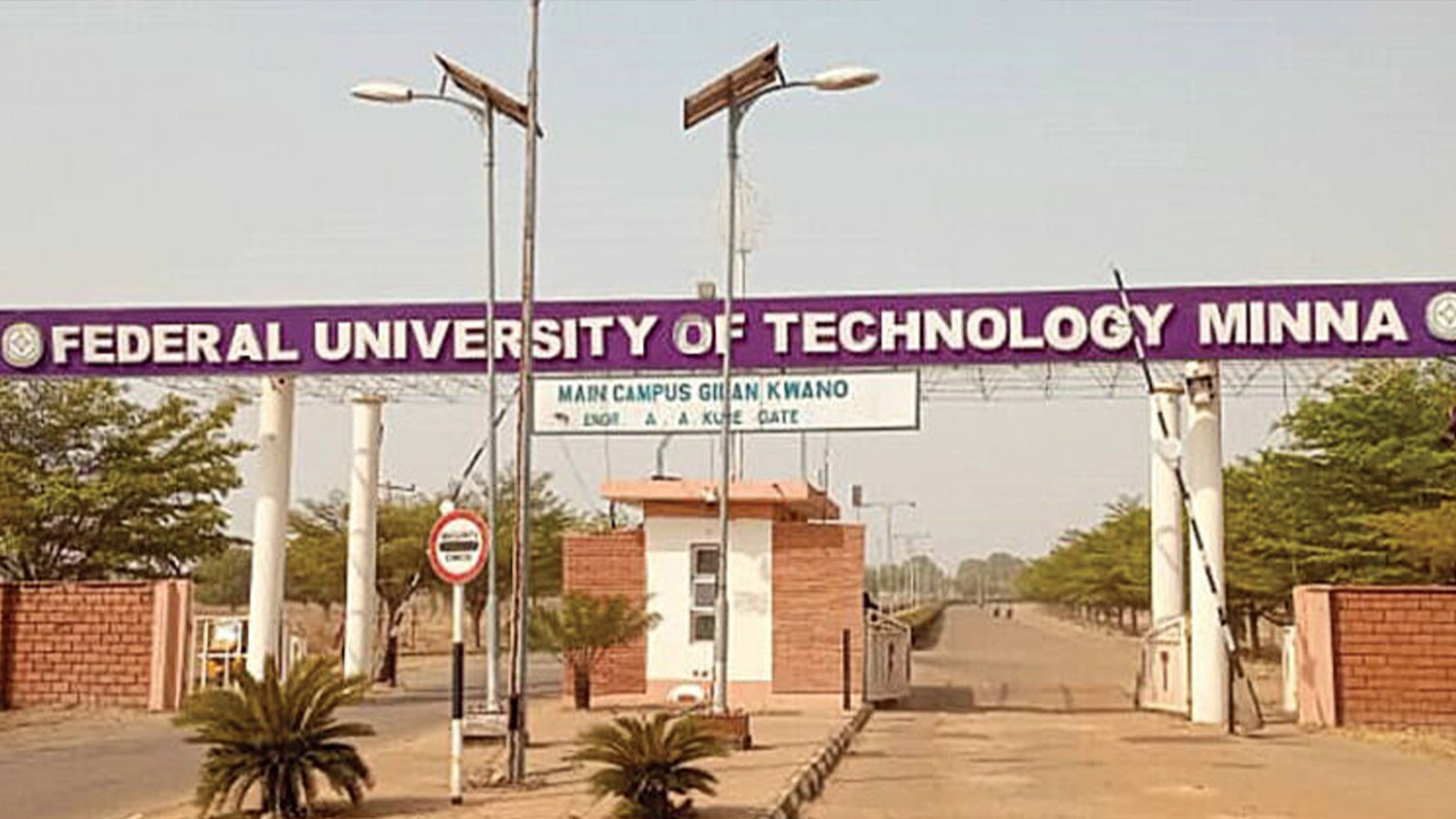
The Academic Staff Union of Universities (ASUU), Federal University of Technology (FUT), Minna branch, has said that the recent dispute over the Bosso Campus has evolved into a matter of national concern, touching on issues of law, land ownership, federal authority, and the delicate balance of institutional autonomy in Nigeria.
In a statement issued by the ASUU Chairperson, FUT Minna, Professor Luqman Kunle Oyewobi, and made available to The Guardian in Minna, the union noted that at the centre of the controversy is a claim by the Niger State Government that the Bosso Campus—used as the university’s take-off site—was merely leased and should revert to the state following the alleged expiration of a 40-year term.
ASUU explained that the dispute began during a courtesy visit by the Governing Council of FUT Minna to the Governor of Niger State, Muhammad Umaru Bago, to congratulate him on his assumption of office.
According to the statement, “At the close of the meeting, the governor publicly declared his intention to repossess the Bosso Campus, claiming that it had been leased to the university and that the lease expired in 2023.” ASUU, however, insisted that in law, a lease is not presumed; it must be explicit, documented, and enforceable, stressing that its absence is not a minor gap but a fatal defect in the state’s claim.
The union disclosed that the Vice-Chancellor, in a measured response, indicated willingness to revisit the issue. However, on October 3, 2025, the Niger State Government formally notified the university of its intention to take over the campus. This was followed by another communication on November 27, 2025, from the Secretary to the State Government, urging the university to vacate the premises to avoid unpleasant developments.
ASUU revealed that events escalated quickly, as a delegation of state officials, led by the Deputy Governor, reportedly visited the campus and began marking out spaces for state use without prior consultation with university authorities.

It stressed that for an academic institution built on order, process, and intellectual civility, such actions were not only surprising but deeply unsettling. The university community, it said, responded with peaceful protests, presenting what it described as incontrovertible evidence of federal ownership.
ASUU added, “This stance was echoed by the Alumni Association, the Students’ Union, and the University Congregation. At the administrative level, the Vice-Chancellor and management maintained a firm and consistent position that no authority exists to cede legally acquired federal property to any state or individual.”
The statement noted that, ordinarily, such a unified presentation of facts might have moderated the situation. Instead, tensions appeared to intensify, with allegations of intimidation emerging. The matter was subsequently escalated to Abuja, where a tripartite meeting was convened by the Minister of Education, Dr. Maruf Tunji Alausa. However, ASUU said this intervention raised further concerns.
Professor Oyewobi explained that historical records show the Bosso Campus, originally a state-owned teachers’ college, was formally acquired by the Federal Government in 1983 following the establishment of FUT Minna. He emphasised that the acquisition was neither symbolic nor temporary.
“A total compensation of N2.8 million was paid to the Niger State Government in two instalments: N500,000 on July 22, 1983, and N2.3 million on December 14, 1983. In property law, such payment, coupled with transfer of possession, extinguishes prior ownership claims unless otherwise specified,” the statement said.
It further noted that no such qualification exists, maintaining that university council records from that period affirm that the transfer was outright and unconditional. To date, ASUU said, no contrary evidence has been presented by the state.
The union also pointed out that the National Universities Commission (NUC), the statutory regulator of university education in Nigeria, communicated clearly to all federal universities on August 14, 2014, that take-off campuses do not revert to state governments. This directive reflects established policy.
ASUU added that several federal universities—including Ahmadu Bello University (ABU), Zaria; the Federal University of Technology, Akure; and the University of Ilorin—began operations on state-provided land, yet none has been asked to relinquish its take-off campus. It argued that the attempt to single out FUT Minna raises serious questions of consistency and equity.
The statement emphasised that the Bosso Campus is not merely a parcel of land but a thriving academic ecosystem. Over the past four decades, the Federal Government has invested heavily in infrastructure, including lecture theatres, laboratories, hostels, staff quarters, and research centres. The campus currently serves thousands of students and staff and has continued to expand through additional land acquisitions.
ASUU argued that proposals for co-sharing or repossession are not mere administrative adjustments but disruptions of academic continuity and potential misallocation of federally funded assets.
The union reiterated that FUT Minna is a federal institution, and its assets are held in trust for national development. It warned that any attempt to transfer, dilute, or co-administer such assets without clear legal backing risks undermining the integrity of federal property rights and setting a dangerous precedent.
ASUU also highlighted the human dimension of the issue, noting that the Bosso Campus is home to a vibrant academic community comprising students, lecturers, researchers, and support staff. Displacing this community amid an unresolved legal dispute, it said, would be both disruptive and unjust.
The statement further alleged that due process may not have been fully observed during the Abuja meeting. Despite receiving extensive documentation beforehand, the Minister reportedly excluded journalists, did not sufficiently engage the NUC—which facilitated the original acquisition—and proposed a compromise lacking legal foundation.
More troubling, ASUU said, were alleged threats directed at the Vice-Chancellor, whose appointment and authority are governed by statutory provisions beyond ministerial discretion. Such developments, if accurate, risk eroding confidence in institutional safeguards.
ASUU concluded that the Bosso Campus dispute is far more than a disagreement over land. It described it as a test of Nigeria’s commitment to the rule of law, institutional stability, and respect for documented agreements.
“The facts are neither obscure nor ambiguous: a completed transfer of ownership in 1983, absence of any lease or reversion agreement, clear federal policy protecting take-off campuses, decades of national investment, and no legal framework supporting co-sharing of university property. Taken together, these establish a compelling and unassailable conclusion—the Bosso Campus is neither legally nor historically available for repossession or co-sharing.”

