 Follow Us on Google News


 Follow Us on Google Discover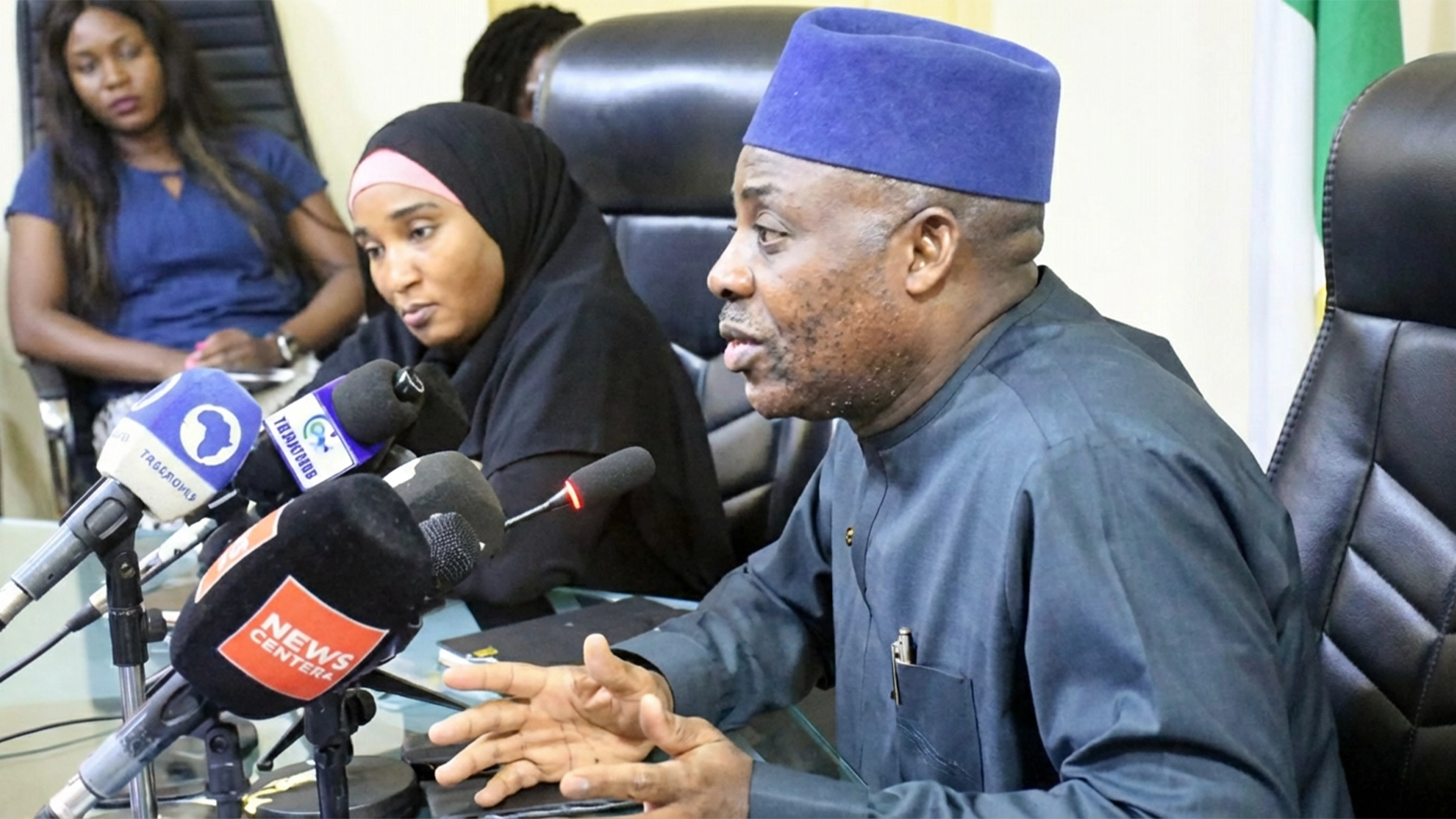
The Federal Government has said the country lost a cumulative five years to industrial actions by the Academic Staff Union of Universities (ASUU), 10 years prior to President Bola Tinubu’s assumption of office in 2023.
According to the government, the frequent disruptions not only prolonged academic calendars but also affected the quality of learning and the global competitiveness of graduates from Nigerian universities.
Minister of Education, Dr Tunji Alausa, at the official launch of the Entrepreneurship, Innovation and Business Incubation Certification (EIBIC) programme in Abuja, noted that public tertiary institutions had endured repeated shutdowns, leading to delayed graduations and, in many cases, a loss of motivation. This, he declared, has been nipped in the bud.
The Guardian reports that although ASUU had embarked on warning strikes since the current administration assumed office in 2023, the actions have not been prolonged enough to significantly disrupt the academic calendar or delay students’ graduation.
This, Alausa attributed to Tinubu’s proactive engagement with the user union, improved dialogue mechanisms, and timely interventions aimed at addressing lecturers’ concerns before they escalate into full-blown industrial actions.
The minister insisted that, under the present administration, a four-year programme now runs its full course within that time, noting that such consistency had not been achieved over the past three decades.

He said: “This President, when he campaigned, he said, four years will be four years. In the last 10 years, we have had almost 52 ASUU strikes. And there have been almost 1,700 lost academic days. Calculate that almost five years of lost academic days. Since May of 2023, that has been brought down to zero.”
Stakeholders expressed concern that frequent disruptions in the academic calendar due to ASUU strikes hampered the global ranking of Nigerian universities
According to the 2026 Times Higher Education (THE) rankings, the University of Ibadan and the University of Lagos were ranked between 801 and 1000 among the world’s top 1,000 universities.
Indications emerged that the relative stability in public universities may be short-lived, as ASUU has threatened fresh industrial action over delays in implementing its renegotiated agreement with the Federal Government.
There is growing tension across federal universities following the failure to commence full implementation of the agreement about three months after it was signed and presented to the public.
The deal, which stakeholders say could resolve the 16-year dispute over the 2009 agreement, was scheduled to take effect from January 1, 2026. It includes a 40 per cent salary increase for lecturers, improved pension benefits, and enhanced earned academic allowances.
Investigations in many federal universities including the UNOLAG, University of Abuja (UNIABUJA), University of Calabar (UNICAL), Federal University of Petroleum Resources, Effurun (FUPRE), Federal University of Otuoke, Federal University of Lafia (FULAFIA), Nigerian Maritime University, Okerenkoko (NMU), Federal University of Medical and Health Sciences, Kwale (FUK), Federal University of Technology Minna, Alvan Ikoku Federal University of Education, revealed that the agreement had yet to fully take effect in the last two months, contrary to claims by the Nigerian government that total implementation had commenced.
ASUU President, Prof. Chris Piwuna, had, in an interview with The Guardian a fortnight ago, warned that the union would decide its next line of action if there is no progress by the end of March.
He identified delays in budget approval as a major constraint on implementing the salary component of the agreement.
Last week, Piwuna also issued a four-day ultimatum to the Federal Government during a public lecture at Sa’aduZungur University, Bauchi State, demanding immediate implementation of the new salary structure.
However, the Education Rights Campaign has described the minister’s claim as misleading and lacking depth.
In a chat with The Guardian, the National Mobilisation Officer of the Campaign, Michael Adaramoye, argued that it is “not factually correct” to claim that five years were lost to strikes within a decade prior to the administration of Tinubu. He maintained that focusing on the number of years lost to strikes misses the broader issues affecting the sector, describing such an approach as “myopic.”
The activist further warned that the underlying issues driving industrial action remain unresolved. He cited a recent union warning of a possible strike, accusing the government of failing to implement the January wage agreement.
He added: “What is needed is for students and education workers to wage a united struggle against inadequate funding of public education and the horrific state of tertiary institutions.”

