 Follow Us on Google News
 Follow Us on Google Discover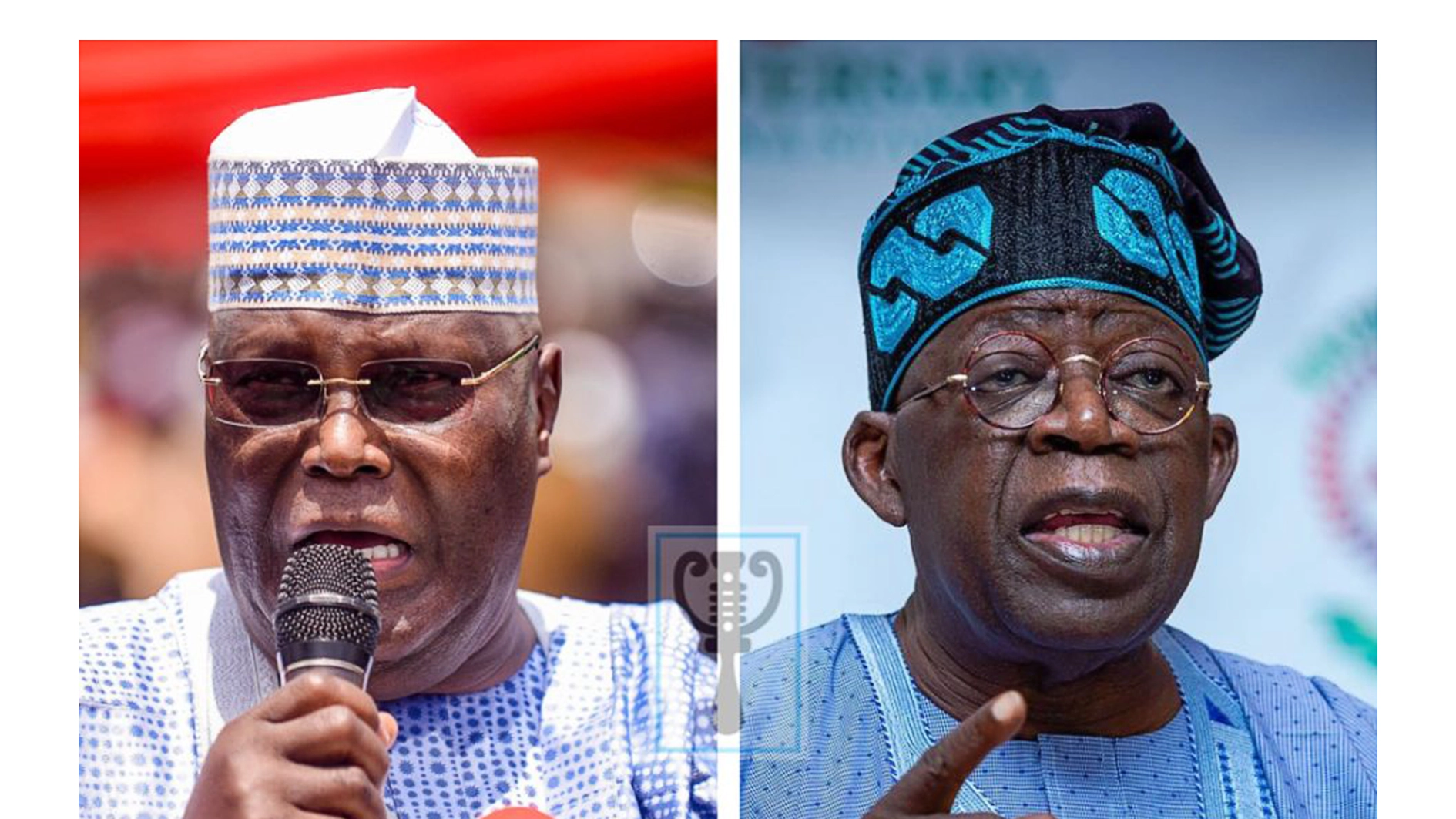
Former Vice President of Nigeria and presidential candidate of the African Democratic Congress (ADC), Atiku Abubakar, has accused the Tinubu administration of dragging Nigeria to a point where scandals are no longer viewed as isolated incidents but as recurring features of governance.
In a statement issued by his Senior Special Assistant on Public Communication, Phrank Shaibu, Atiku said there is an old African saying that when a man’s roof leaks every rainy season, neighbours stop blaming the clouds and begin questioning the strength of the house itself.
“Nigeria has sadly arrived at that point. The issue is no longer one scandal or another. The issue is the pattern. And when scandals become a pattern of governance, the inevitable conclusion is this: you are no longer managing scandals; you have become the scandal itself.”
According to the former Vice President, the controversy surrounding the purported Presidential Foreign Intervention Promotion Council (PFIPC) is not merely another embarrassment for the government but the latest chapter in an ever-expanding catalogue of controversies that have come to define the Tinubu administration.
He said the government has become one in which scandals erupt with unsettling regularity, investigations are announced with fanfare, and the truth too often disappears into official silence.
The Waziri of Adamawa noted that what should concern Nigerians is not merely the frequency of these scandals but the disturbing pattern that follows them: allegations emerge, committees are hurriedly assembled, promises of accountability are made, headlines are generated, and then, gradually, silence descends.
He recalled that the suspension of a former Minister of Humanitarian Affairs over allegations of financial impropriety was presented as proof that the government would pursue accountability wherever it led.
Investigations were announced, recoveries publicised and assurances given. Yet, he said, Nigerians are still waiting for a comprehensive public account of what transpired, who was held responsible and what institutional safeguards were put in place to prevent a recurrence.
Atiku also noted that persistent questions surrounding transparency and financial disclosures within the Nigerian National Petroleum Company Limited (NNPCL) have remained unresolved despite repeated calls for greater openness and institutional accountability.
He argued that the PFIPC affair did not emerge in a vacuum but forms part of a troubling sequence of controversies that have cast long shadows over the current administration.
“From unresolved questions surrounding the Humanitarian Affairs scandal to allegations of crude oil theft and illegal tanker releases that faded without publicly released investigative reports; from concerns over alleged discrepancies in the 2024 budget and the absence of a comprehensive forensic explanation to the billions reportedly spent on refinery rehabilitation while public refineries remain largely dysfunctional; from procurement controversies involving major infrastructure projects to recurring concerns over opaque contract awards, missing procurement records and appointments of persons linked to unresolved allegations, Nigerians have watched a familiar and deeply troubling pattern unfold.
“The pattern itself has become the scandal. When allegations involve ordinary citizens or politically expendable officials, the machinery of government appears to move with astonishing speed. But when questions drift dangerously close to the corridors of power or involve individuals perceived to enjoy political protection, investigations slow to a crawl, independent scrutiny gives way to internal administrative reviews, public updates disappear and accountability quietly evaporates.
“This selective application of justice is corrosive to public confidence because it creates the dangerous impression that there are two systems of accountability in Nigeria: one for the powerful and another for everyone else.
“A democracy is not measured by how quickly it moves past controversy. It is measured by how honestly it confronts it.
“Nations do not lose public trust overnight. They lose it gradually—each time difficult questions are postponed, each time reports remain unpublished, each time accountability appears incomplete, and each time citizens are left to fill the silence with speculation.”
Atiku said it was unfortunate that millions of Nigerians continue to endure the crushing hardship imposed by the government’s economic reforms while those entrusted with managing the nation’s resources appear to be presiding over an unprecedented wave of corruption.
Rather than translating the sacrifices demanded of citizens into improved governance, transparency and accountability, he said, the country has witnessed a succession of scandals involving public funds, questionable contracts, budget irregularities and allegations of official misconduct.
“It is both cruel and indefensible that, while ordinary Nigerians are being asked to tighten their belts, the nation’s collective patrimony is allegedly being pillaged with alarming impunity,” he said.
The former Vice President described the PFIPC affair as an opportunity for President Bola Ahmed Tinubu to demonstrate that transparency is not merely an aspiration but a governing principle.
He urged the President to order a truly independent investigation into the PFIPC controversy and make its findings public.
Atiku noted that the statement came barely 48 hours after he gave the Federal Government a seven-day ultimatum to provide a full account of the PFIPC affair.
“The countdown has already begun. Nigerians expect answers, not evasions, before the expiration of that timeline.
“An ultimatum is not a political gimmick; it is a demand for accountability. The clock is ticking, and every passing day without a credible explanation only deepens public suspicion and further erodes confidence in the institutions of government.
“The Presidency still has five days left to tell Nigerians who created this phantom organisation, who authorised its activities, and who must be held responsible. Silence cannot become the official response to a scandal of this magnitude.”
The ADC presidential candidate further argued that the moment also presents the President with an opportunity to address other longstanding public controversies.
“Over the years, questions and publicly documented reports relating to aspects of the President’s age, family background and educational records have generated intense public debate and litigation. While the President has consistently maintained his position on these matters, their persistence in public discourse demonstrates a fundamental truth: unanswered questions rarely disappear; they merely endure.
“Leadership is not simply about exercising power. It is about inspiring confidence. Transparency is not a concession to critics; it is an obligation owed to citizens.
“The greatest inheritance any generation can leave the next is not wealth but an enduring culture of integrity. Young Nigerians must see that public office demands accountability, that institutions are greater than individuals, and that difficult questions are answered with facts rather than buried beneath bureaucracy and silence.
“History does not merely remember the scandals that confronted governments. It remembers how governments responded to them. It remembers whether they chose transparency over opacity, accountability over expediency and truth over convenience.
“The Presidency now stands at a defining moment. It can permit a truly independent investigation that follows every lead, regardless of whose interests may be implicated. It can answer legitimate questions with facts and transparency. It can demonstrate that no individual is above scrutiny and no issue is too sensitive for public accountability.
“Anything less will only deepen the growing perception that official silence has become this government’s preferred instrument for managing scandals instead of resolving them.
“History teaches that governments are not destroyed by allegations; they are diminished by their refusal to confront them. And when every controversy ends in evasion, every question is met with silence, and every scandal fades without accountability, the verdict of the people eventually becomes unavoidable:
‘The scandal is no longer around the government. The government itself has become the scandal.’
“And to President Tinubu, Nigerians are increasingly asking a simple but profound question: If every road of controversy leads back to your doorstep, then who, indeed, is the scandal?”

