 Follow Us on Google News
 Follow Us on Google Discover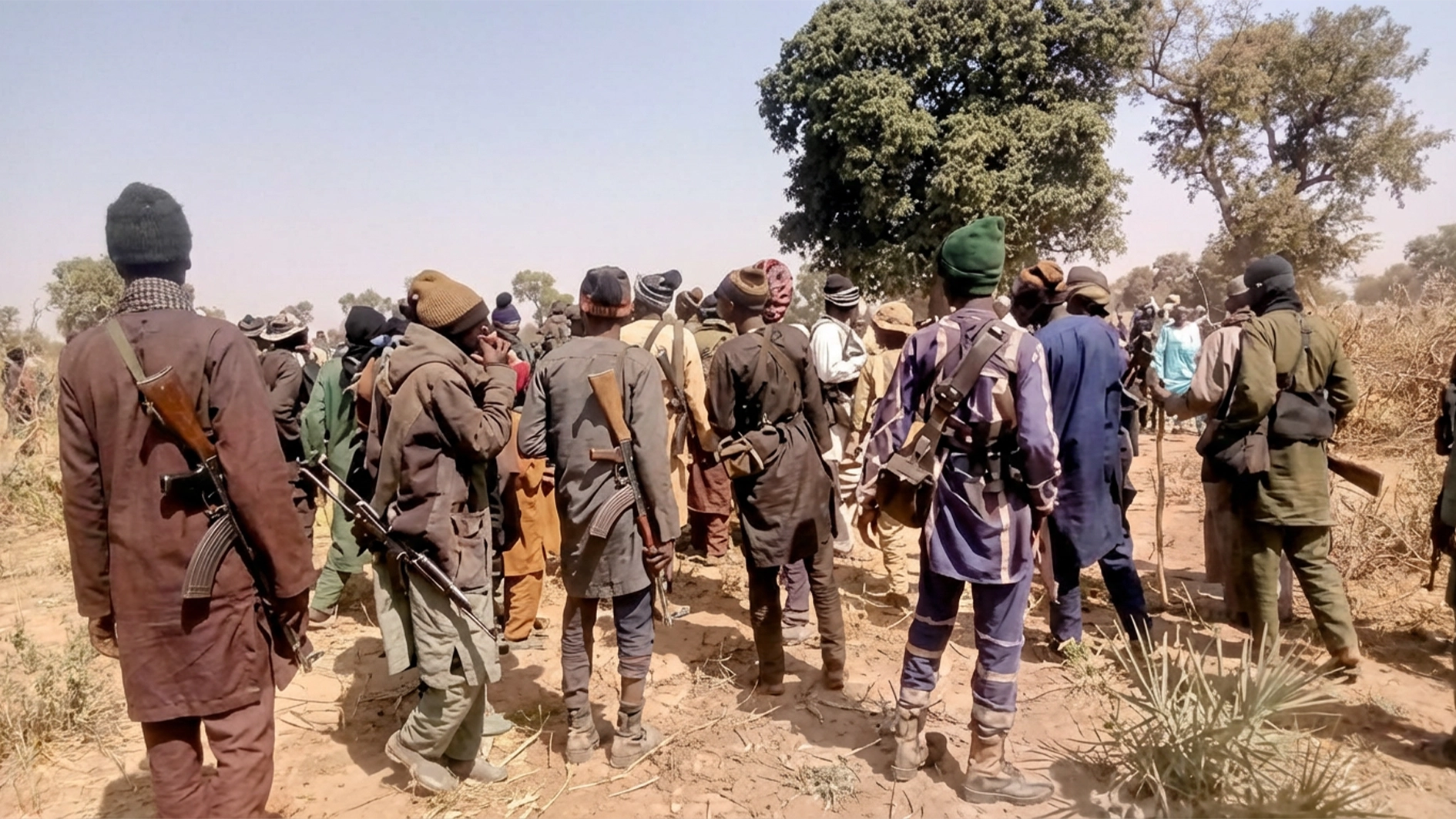
• Experts raise alarm on threats of IEDs to counter-terrorism fight
Bandits have reportedly killed 14 persons and injured dozens in two separate attacks on Tuesday in Dandume and Musawa Local Councils of Katsina State.
The hoodlums, said to be in their numbers and armed with automatic weapons, attacked the Dansoda community, Dandume, at about 8p.m., where they killed 11 people.
A resident said community members had finished breaking their Ramadan fast and were seated outside under trees when the bandits struck.
He added that the people ran helter-skelter as the attackers shot sporadically, and also directly at the fleeing locals.
The inhabitant said that after the bandits left the area, community members cautiously came out of their homes and hiding places to discover that 11 people had been killed during the mayhem.
All victims were buried yesterday according to Islamic rites, while the injured had been ferried to the hospital for treatment.

Also, bandits attacked the Jikamshi community in Musawa council area on the same day, at about 6:10 p.m., killing three persons and injuring dozens.
Sources familiar with the incident said the assailants operated for more than an hour, looting shops and carting away food items and other valuables worth millions of Naira.
It was gathered that before the incident, efforts were made by residents to reach out to security operatives as well as government officials from the area, alerting them to the imminent attack.
The onslaught comes on the heels of a peace agreement entered into between security-prone communities and repentant bandits.
Part of the pact had included the release of about 70 suspected and convicted bandits, a development that had attracted criticisms from several Nigerians.
There was no response from the state police command on both incidents at press time.
Meanwhile, the Coordinator, National Counter Terrorism Centre (NCTC), Maj.-Gen. Adamu Laka has identified Improvised Explosive Devices (IEDs) as one of the most potent threats to personnel engaged in counter-terrorism operations, particularly in the North-East.
Laka observed that beyond the tragic loss of lives and injuries, IEDs have severely disrupted agricultural and economic activities, restricted humanitarian access, displaced communities, and undermined investor confidence in affected areas.
The coordinator stated this at the opening of a five-day Counter Improvised Explosive Devices Baseline Assessment Workshop yesterday, organised by the NCTC, in collaboration with the United Nations Mines Action Service (UNMAS) and UKAID.
Laka added that the impacts of IEDs extend far beyond the theatre and continue to affect the stability and recovery of communities across the federation.
“It is in recognition of this threat that the National Counter-Terrorism Strategy identified the development of a National Counter-Improvised Explosive Devices Strategy as a key priority.
“Guided by the Lome Recommendations of the Global Counter-Terrorism Forum, the Centre has been working with international partners to develop a threat-aligned and coordinated framework that will strengthen our national ability to counter the evolving use of Improvised Explosive Devices by terrorist groups, he said.
In his remarks, Chief of the United Nations Mines Action Service, Edwin Faigmane, said the United Nations and its entities work on counter-IEDs to mitigate their threats to personnel, civilians and infrastructure.
He said the workshop is part of a programme which began in 2024 with operational assessment of the EOD and IED capabilities of the Nigerian police, leading to the training of the Nigeria Police Force (NPF) and Nigeria Security and Civil Defence Corps (NSCDC) to deliver risk education in areas that are hard to reach.
On his part, the British High Commissioner to Nigeria, Mark Flood, noted that the outcome of the workshop would offer practical ways to enhance Nigeria’s counter-IED enterprise.
Corps Commander, Engineering, Nigerian Army, Maj.-Gen. Shamsideen Shafaru submitted that IEDs remain one of the most potent and adaptive weapons employed by hostile elements across multiple operational theatres.
He said countering the threat requires a unified, intelligence-driven, and capability-focused approach involving all relevant stakeholders, as no single organisation can effectively address the challenge.

