 Follow Us on Google News


 Follow Us on Google Discover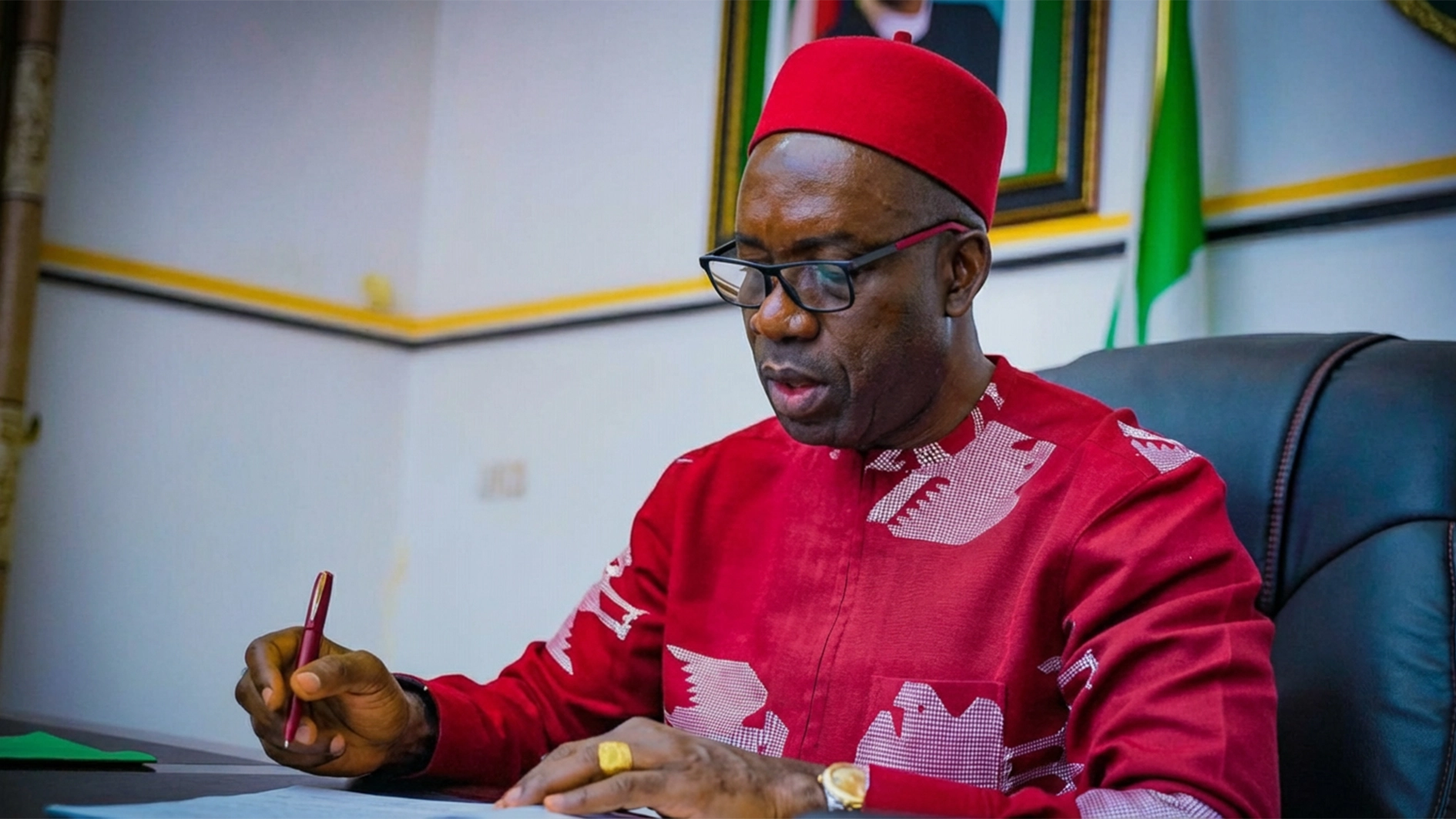
Day not merely sit-at-home but solemn act of remembrance, says IPOB
Governor Chukwuma Soludo of Anambra State has called for a structured national conversation on the place of the Igbo in Nigeria, urging stakeholders to embrace intellectual engagement and constructive dialogue rather than agitation.
Soludo made the call during a stage performance titled “The Tale of Two Nnamdis,” written by Tobe Osigwe and presented by students of the Department of Theatre Arts and Film Studies, University of Nigeria, Nsukka (UNN), at the Government House, Awka.
The governor’s remarks coincided with the May 30 Biafra remembrance anniversary, often observed by pro-Biafra groups.
Expressing concern over what he described as the absence of a coordinated intellectual discourse on the challenges confronting the Igbo and their position within the Nigerian federation, Soludo urged a shift from agitation to evidence-based and structured engagement.
Commending the students for initiating discussions on the subject, he said: “I was at UNN last month and recalled that the Biafran war was literally declared there. I am glad that young people are now leading the way by insisting that this conversation must begin in a structured manner.
“I saw the war very clearly. I am a Pan-Africanist and a proud Nigerian. Ndi Igbo need Nigerians, Nigerians need Ndi Igbo, just as we all need the wider world. Our prosperity will accelerate if we take advantage of a larger space.”
The governor cautioned against methods of agitation such as the prolonged sit-at-home protests, arguing that such actions often inflict economic and social hardship on the people they are intended to protect.
Drawing from personal experience, Soludo recounted the impact of the Nigerian Civil War on his family, revealing that his mother died during the conflict, while his father lived with a bullet wound for 11 years after the war.
While acknowledging the right of individuals to hold differing views, he stressed the need for dialogue, negotiation, and political engagement, citing the example of Nigeria’s first President, the late Dr Nnamdi Azikiwe.
“Zik taught us the politics of bargaining. He negotiated and engaged during the First and Second Republics, and that remains an enduring lesson,” he said.
Soludo also raised concerns over what he described as a contradiction in the political aspirations of the Igbo, questioning how the region could seek the presidency while simultaneously expressing doubts about the Nigerian project.
Meanwhile, the Indigenous People of Biafra (IPOB) has declared that the May 30, 2026, event was not merely a sit-at-home but rather a solemn act of remembrance.
In a statement issued yesterday by the spokesperson/Media and Publicity Secretary of IPOB, Emma Powerful, the body described it as a collective tribute by a grateful people to millions of innocent men, women, and children who perished during the genocidal war against Biafra.
IPOB congratulated Biafrans across the world for the successful and historic observance of May 30, 2026, which, according to him, was a sacred day set aside to honour and remember Biafran fallen heroes and heroines whose supreme sacrifices made Igbo existence possible today.
According to the group, it was a day when Biafrans everywhere paused to reflect on the pain, courage, resilience, and sacrifices of those who gave everything so that future generations would never forget who they are.

