 Follow Us on Google News
 Follow Us on Google Discover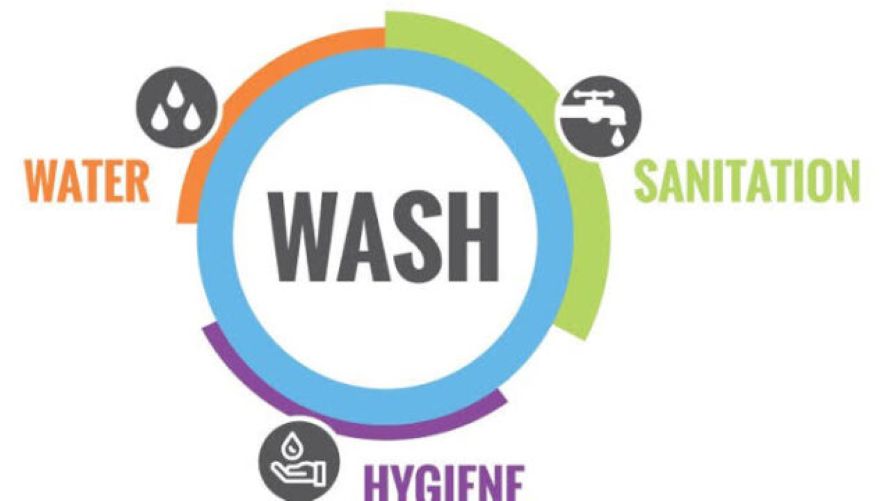
The Federal Government and development partners have pledged to move beyond discussions and translate climate change dialogue into practical actions that will strengthen Water, Sanitation and Hygiene (WASH) systems and improve resilience across Nigeria.
The commitment was made on Monday in Abuja at the Annual National Climate Change and WASH Conference held in Abuja with the theme: “Water, Sanitation and Hygiene (WASH) Systems at the Frontline of Climate Change: Aligning NDC 3.0 with National Adaptation Priorities.”
The Minister of Water Resources and Sanitation, Prof. Joseph Terlumun Utsev, said the conference was a strategic platform to advance implementation of climate adaptation measures, stressing that the climate crisis was fundamentally a water crisis.
The minister said climate change was already affecting access to water, sanitation and hygiene services through floods, droughts, changing rainfall patterns and declining water quality.
He said Nigeria’s updated Nationally Determined Contribution (NDC 3.0) provided an opportunity to place WASH at the centre of national climate adaptation planning.
“Without water security, there can be no climate resilience. Without sanitation, there can be no public health resilience. Without resilient WASH systems, adaptation efforts remain incomplete,” Utsev said.

He listed priority areas to include strengthening climate-resilient water infrastructure, improving integrated water resources management, expanding climate-smart sanitation solutions, enhancing early warning systems, mobilising climate finance and increasing community participation.
The minister added that the ministry would continue to work with the National Council on Climate Change, development partners, state governments, River Basin Development Authorities, academia and civil society to mainstream WASH into national adaptation plans.
The Acting Permanent Secretary of the ministry, Engr. Ali Ibrahim, said climate change remained one of the defining challenges of the era, with the water and sanitation sector positioned at the centre of both the problem and solution.
He said the conference would help stakeholders review the implementation of the 2025 communiqué, strengthen understanding of WASH within NDC 3.0 and develop an actionable roadmap for climate-resilient service delivery.
“Climate impacts continue to test the resilience of our WASH systems, from flooding and erosion to drought and water scarcity. These realities require us to rethink planning, strengthen infrastructure, improve financing and adopt innovative approaches,” Ibrahim said.
The Head of Advocacy, Policy and Communications at WaterAid Nigeria, Kolawole Banwo, commended the Federal Ministry of Water Resources and Sanitation for sustaining the conference as a government-led platform for climate action.
Banwo said the objective of the conference was to bring government, development partners, private sector, civil society, academia and the media together to promote sustainable WASH services in the face of climate change.
He noted that climate resilience required stronger institutions, better planning, sustainable financing and reliable data.
“Climate resilience is not just infrastructure to build.
We need to build partnerships, plan collaboratively and ensure we have accurate data,” he said.
Banwo also called for the outcomes of the conference to be integrated into national and sub-national budgets to ensure implementation.
The UNICEF representative, Obinna Uche, said integrating WASH into Nigeria’s climate commitments was beyond meeting policy requirements, as it directly protected public health and vulnerable communities.
“By integrating WASH into our NDCs, we are not just ticking the policy box. We are directly protecting public health, safeguarding livelihoods of vulnerable populations and empowering women and girls who bear the heaviest burden of water scarcity and unsafe sanitation,” Uche said.
He urged stakeholders to collaborate to ensure WASH interventions were prioritised in Nigeria’s updated climate plan.
Representing the Minister of Environment, Mrs Chika Okpela, the Chief Environmental Officer from the ministry said climate change was increasingly affecting water resources, sanitation infrastructure, ecosystems, food security and human health.
She said the ministry remained committed to supporting climate adaptation, environmental sanitation, pollution control, waste management and ecosystem restoration as part of efforts to build resilient communities.
Okpela stressed the need for stronger partnerships, innovative financing, sound policies and community ownership to deliver climate-smart WASH solutions.
She urged participants to convert discussions from the conference into practical actions capable of strengthening institutions, improving infrastructure and ensuring sustainable WASH services for Nigerians.

