 Follow Us on Google News
 Follow Us on Google Discover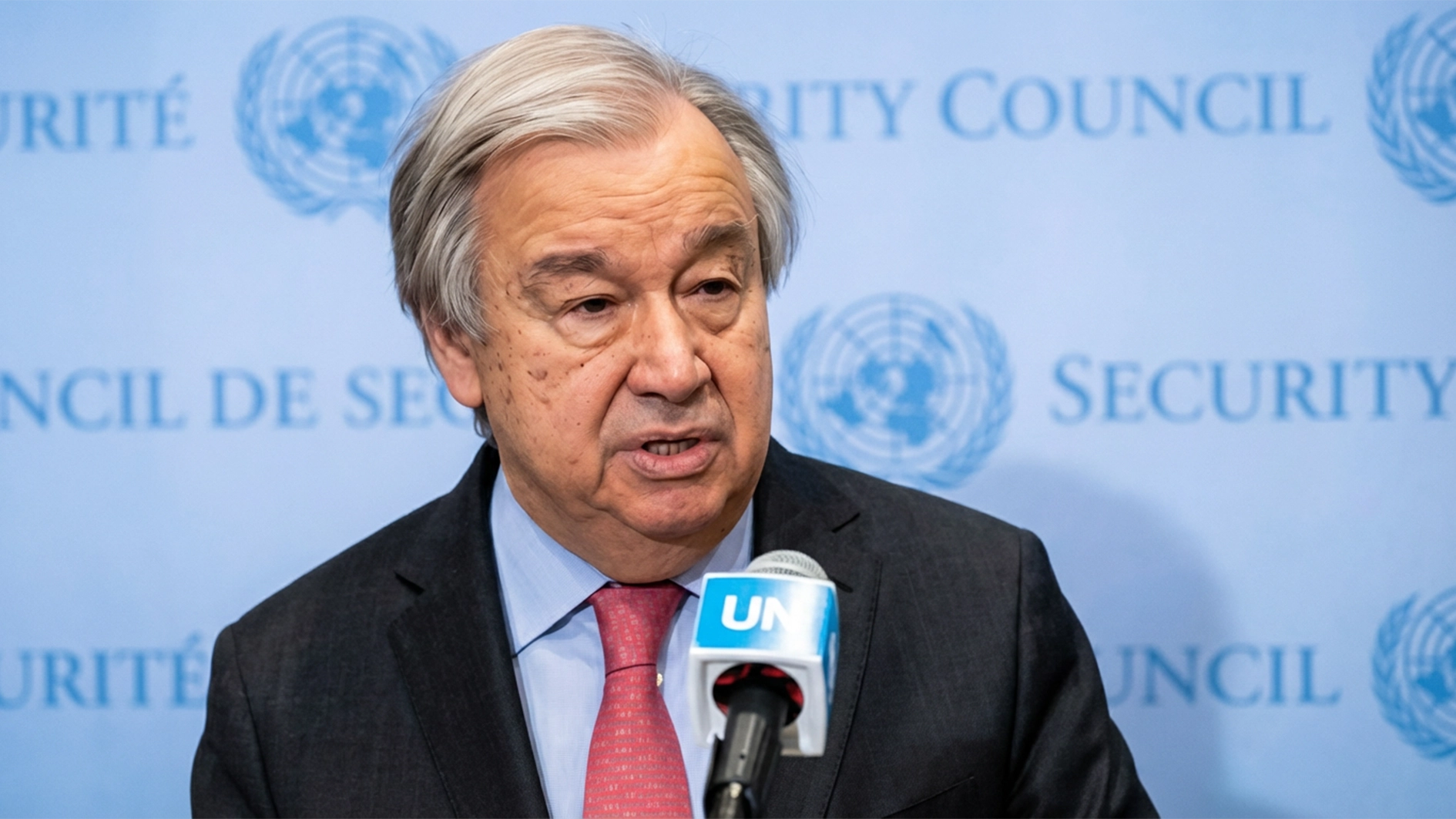
•It can survive if members pay their dues – Amb Keshi
•Adekoya cautions against geopolitical rivalry
Recent outcry by the United Nations’ Secretary General, Antonio Guterres, about the financial state of the global body has heightened stakeholders’ apprehension about its ability to sustain programmes and activities.
As a way out, many people have urged member states to fulfil their obligations, including prompt payment of their membership dues.
Worried that over dependence of the United States of America (USA) for funding contributed largely to its present financial predicament, experts have called on other super powers to take advantage of America’s backsliding to strategically position themselves in the global financial ranking.
African member states, including Nigeria, have also been admonished to look inward for self-funding of its critical sectors.
Established in 1945 shortly after the second World War, the UN’s primary objective was to forestall future global conflicts, foster international cooperation, peace and security.

With 193 member states, the global body has in the past, played critical roles in peacekeeping, humanitarian aid and international diplomacy, all of which are currently threatened by poor funding.
In a recent letter to member states, Guterres warned that the financial crisis was deepening and could soon lead to a collapse, a development he blamed on the failure of member states to pay their mandatory dues and the UN budget rules that compel the organisation to return unspent funds.
This according to officials, have put the organisation on an “unsustainable trajectory.
By the UN financial law, about $300 million in budget credits would be returned and this, the Guterres warned, will trigger a liquidity crisis, especially with the recent withdrawal of USA under President Donald Trump, from 66 international organisations out of which UN entities were 32.
Beyond its unpleasant financial disposition, recent actions by some super powers have left critics worried over the supervisory power of the UN over member countries. The lingering Russia/Ukraine war as well as the Gaza conflict, has left a glaring impression that the body has succumbed to super power hegemony.
Its inability to call US to order, especially with the recent inauguration of the Board of Peace (BoP), an acclaimed international organisation he chaired, and he designed to oversee post-war reconstruction, security and governance in Gaza, left many people wondering about the current status of the UN in the global scheme of things.
On non-payment of dues, it was stated that although, over 150 member states paid last year, the year still ended with $1.56 billion outstanding dues, a figure that doubled that of the previous year.
Also, the US decision to cut voluntary funding and withheld mandatory payments to both the regular and peacekeeping budgets on the ground of inefficiency wasteful and contrary to its interest, brought the UN financial situation to a breaking point.
The officials feared that with the withdrawal of US, which accounted for 22 per cent of UN’s core budget, the organisation has become short of cash reserves while the level of liquidity to keep functioning as it has done in previous years has dipped.
Consequently, stakeholders felt UN should save itself by urgently rethinking its funding structure and institutional priorities.
They maintained that the world can survive the American threat if respective member states reduce their over-dependence on aid and take responsibility of their obligations to the UN.
Former Permanent Secretary, Federal Ministry of Foreign Affairs and Nigerian Ambassador to the U.S., Amb Joe Keshi, described the current state of the UN as worrisome.
“The problem is that for the last 80 years, we have unnecessarily over-dependent on the US and now that we have a US President, who does not believe in the UN or just believes in America first, we are confronted with a number of problems.
“If the rest of the world has actually moved up, marched up to meet up their responsibilities, we will not be in this global mess. African countries for example, think that aid is going to be perpetual. So, they don’t use the little they get to improve their countries judiciously.
“And by the way, it is not only the UN that is going to suffer, African Union will also probably suffer the same fate because they also provide assistance. For many years, a number of countries do not pay to AU and a number of countries are not paying to ECOWAS too.”
Keshi decried that for a long time, the number of countries that maintain their responsibility for the UN by paying all their dues have shrunk. How can you be a member of an organisation and fail to pay your dues? He asked. Meanwhile, those countries that have failed to pay are the ones, who fight tooth and nail to put their own people in that organisation. As we say, the chicken has come home to roost.”
For Keshi, the only the world can survive America’s threat is for UN member states to pay up their dues by eliminating corruption in their respective countries and own up to their responsibilities to international commitments.
“Some presidents are very rich; some have the whole country’s resources at their disposal. Yet, they are not paying to the UN.”
According to him, this is also time for countries like China to step up the ladder as the number one contributor to the UN, having maintained number after the US with 20 per cent of the UN core budget.
On what many people described as undemocratic actions to the US, Keshi said it was the rest of the world that enabled the country and its leaders without realizing the implications.
He said: “United States has borne the responsibility of the world for a long time, and that is my argument – because we are dependent on the US, we enabled it,we encouraged it.
Today, that child that you have enabled and encouraged, has overgrown you and has become stubborn, does not want to listen to you, does not care about you. What do you do? You cannot just go about crying. You have to do the needful.
“The needful is for member states to simply pay up. It they pay up their dues, U.N. will survive. The Secretary General should call member states up and beg them to pay up so that the U.N. can survive.
“In that way, you shame the US that “Listen, the world can exist without you.”
Keshi said that remaining indifferent to the outcry of the UN Secretary General, shows that the world lacks conscience and that members just go to the UN for personal benefits without caring whether it survives or not.
“So this is a time for every country that owes the UN and its agencies to pay up.Even if you cannot pay in full, you can begin to pay what you can and ensure the survival of the organisation.
“In that way, Americans will come back. They came back to all the organisations they exited and I assure you that they will come back again. But until then, we have to find a way to keep the UN going, and the only way about it is for member states to pay up.”
The Ambassador decried that even Nigeria falls among the members, that are indebted member states.
“Nigeria is a typical example. We are in so many organisations but we are not paying our dues to those organisations.
“And a number of African countries must have the conscience to pay because the UN helped them a lot during the colonisation process and in a number of humanitarian areas. So it is a payback time.
On the withdrawal of the US from international agencies, including those of the UN, which it was a party to, Ambassador said there was no law prohibiting members from withdrawing. Rather, every exiting member must pay all their debts.
“The United States, for example, was supposed to pay whatever they are owing the U.N. system before they leave. I am not too sure they have done that but it is beholden on the Secretary General to take it up with the them.
While the financial crises subsist, Keshi advised on streamlining of UN agencies without causing so much damage to the international system.
“For example, can the World Health Organisation reduce some of its agencies around the world? So, there is need to reform the U.N system to see how it can function effectively without some agencies. You cannot continue to carry such a heavy burden, when you do not have the resources to manage them all.
Also speaking, an environmental sustainability expert, Anngu Orngu, said the situation exposes weaknesses in the UN’s internal planning and preparedness.
He noted that the organisation has long promoted sustainability globally but appears not to have fully applied the same principles to its own operations. According to him, the financial crisis presents an opportunity for the UN to reflect inward and begin to adopt more durable, self-sustaining financial models.
Orngu explained that the liquidity challenge has been worsened by reduced commitments from key contributors, particularly the United States, whose changing foreign policy priorities have had a significant impact on the organisation’s finances.
“America First” posture of President Trump made the development largely predictable but also revealed how dependent the UN has been on a single dominant supporter.
“This situation shows clearly that the UN relied too heavily on one pillar. It should now begin to engage other wealthy nations more seriously”, Orngu said.
He added that economically strong countries, especially in Europe and Asia, must step up their contributions to ensure continuity in global humanitarian and development efforts.
Orngu also said the unfolding crisis carries important lessons for African countries, warning that continued dependence on foreign aid is unsustainable. He frowned that though, Africa has vast natural and human resources capable of driving self-reliant growth, it has failed to manage its resources properly.
He therefore called for deliberate investment in industrialisation, insisting that resources extracted from the continent should be used to develop Africa rather than being exported for the benefit of foreign economies.
A Public Affairs Analyst, Olisa Adekoya, a lawyer, cautioned the UN against making statements or taking positions that could draw it into geopolitical rivalries, noting that neutrality remains central to its relevance and authority.
“The UN should maintain its role as a mediator and avoid being seen as partisan,” Adekoya said.
On the likely impact of the financial state on Nigeria, he said the effects of a weakened multilateral system would be global rather than country-specific, depending largely on how nations align themselves within the evolving balance of power.
He disclosed that the UN could run out of operational funds by July 2026, with its New York Headquarters facing possible shutdown by August if urgent funding gaps are not addressed, especially with the over $4 billion owed by the US in combined regular and peacekeeping budgets.
The situation has already resulted in hiring freezes, a 15 per cent reduction in peacekeeping operations for 2025–2026 and threats to major events such as the UN General Assembly.

