THE Nigerian government has granted special protection to the Guinea-Bissau presidential candidate, Fernando Costa, due to reports of imminent threats to his life.
Costa had been the main opposition candidate to incumbent President Umaro Embalo in the 2025 presidential election, held on 23 November.
However, hours before the results were to be announced, the military seized power, suspended elections, and imposed a curfew.
According to the Nigerian Ministry of Foreign Affairs, President Bola Tinubu had approved the decision to place Dias under protection within the Nigerian Embassy premises in Guinea-Bissau.
A letter addressed to the President of the ECOWAS Commission, Omar Alieu Touray, dated November 30, and signed by the Minister, Yusuf Tuggar, stated that the decision reflects Nigeria’s commitment to safeguarding democratic processes and ensuring the safety of political actors in the region.
The letter also requested ECOWAS to direct its Stabilisation Support Mission in Guinea-Bissau to provide Mr Da Costa with additional protection within the embassy grounds.
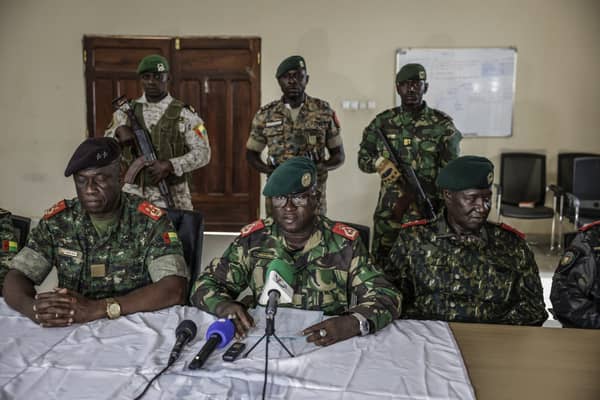
Guinea-Bissau’s military leaders have suspended protests and strikes as they tighten control ahead of a planned visit from The Economic Community of West African States (ECOWAS), which is pushing for a return to constitutional order after last week’s coup.
The military government, which took power in what some West African leaders described as a “sham” coup, said late on Sunday that all demonstrations, strikes and any activities seen as risks to peace and stability were now banned.
The directive also instructed ministries, public institutions and state secretariats to reopen and resume work.
The announcement came a day after hundreds of people, mostly young protesters, gathered in Bissau demanding the release of detained opposition figures and the publication of presidential election results.
A mediation team from ECOWAS, including the presidents of Togo, Cape Verde and Senegal along with the ECOWAS Commission president, was expected in Bissau on Monday. Their mission is to push the military authorities to restore constitutional rule and publish the disputed election returns.
ECOWAS has warned that it may place sanctions on anyone found responsible for obstructing Guinea-Bissau’s electoral or democratic processes.
Major-General Horta Inta-a, who was installed as interim president by the military, said the coup was needed to stop what he described as a plan by “narcotraffickers” to “capture Guinean democracy”. He also said the transition period would last one year, starting immediately.