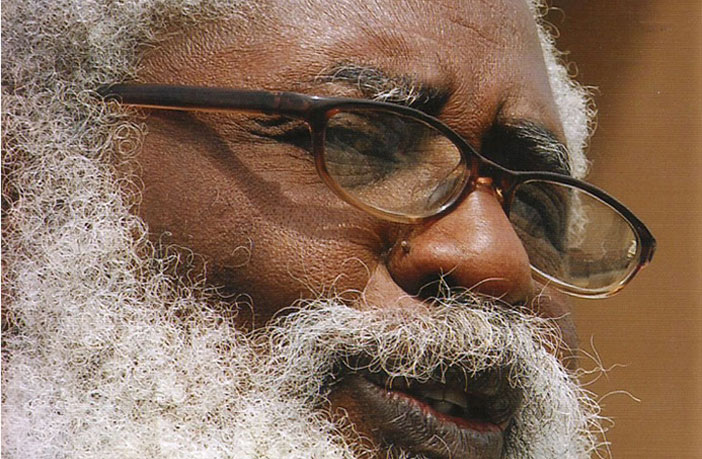
A Chief Magistrate’s Court in Ado-Ekiti has remanded the lawyer and human rights activist, Dele Farotimi, for authoring and publishing a book titled: “Nigeria and its Criminal Justice System,” which alleged that the founder of Afe Babalola University Ado-Ekiti, (ABUAD), Chief Afe Babalola, corrupted the Supreme Court to procure a fraudulent judgment in the service of his clients.
The defendant was charged with 16 counts but pleaded not guilty to the charges read to him.
The Chief Magistrate, Abayomi Adeosun, ordered that the defendant be remanded in the Ado-Ekiti Correctional Centre, till Tuesday, December 10, 2024, for the court to hear the bail application of the defendant.
The police prosecution, Samson Osobu, while arguing against the oral bail application, said that the matter is still under investigation, adding that other co-conspirators are still at large, while the published books are still in circulation.
In his oral application, the defence counsel, Peter Akeredolu, who led other three lawyers to appear for the defendant, said: “The offence allegedly committed is bailable.
“The court should admit the defendant to bail on very liberal terms, especially on self-recognition. The man in the dock is a lawyer of 25 years standing. There are three health challenges the defendant is currently managing.
Ruling on the bail application, Adeosun said: “I have carefully listened to the argument of both the prosecuting and defence counsel. Enough materials have not been brought to the court to enable me to exercise my discretion. It is not enough to cite plethora of cases.”
He, therefore, ordered the defence counsel to file proper bail application so that it could be heard on December 10, 2024.
Meanwhile, rights activist and National Coordinator of the Obidient Movement, Yunusa Tanko, has condemned the rising level of violation of fundamental rights of citizens in the country , urging the immediate release of Farotimi.
Tanko, who stated this during a media briefing, yesterday, said: “We, the Obidient Movement crusaders, express our deepest concern and shock regarding the gestapo arrest of Dele Farotimi.”
Relatedly, the Yoruba Ronu Leadership and Nigeria/African Union of Journalists, yesterday, called for the immediate release of Farotimi, just as they condemned the manner he was abducted by strange police officers in Lagos and whisked to Ekiti State in a Gestapo manner.
A statement by President of the Yoruba group, Akin Malaolu, said it was quite unfortunate that such a Gestapo style could still exist.
In a similar vein, former President of the Union of Journalists, Lanre Ogundipe, described Farotimi’s arrest and trial as unjust and against the principle of natural justice for the police to invade and arrest human rights activist on a mere defamatory allegation that has not been proved.
Meanwhile, the Nigerian Bar Association (NBA) has expressed deep concern over the arrest of Dele Farotimi on allegations of libel, coupled with the reported invasion of his law firm and harassment of lawyers and members of staff within his premises.
The NBA, in a statement signed by its President, Mazi Afam Osigwe (SAN), described these actions as a grave violation of the rule of law and an affront to the sanctity of the legal profession.
A prominent legal practitioner, Bayo Akinlade, also decried the judiciary’s alleged misuse of discretionary powers in bail proceedings, describing it as a significant contributor to prison congestion in Nigeria.
Akinlade, who is also the Convener of the Fight Against Corruption in the Judiciary (FIACIJ), specifically chided magistrates in lower courts for imposing unreasonable bail conditions, which he claimed, undermine the principle of justice and exacerbate the country’s overburdened prison system.
Akinlade, citing the case of Dele Farotimi that was reportedly detained and denied bail on self-recognition, argued that such judicial decisions could erode public confidence in the judiciary.
He questioned whether judges fully understand the trauma inflicted on suspects and their families when bail provisions are misused.
Farotimi’s case, he said, is a reminder of the urgent need for accountability within the judiciary to restore public trust and uphold the rule of law.