 Follow Us on Google News


 Follow Us on Google Discover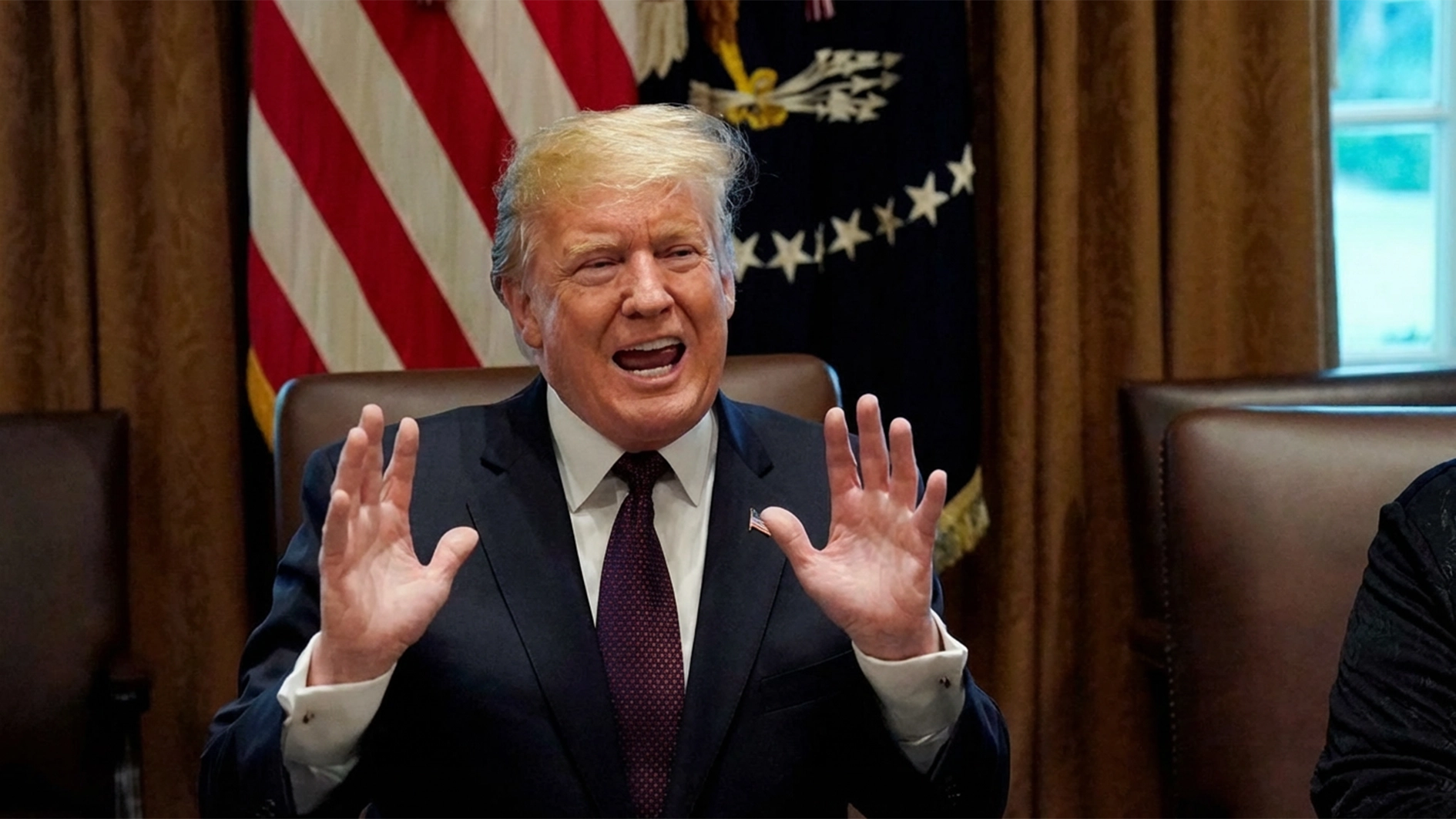
• FG to boost domestic revenue, cut reliance on borrowing, says Edun
• UN warns rising hunger, displacement threaten global economic stability
• European leaders condemn Trump’s ‘new colonialism’
Nigeria has sought to reassure investors that its growth strategy is shifting away from debt, with domestic revenue, tax reform and fiscal discipline now anchoring long-term economic stability.
The Minister of Finance, Wale Edun, said this while speaking on Bloomberg Television at the ongoing World Economic Forum in Davos, yesterday.
“The issue now is to focus on revenue, focus on domestic resource mobilisation,” Edun said. “We’re hoping to rely less on borrowing,” he added.
His remarks come as Nigeria implements fiscal reforms aimed at strengthening the economy. The minister emphasised the need to prioritise revenue generation, noting that while the country could access international bond markets if necessary, the government’s focus is on mobilising domestic resources.
Edun outlined efforts to raise tax revenue and strengthen fiscal sustainability amid mounting global economic pressures, adding that strategies are being pursued to reduce borrowing while expanding revenue generation. He said Nigeria remains open to international capital markets if needed, but stressed that domestic reforms are central to the government’s fiscal policy.

Since taking office in 2023, President Bola Tinubu’s administration has introduced several economic reforms aimed at driving growth and stabilising public finances. These include removing currency restrictions, ending the fuel subsidy and overhauling the tax framework.
Other measures include tax reforms designed to raise revenue to 18 per cent of GDP next year, up from about 14 per cent currently. The minister said the policies target long-term economic sustainability while reducing reliance on external debt, adding that the initiatives form part of broader efforts to modernise the economy and strengthen investor confidence.
Economic forecasts indicate early signs of progress. The International Monetary Fund recently upgraded Nigeria’s growth forecast to 4.4 per cent for 2026, from an estimated 4.2 per cent in 2025, despite weaker oil prices, Nigeria’s main export and major foreign-exchange earner.
The Fund said government reforms are expected to further stabilise revenue collection and support fiscal sustainability. “The combination of domestic resource mobilisation and ongoing reforms underscores Nigeria’s effort to reduce debt dependence and strengthen its economic foundations,” the IMF said.
Edun is expected to use the Davos meeting to address investor concerns around policy consistency, inflation, foreign exchange stability and fiscal sustainability. Nigeria’s engagement at WEF 2026 is also shaped by wider global realities affecting emerging markets.
The Federal Government will also debut its first official national pavilion, Nigeria House Davos, at the Forum.
UN warns rising hunger, displacement threaten global economic stability
Edun’s reassurances came as United Nations agencies warned that worsening hunger and displacement are no longer only humanitarian crises but are increasingly becoming threats to global economic stability.
The warning was issued as world leaders and business executives gather in the World Economic Forum in Davos, Switzerland.
According to the agencies, rising hunger and forced displacement now pose significant economic risks, disrupting markets, supply chains and labour systems worldwide.
The UN World Food Programme said an estimated 318 million people are facing acute hunger, with hundreds of thousands already living in famine-like conditions. It warned that severe funding shortfalls are forcing it to cut food rations and scale back assistance despite rapidly growing needs.
Current projections show WFP funding at just under half of its required $13 billion budget for 2026, leaving the agency able to support only about 110 million people, roughly one third of those in need.
Rania Dagash-Kamara, WFP Assistant Executive Director for Partnerships and Innovation, said hunger fuels displacement, conflict and instability, which in turn undermine economic systems.
“Hunger drives displacement, conflict, and instability, and these not only threaten lives but disrupt the very markets that businesses depend on,” she said. “The world cannot build stable markets on a foundation of 318 million hungry people.”
Dagash-Kamara, who is attending the forum, said the private sector has a direct stake in tackling food insecurity and called on companies to invest in supply chains, technology and innovation to help stabilise fragile markets and protect workforces. WFP urged business leaders in Davos to keep hunger and food security high on their agenda.
The International Organisation for Migration is also using the forum to press its case, calling on political and business leaders to rethink migration as a driver of economic growth rather than a burden.
“Migration is one of the most powerful drivers of development when managed responsibly,” said Amy Pope, Director General of IOM. “Mobility can unlock economic potential, help communities thrive independently, and provide lasting solutions to displacement, while respecting national sovereignty and human rights.”
The agency said partnerships with private companies and foundations are already supporting this approach, including the use of artificial intelligence to improve health screening, labour market policies and programmes focused on vocational training, entrepreneurship and long-term solutions for displaced people.
At Davos, IOM is also highlighting the role of diaspora communities as investors and innovators, noting that remittances and diaspora capital can support business creation, expand digital financial access, open new markets and create jobs.
Other senior UN officials attending the forum include President of the General Assembly Annalena Baerbock, Tedros Ghebreyesus, and Alexander De Croo.
Also in attendance are Barham Salih and Rafael Grossi, Director-General of the International Atomic Energy Agency.
European leaders condemn Trump’s ‘new colonialism’
Meanwhile, European leaders have lined up to criticise US President Donald Trump over what they described as a “new colonial approach”, warning that the continent is at a crossroads amid escalating tensions over Greenland.
The criticism came on the first full day of the World Economic Forum in Davos, as Trump insisted there was no going back on his ambition to control Greenland, a largely autonomous territory within the Kingdom of Denmark.
After weeks of aggressive rhetoric from Washington, French President Emmanuel Macron told the forum on Tuesday that this was “not a time for new imperialism or new colonialism”.
“We prefer respect to bullies, we prefer science to conspiracies, and we prefer the rule of law to brutality,” Macron said, criticising what he called the “useless aggressivity” of Trump’s threat to impose tariffs on countries opposing a US takeover of Greenland.
He accused the United States of seeking to “weaken and subordinate Europe” by demanding “maximum concessions” and using tariffs as leverage against territorial sovereignty, describing such actions as “fundamentally unacceptable”.
Macron spoke shortly after European Commission President Ursula von der Leyen told the forum that Europe must strengthen its independence. She also pledged an “unflinching, united and proportional” response to any US tariff measures.
China’s Vice Premier He Lifeng warned against allowing the international system to slide into a “law of the jungle”, while Canada’s Mark Carney said the world’s middle powers needed to work together as the rules-based order fades.
“It seems that every day we are reminded that we live in an era of great power rivalry,” Carney said, warning of “the dawn of a harsh reality of geopolitics”. He added that Canada stood with Denmark and Greenland.
UK Chancellor of the Exchequer Rachel Reeves said in Davos that she would urge calm over US threats of new tariffs.
Earlier, US Treasury Secretary Scott Bessent warned Europe against retaliation, urging governments and companies to “let things play out” following Mr Trump’s threat of 25 per cent tariffs on opponents of his Greenland proposal.
Tensions intensified after Trump published private messages from Macron and other leaders, amid reports of diplomatic unease over proposals including a possible G7 meeting in Paris involving Russian representatives.
Former Nato secretary general Anders Rasmussen, also a former Danish prime minister, warned that the alliance underpinning Western security since the Second World War was now on the brink of collapse because of Trump’s behaviour.
In a strongly worded address, Macron said Europe “should not hesitate to deploy” all tools at its disposal to protect its interests, urging greater innovation and private investment while resisting what he described as “the law of the strongest”.
“This is a time of cooperation,” he said, returning to the theme at the close of his speech. “We do prefer respect to bullies, and we do prefer the rule of law to brutality.”

